Caution: This review contains minor spoilers for the game’s story in addition to the Final Boss. Read at your own discretion.
I don’t necessarily consider myself a Sonic fan. I’m not in love with this franchise as others are. Whenever a new Sonic game releases, I just go “Oh, a new Sonic game released.” And then I move on. Despite this though, I do enjoy the games. I’ve enjoyed almost every sonic game. The original trilogy on the Sega Genesis were really fun, the Adventure games I had loads of fun with, and even though Sonic 06 was an awful game in every way, I still had fun with its bugs and glitches. The last Sonic game I played and genuinely enjoyed playing was Sonic Generations, a game that released a decade ago. When Sonic Frontiers was revealed at the Game Awards though, I wasn’t that excited. I was probably more excited for the sequel to the Sonic Movie if anything. And the gameplay shown off by IGN definitely made me a bit more excited because it looked laughably unfinished. I was more so looking forward to this game because I was expecting an unfinished and buggy game like Sonic 06 and Sonic Boom before it. But when Sega started putting out their own trailers, I started getting less excited because it looked bad, and more excited because it was looking like an actual good game.
Sonic Frontiers takes place on the Starfall Islands, with the story given to the player being shrouded in mystery. Eggman has a device that he sticks on some kind of strange ancient structure, leading to him being sucked in against his will. Meanwhile, Sonic, Tails, and Amy are on an expedition to the Starfall Islands to learn about the disappearance of the Chaos Emeralds. Unfortunately, they’re sucked into what is known as “Cyberspace”, with Sonic being the only one that makes it out. Your goal in the game is to rescue all of Sonic’s friend while uncovering the mysteries of the Starfall Islands. There’re also two prequels to the game, one being a 9-page comic on the game’s official website and a short film revolving around Knuckles that’s on the Sonic official Youtube Channel.
Image from the official online comic
I really like the story of Sonic Frontiers. I’ve never read the Sonic IDW comics, but I can tell that the writer for those comics, Ian Flynn, is extremely talented and I’d like to see him write for more sonic games in the future. There are so many small nods and references to past games. There is a point in the game where Sonic references the Mystic Ruins from Sonic Adventure and I was left surprised because I didn’t expect the game to reference anything from previous Sonic games. Coming off of previous Sonic games, the story in this game is a breath of fresh air. Sonic Forces had an interesting concept for its story, with Eggman already winning and Sonic and friends having to take back their world, but it was poorly executed and had almost no stakes. Sonic Frontiers’ story on the other hand, as said before, is shrouded in mystery and as I progressed more and more in the game, the more I found myself invested in the world and its narrative.
I also have to commend Ian Flynn on how he wrote the characters. Sonic is relatively the same in his personality, but he knows when to dial back his more jokey dialogue when something serious happens. Sonic in previous games came off more annoying to me than anything else. He was always cracking jokes and it never really seemed like he was aware of the situation he was in. Even in a game like Sonic Forces, a game that has a super serious tone, has Sonic making at least one or two jokes in every scene he’s present in. The friendly rivalry between Sonic and Knuckles that has been absent for the past few games is also seen here and is executed fairly well. Eggman, who was portrayed as a bumbling genius who always failed to see the bigger picture is treated well in this game. Eggman is thrown into a situation where he has to use his intellect in a productive way for once, as he’s trapped in Cyberspace with seemingly no way out. And even Tails’ character is respected in this game, as he reveals that he’s frustrated with always being seen as a sidekick to Sonic. Sage, the new character for this game is also pretty fleshed out and the relationship between her and Eggman is also interesting to see. The writing may not be on the same level of Naughty Dog storytelling, but it still is a breath of fresh air after the wasted premise of Sonic Forces, the nothing plot of Lost World and Colors, and the completely non-existent story of Sonic Generations. Story here is fine from a narrative perspective, but pretty good when considering previous Sonic games, and Ian Flynn wrote the characters with a lot of respect and care, which is also great.
Sonic Frontiers is described by Sega as an “Open-Zone” game. A lot of people compare it to Breath of the Wild, but I personally think it’s a lot more like Mario Odyssey then anything. Gameplay is set across 5 different islands (but really it’s more like 3) which act as these large sandbox areas. Players can solve puzzles scattered throughout the island to reveal parts of the map. I don’t really think these islands are all that interesting to explore though. When comparing the islands in this game to the kingdom from Mario Odyssey or even Hyrule from Breath of the Wild, there isn’t really much here compared to those games. The kingdoms in Mario Odyssey always had some kind of interesting object or landmark to guide me along. In the Tosterna Kingdom, the first thing I see is the inverted pyramid in the sky, making me want to go there. As I travel there, I start seeing all of these other interesting locations like a town and some ruins. I can run around the world, see a structure, and immediately know where I am. Sonic Frontiers feels a bit more barren, with a lot of the structures blending in with each other. There are a few structures I can look at and remember where I’m at, but it isn’t often that I was able to tell where I was. Even though these areas are pretty empty and uninteresting, the areas are still enjoyable to run around.
Despite these areas being very barren, they’re still a joy just to run around. I really enjoyed the first island, but the islands after it were a bit too big for my liking. For example, on the second island, I found myself frequently getting lost as there’s a few narrow gorges spread across it and I whenever I entered one, I couldn’t tell which one I was in and where I was going. It also didn’t help that most of the area was a desert and I felt like I was running around in circles. On the islands, there’s tasks you can complete to fill in the map. Some of these tasks can be solving a puzzle, running to a location under a time limit, performing a combo, and more. These were decently spread out across the first island, but because of the second island being bigger, I couldn’t really find these tasks when searching for them, which meant I couldn’t rely on the map to find where I want to go. The third island is probably the worst of the three in my opinion. Not only is its size comparable to the second island, but there’s also this dumb bird mechanic on the third island that can completely ruin the pace of the game.
In these large open sandbox areas, there are enemies the player will encounter. This is where Sonic’s new moveset and skill tree come into play. Combat is really simple when starting the game, with the extent of Sonic’s moveset really just being a series of standard attacks. When you start upgrading the skill tree and unlocking new moves for Sonic, that’s when the combat gets interesting. Obviously, the combat in this game is nothing like Devil May or Bayonetta, but it can still be fun at times. Sonic can gain new moves from this such as unleashing a flurry of strikes from a distance from or zigzagging across the screen to attack an enemy head-on. Sonic also has a parry but performing it doesn’t really require any timing which is weird. All you need to do is hold down the triggers on the controller and Sonic will automatically perform the parry. Sonic also has stats in this game. Players can raise their maximum ring capacity as well as their speed from finding these things called “Kocos” (legally distinct from Koroks). When collecting a certain number of Kocos, you can trade them in to increase these stats. Power and defense can also be increased by finding seeds to increase them and trading them in. There’s also the new Cyloop ability. The Cyloop leaves a trail behind Sonic and can be used to find rings and items or be used against enemies in battle. Sonic also has the drop dash from Sonic Mania, marking its first ever debut in a 3D game. The drop dash is just kinda there, I honestly forgot it was even in the game most of the time. I never used it because all it does is give Sonic a small burst of speed, and then he just stops in his tracks. I never really found it that useful to be honest.
The islands also have mini-bosses scattered throughout them. All of these have some kind of fun gimmick or interesting mechanic to them. For example, there’s a mini-boss on the first island that soars around the sky, leaving a trail behind it. You can jump onto the trail and chase it down, once you get close enough to it, then you can attack. Another one involves using grind rails to boost yourself up to the mini-boss where you then have to do one lap on each of the three grind rails before being able to attack it. I like all of these mini-bosses except for the one on the first island where you have to run up its body to attack its head. I kept falling off as I tried to climb its body on multiple occasions, and it just wasn’t as fun or as interesting as some of the other mini-bosses.
And then there’s Cyberspace, which are essentially more traditional Sonic levels, reminiscent of the boost gameplay seen in games like Unleashed, Colors, Generations, and Forces. You must collect a certain number of portal gear fragments in order to access a Cyberspace level. There’re 7 Cyberspace stages on each island with the last island having 9 stages. The stages are themed after Green Hill Zone, Chemical Plant Zone, Sky Sanctuary, and a city that looks like it could either be Speed Highway or Empire City. The reason the stages look like this is because they’re linked to Sonic’s memories, which plays into the story. The real reason behind this is probably just because they realized they could reuse assets left over from games like Sonic Generations and Sonic Forces. I don’t like how stages are visually themed to stages that have been done to death about a thousand times in other Sonic games. Green Hill and Chemical have been in so many games at this point that I groan every time I see them in another Sonic game, so I find this aspect of the game disappointing. I wish they themed these stages off of anything but Green Hill or Chemical Plant. All of these stages also reuse level design from previous Sonic games. For example, the first level of the game uses the layout of Windmill Isle from Sonic Unleashed, another level is based on City Escape from Sonic Adventure 2, Sky Rail from Sonic Adventure 2, Green Hill from Sonic Generations, Dragon Road from Sonic Unleashed, and more. I’m fine with them reusing level design from previous games though. I like the feeling of familiarity that they give. Plus, I’m happy with them reusing older level design after playing through the pile of trash that was Sonic Force’s levels. The physics in the Cyberspace stages also felt a bit strange to me. I can’t really figure out what exactly it is, but I’m not a fan. I actually think the Cyberspace levels might actually be the worst part of the game, as the new physics with Sonic don’t really seem to mesh well with level design that was tailor made for the physics in those games.
Upon completing Cyberspace stages, you’ll be graded and rewarded with vault keys. You can get up to four vault keys per level depending on how many challenges you’ve completed in that stage. These keys can be used in the sandboxes to obtain the Chaos Emeralds. In the sandbox, you’ll be tasked with finding the 7 Chaos Emeralds. Sometimes they’ll just be out in the open but will require a certain number of keys, other times they may require a vault key or an interaction with a certain character. Once you’ve obtained all 7 Chaos Emeralds, you’ll be able to tackle the boss of that island known as a “Titan” as Super Sonic. These fights can be described in one word: epic. These fights are a spectacle to behold, taking out these colossal beings as Super Sonic has never felt more fun and it echoes back to some of the older games which saw Sonic doing this for the final boss fights like the Adventure games, Heroes, 06, and Unleashed. My favorite of these fights was probably against the first Titan, Giganto. During this fight I accidently clipped inside of the boss during its second phase, and I took it out in a matter of seconds because it couldn’t do anything to me. But that isn’t the reason it’s my favorite. The reason this one is my favorite is because while they all are fun to look at and play, the Giganto fight is the most mechanically basic and least frustrating compared to the others. I wouldn’t say the others are hard or anything, but they do have elements in their fights that annoy me a little. The second Titan has these moments during the fight where you chase after the Titan which looks cool, but it still drains rings during the process along with the having to parry the Titan’s attacks to just to be able to attack. The third Titan fight also has this annoying Beyblade attack that, like the second Titan, looks cool, but I’m not a very big fan of using them in the fight. But these fights visually are really cool, and they are still fun whenever they appear.
I should also mention that the game’s economy is broken. And the one man to blame for this broken economy is Big the Cat. Yes, Big the Cat returns in this game after being absent from the mainline series for years. Big brings with him his fishing minigame which is a personal source of trauma for me. Big the Cat had his own story in the original Sonic Adventure that revolved around fishing for his pet frog, Froggy, and it was awful to control in almost every way and I hated playing it, but the fishing minigame here is actually fun. This time you just cast your rod in the area you want, wait for the fish to bite, and time your button presses correctly to get a big fish. “But how does this break the game’s economy?” You may be asking. Well, fishing requires purple coins. Upon catching fish, you can earn some treasure tokens. You can exchange these treasure tokens for things like extra rings, memory tokens, portal gear fragments, egg memos (essentially just Eggman’s diary), vault keys, seeds, skill pieces (for the skill tree), and even Kocos. When you progress further in the game, you will encounter Starfall events. These events will drop fallen star fragments. If you go to pick one up, a slot machine will appear and can be spun for tons of purple coins. Despite this being all up to chance, it is still a pretty easy way to get a ton of purple coins. Purple coins can also eb found just laying around the various islands. But you can basically bypass all the things the game wants you to do. You don’t have to do Cyberspace levels because you can just trade in your treasure tokens for vault keys, you don’t have to find lost Kocos because you can trade for them, you don’t need to engage in combat because you can trade for seeds, you can bypass a good majority of the game by simply fishing, but this isn’t an actual problem I have with the game. I welcome this because for some people, they might not want to engage in certain activities like the cyberspace levels or lost Kocos. It simply gives the player another option when it comes to engaging with the game and its many collectables.
A quick note on the Final Boss, depending on what difficulty you play on, it changes. If you play the game on the normal difficulty, the final boss will be a simple button prompt, which is lame. If you play on the hard difficulty, the final boss will turn into an actual legitimate boss fight. But if you don’t want to play the whole game with a harder difficulty, then good news, you don’t have to. Right before getting the 6th Chaos Emerald on the last island, go to settings and switch the difficulty to Hard Mode. This will change the button prompt final boss to an actual fight.
The animation here is also something I should give praise to. Sonic Forces had a lot of stiff animation and a lot of cutscenes involving characters just standing around and talking with nothing else going on. I’d say that the animation here is definitely an improvement over Forces, but I think it could still be better. The characters do feel a lot more expressive than they were in other games, but there are still a few cutscenes that consist of the characters just standing around. Animation during things like the fights against the Titans and a lot of the pre-rendered cutscenes all look really good, but the animation during gameplay can still feel a little stiff at times. For example, the animation that plays when Sonic shifts lanes looks unnatural. In Unleashed and Generations, there was this blur effect that occurred when switching lanes which helped give the player a sense of speed and fluidity to Sonic, but that isn’t present here. Even performing tricks feels a little stiff as at times it can look like Sonic’s model is just snapping to another pose. But the animation here is definitely an improvement over the animation in previous games.
I thought that I should also mention the greatest and most formidable foe in this game: the camera. The camera just does not work sometimes. This isn’t very prevalent on the first island, but once you get to the second one, that’s where it starts rears it’s ugly head. There are these enemies on the second island that will jump up into the air and if you’re anywhere close to them, the camera will pan up to the sky to show the enemies jumping up when you’re just trying to run to your next destination. There’s also these 2D sections that sometimes appear on islands and once the camera shifts to that 2D perspective, it’s difficult to get out of sometimes. You may have to complete the small platforming challenge (if you even want to call it that) just to get out and move in a 3D space again. The camera will also fight you when fighting bosses or mini-bosses since these fights have a lot of dynamic camera angles and moving parts to them. But the camera here has a mind of its own and you will be fighting it throughout the game.
The sound design in Sonic games has always been relatively good, and it stays that way here. When boosting, the music and sounds get washed out a little which does ruin the music a little, but it helps make you feel like you’re going fast. The sounds whenever one of Sonic’s attacks lands on an enemy is satisfying, and the same applies to whenever you hit an enemy with the homing attack. The music here is also fantastic. The islands have this somber music that plays as you run around them which fits really well, and it helps capture the mystery of these islands. And the music that plays in the Cyberspace levels are awesome. The Cyberspace music is like Techno/EDM and has a little bit of vocals in each song. I don’t know any of the names of the songs as the soundtrack has yet to be released at this time, but you can still find these songs on youtube. There’s also the Cyberspace DJ Mix you can find on the Sonic the Hedgehog official Youtube channel which is also really good. There’s also the game’s main theme “I’m Here” which is a return to buttrock for the series. It’s awesome and you should check it out if you’re into that kind of music. There’s also the song “Undefeatable” which features the vocal talents of Kellen Quinn, the lead singer of Sleeping with Sirens. This song plays during the first boss fight against Giganto, and there’s a different song for each fight against the Titans and they’re all consistently awesome. “Breaking Through It All” is also a great song that features Kellen Quinn. The soundtrack here shows just how talented of a musician Tomoya Ohtani is and the range he has when it comes to different music genres. There’s also the song “Vandalize” by “ONE OK ROCK” which plays during the game’s end credits. This song is also pretty good, but it’s not something I’d find myself listening to like other songs. This soundtrack is awesome, and I’d recommend giving at least some of the songs a listen if you’re into any of the genres I mentioned earlier.
I’m a bit mixed on the voice acting in this game. Sonic is still voiced by Roger Craig Smith, but he has a deeper voice in this game that makes Sonic sound like a 40-year-old at times. Mike Pollock does a pretty good job as Eggman in the game, as he always does, and Colleen O’Shaughnessey does a pretty good job as Tails. Dave B. Mitchell’s performance as Knuckles also sounds very weird. His voice for Knuckles makes him sound like a combination of Travis Willingham and Dan Green which doesn’t really mesh well. But even though I find Roger Craig Smith’s voice for Sonic strange in this title, this is easily still the best performance he’s given as the character so far.
Generally, this game is pretty fun and is much better than Sonic’s more recent outings. There are some problems with the game, such as gross pop-in, an abundance of rails floating in the sky, wonky physics, and minor bugs. But the parts that work are really fun. The game has a rocky start at first, but the more I played, the more I found myself enjoying it. For the first game in this style, they did a pretty good job. I hope they take what they learned from this game and try to improve and refine the problems and ideas here. I also hope that Ian Flynn becomes a lead writer for future Sonic games after seeing the story he wrote for this game. Sonic fans will love this game, and if you aren’t into Sonic, then you’re better off playing God of War Ragnarök.
Seeing as it’s the spooky time of the year, I thought it’d be nice to revisit the Luigi’s Mansion series this time of year among other spooky game franchises and compare all of these games to one another.
Luigi’s Mansion released back in September of 2001 as a launch title for Nintendo’s newest console at the time, the Gamecube. A demo was shown at the Nintendo Space World 2000 in order to show off the graphical capabilities of the Gamecube before being turned into a real game afterwards. The game received mostly positive reviews, but some also criticized it for not being a more traditional Mario adventure in addition to its short length.
Luigi’s Mansion
This game sees Luigi as the protagonist for the first time in the series (the first time since Mario is Missing, but Nintendo doesn’t count that.) The plot revolves around Luigi winning a mansion in a contest he never entered. He is supposed to meet Mario at the mansion he won but Mario is nowhere to be found. Luigi enters the mansion and is attacked by a ghost before being saved a tiny man in a lab coat with a vacuum who introduces himself as Professor E. Gadd. E. Gadd explains to Luigi that the mansion came out of nowhere just a few days prior to him showing up and that he saw Mario enter the mansion but never come out. He gives Luigi the “Poltergust 3000” (the vacuum cleaner he used earlier) and a communication device known as the “Game Boy Horror.”
Gameplay takes place inside the titular mansion over the course of four stages. Luigi can go back and forth between E. Gadd’s lab and the mansion in between stages. Despite taking place over four stages, the mansion is an interconnected world with the stages only blocking off specific parts of the mansion until you progress further in the game. By the end of the game, the entire mansion can be explored by the player. The main enemies players will have to deal with are ghosts, and players have to suck up these ghosts in order to defeat them. Players must use Luigi’s flashlight to stun the ghosts, and for a short window, they’ll be able to suck up the ghosts. The ghosts will try to fight the player by flying away, which means the player will have to use the sticks on the Gamecube controller to pull the ghost back in the opposite direction its flying. The two sticks on the Gamecube controller make this incredibly satisfying. The player will have to continue sucking up the ghost until its health depletes completely. If the ghost escapes, then Luigi will be left open to attack. If Luigi’s health reaches zero, then its game over. When the player clears a room full of ghosts, the music will change, replacing the normal eerie theme of the game to Luigi cheerfully whistling the main theme. There are also elemental medals. These medals can be found in the mansion and once obtained, give Luigi the ability to suck up elemental spirits to use. Fire can melt ice, ice can freeze water, and water can extinguish fire. The Game Boy Horror can also be used as a map of the mansion. The map displays rooms the player has explored before, room that have yet to be explored, doors, and locked doors. You can even use the Game Boy Horror to scan certain objects and see Luigi’s commentary.
There are also “Portrait Ghosts,” ghosts that previously resided in Professor E. Gadd’s paintings but have managed to escape. These ghosts are different from other ghosts as they’re stronger and sport more unique designs and small puzzles that the player must solve so that way they can defeat them. An example of this is a portrait ghost themed after a butler which wanders through the halls with a candle. The player must light the candle on fire, frightening the butler to run into another room so he can douse the flame. Once the flame is doused, the player is able to suck him up. Another example is the very first portrait ghost players will encounter, Neville. Neville will taunt the player at first for not being able to suck him up as he’ll turn invisible anytime the player flashes their flashlight on him. The player will need turn their flashlight off or face the opposite direction until he yawns. Once he yawns, the player can quickly flash their light at him and suck him up. Boos will also appear later in the game and there’s a total of 50 of them to find and capture. They’re hidden throughout the mansion so the player will have to find them, which adds another fun little side activity to do in order to familiarize yourself with the mansion better. The ways the Boos are captured are also mechanically different than other ghosts, as the player needs to play a game of Hide and Seek throughout the mansion to find them. Upon finding them, all the player has to do is suck them up. If the Boo escapes the player’s vacuum, then it will leave to another room, which will force the player to give chase to them. Luckily, the Game Boy Horror is equipped to help find these Boos. The Game Boy Horror will start beeping whenever a spherical object is present, though sometimes Boos can leave decoys such as balls or even bombs, so players will have to be careful when searching for them. There are also boss ghosts which are featured at the end of each stage and are just slightly more cinematic portrait ghosts.
Treasure is also a big part of the game. You can get treasure from capturing ghosts, finding chests, or from shaking basic furniture. The more treasure you collect throughout the game, the better the rank you’ll get at the end of the game. Upon completing the game, you can unlock the “Hidden Mansion” which is essentially the game’s hard mode. All it does is double the damage ghosts do to you while also doubling the damage you do to them. But that’s only in the American version if the game, as the PAL version got a better version of this mode. There’s also the gallery, which has all of the portrait ghosts on display in a hall underneath E. Gadd’s lab, which is nice to look at every once in a while.
There is also the 2018 Remake of the game for the Nintendo 3Ds. The 3Ds version adds 2 player co-op (don’t play the game like this, it runs at 2 frames a second), a new design for the gallery, a boss rush mode, a map display on the bottom screen, and amiibo support alongside graphical adjustments. The game also improves on the Hidden Mansion mode for all versions of the game in addition to adding a feature that lets the player use the Strobulb from the game’s 2013 sequel. A lot of people say that this game should’ve released on the Switch, and I agree, it should’ve. But a common defense among this game being on the 3Ds was that the Gamecube at some point was supposed to use stereoscopic 3D but was scrapped due to 3D Televisions not being widespread at the time in addition to making the price of the Gamecube a bit costly for some people. But yeah, this version is fine, but the Gamecube version feels and plays a lot nicer than the 3Ds one, though this isn’t a bad remake at all and its entirely subjective as to which one you prefer. I personally don’t think the 3Ds having 3D though is a good enough justification for the game being on the system though.
Out of the other games in the series though, this is probably my personal favorite. The atmosphere is creepy, the sound design is great, and the graphics still hold up today. Plus, I think the short run time makes it incredibly replayable, as the game can be beat in under 10 hours. I also forgot to mention how great the sound design in this game is. Play this game.
Luigi’s Mansion 2/Dark Moon
I’ve already talked about the Year of Luigi before and that isn’t the last time I’m going to talk about, but I’ll just recap it here. The Year of Luigi was a marketing plan that Nintendo did back in 2013. The year mainly focused on giving the spotlight to Luigi with tons of games, merch, and more. Unfortunately, the entire event flopped, losing Nintendo tons of money in the process. The reason the event flopped can be pinned on the low sales of the Wii U. Among other Luigi-based products to come out this year, Luigi’s Mansion 2 or “Luigi’s Mansion Dark Moon” if you live in America released and is a sequel to the original Luigi’s Mansion which was released on the Gamecube twelve years earlier. For the sake of this section though, I’m just going to call it Luigi’s Mansion 2 as that’s the title it has in Japan, Australia, and Europe.
The story this time around revolves around King Boo shattering the Dark Moon. All of the pacifist ghosts suddenly go berserk because of this. Professor E. Gadd then contacts the only Ghostbuster who still has his contact number, Luigi. Luigi now has to traverse through 5 mansions that all reside in Evershade valley and collect the broke fragments of the Dark Moon.
This time around Luigi is equipped with the Poltergust 5000, Dual Scream, and Dark-Light Device. Rather than being set in one location that opens up as the story progresses, the game decides to take on a mission structure. Each mansion has its own mission-based levels. There’s “Gloomy Manor” which is a standard haunted mansion, “Haunted Towers” which are two greenhouse towers connected to one another, “Old Clockworks” which is the ruins of some old clockworks in the desert, “Secret Mine” which is an abandoned mine located in a snowy tundra, and “Treacherous Mansion” which is the final mansion. Each mansion has five missions and one boss battle except for Secret Mine which only has 3 missions and one boss. These missions will range from doing things such as retrieving an item, accessing a specific room, defeating a type of ghost, or escorting a toad. Upon completing the mission, the player will be ranked based on their performance in the mission.
This time around, flashing your flashlight on ghosts isn’t enough to stun them. Instead, you must charge your strobulb with the A button. Once charged, you can flash at the ghosts, stunning them. The longer you charge the strobulb, the more area it will cover allowing you to suck up more ghosts. The Dark-Light device also helps Luigi reveal invisible items and doors. Motion controls are also used during certain sections in the game. Sometimes the controls work, and other times they can be frustrating. The bosses in this game have pretty unique concepts such as burning through giant webs in order to defeat a giant spider possessed by a ghost. Unfortunately, the Portrait ghosts are done away with in this entry and are instead replaced with ghosts known as “Possessors” and their designs are basically all the same with the only difference being the number of horns on their heads. There’s also the Polterpup which is an incredibly adorable ghost dog that forces the player to play a game of hide and seek in the mansion to find him whenever he appears. Boos also make a return once again and they can be found by using the Dark-Light Device in each mission. Gems are also scattered throughout the mansion and can be collected, giving completionists extra incentive to go back to previous levels to collect them all.
There is also the “Scarescraper” which is the game’s multiplayer mode. Up to four players can participate and they all play as different colored Luigis as they complete tasks in the mansion. There are multiple modes players can choose to play. Hunter Mode sees the team of Luigis try to catch all the ghosts on a floor to progress to the next one under a time limit. Rush Mode will see players try to find the exit before time runs out. Polterpup mode has players track down Polterpup under a time limit. And Surprise Mode is a mode that forces the players to play through all three previously mentioned game modes in a randomized order. There are also ghosts exclusive to the Scarescraper to catch as well as boss ghosts and upgrades exclusive to this mode. Different difficulties can be selected for this mode including an endless mode.
Luigi’s Mansion 2 is still a pretty good game, but it doesn’t come close to the original at all. The game doesn’t have as creepy of an atmosphere as the original and the mission-based level structure isn’t as fun as having one cohesive world to explore. I can see why they changed to this gameplay style, since the 3Ds is a portable device meant to be played in small bursts. So naturally you’d want to have levels that can be played in small bursts as well, but it still isn’t as fun as the original. I liked the change in artstyle though, with a lot of objects having more jagged edges to them. The loss of portrait ghosts also hurts this game to a degree, as most of the ghosts look identical to one another with small and minor changes to their appearances. But I still had a relatively fun time with the game, even if I prefer the original.
Luigi’s Mansion Arcade
I don’t even think I should count this as a game, but since there’s so little entries in this series, I figured I would anyways even though. In general, there isn’t much to say about this game. I walked into a Dave & Buster’s one day with a friend and we saw this machine there, so we decided to play it. This version of the game has no story to cover and is basically just an on-rails light gun shooter version of Luigi’s Mansion 2. The arcade cabinet has the nozzle from the Poltergust 5000 that players control and aim at the screen with. Ghosts will appear in waves and will require players to stun them with a button and pull on the trigger to suck the ghosts in. There are also stun bombs the player can throw in order to stun every ghost on screen and clear large waves of ghosts. Coins can also be sucked in to increase the player’s score. But yeah, it’s pretty fun, especially with friends. This game is a lot of fun with friends, so if you have any, go play it with them if you ever find one.
Luigi’s Mansion 3
The final entry of the Luigi’s Mansion series as of this writing and is the long-awaited sequel to Hotel Mario. This game’s initial reveal can actually be traced back to the trailer that revealed Simon and Richter Belmont for Super Smash Bros. Ultimate. The trailer shows Luigi running from various monsters from the Castlevania series with a Poltergust that looked and functioned a bit different from the other Poltergusts we’ve seen him use up until that point. Luigi’s Mansion 3 was officially revealed a month after that trailer dropped.
The story this time around is that Luigi, Mario, Peach, and Toad have all been invited to stay at a hotel by name of “The Last Resort.” After finally settling in, Luigi wakes up to find the hotel’s appearance has changed to that of a haunted building in addition to his friends going missing. He encounters the owner of this fine establishemtn, Hellen Gravely, who reveals that this entire hotel was part of a trap planned by King Boo. She explains that she’s freed him from the portrait E. Gadd trapped him in and that he wants to exact revenge on Luigi by imprisoning him and his friends in portraits, much like how he and E. Gadd did in the past. Luigi manages to escape via a laundry chute. Luigi then follows his pet Polterpup around the hotel, where he finds the Poltergust G-00. He follows Polterpup some more until he finds E. Gadd trapped in a portrait. Luigi finds the returning Dark-Light Device and uses it to free E. Gadd. E. Gadd sets up a portable lab in the garage and explains to Luigi how he was also invited to the mansion and was subsequently captured in addition to Hellen stealing his ghost collection and using them to staff the hotel. And with the help of two brand new gadgets, the Virtual Boo and Gooigi, Luigi sets off to find the missing elevator buttons in order to reach the top floor and save his friends.
This game goes back to the original formula the first Luigi’s Mansion game had, ditching the mission-based system from 2 and making the world interconnected. Players will explore each floor of the hotel to find the missing elevator buttons which are held by various ghosts that the player will need to defeat most of the time. There are seventeen floors in total, with each floor having a different theme of some kind. For example, one floor is themed after a pirate ship while another is themed after a disco dance floor. Like the original Luigi’s Mansion, the game’s world is largely interconnected but is restricted at the start, though it becomes more and more open the more the player progresses through the game. A big new addition to the series though is the introduction of Gooigi. Gooigi originally appeared in the 3Ds remake of Luigi’s Mansion as the character the second player plays as while playing co-op. Gooigi invincible when it comes to spikes and can squeeze through narrow gaps like vents and grills. Unfortunately, water and fire will melt Gooigi if he comes into contact with either of the two in addition to having significantly less health than Luigi (Luigi has 100 hearts while Gooigi only has 30.) Gooigi is mostly used to solve puzzles and explore areas Luigi can’t normally access. With the addition of Gooigi though, the entire game can be played with two players working together.
Luigi also has two new additions to his moveset. The burst pushes Luigi up into the air, launching a gust of air underneath him that can blow objects and enemies away in the process. This move can also be used a dodge of sorts against specific enemy attacks. There’s also the Suction Shoot, which launches a plunger. When the plunger attaches to an object or enemy, Luigi can use the Poltergust to grab the attached object and either pull or slam the object depending on what it is. This leads into another new mechanic in the game, slamming. When catching ghosts now, Luigi can slam the ghosts into the ground multiple times to take away huge chunks of the ghost’s health. Portrait ghosts also return this time around and they present some of the most fun and unique boss battles the series has seen yet. Boos also return and function similarly to how they did in Luigi’s Mansion 2. Gems also return from Luigi’s Mansion 2 and there is a set of gems for each floor that are hidden. The Polterpup missions from Luigi’s Mansion 2 are also brought back in the form of the Polterkitty. Like the Polterpup in Luigi’s Mansion 2, the Polterkitty can be really annoying as it will steal the doorknob you just got and run off with it, requiring the player to look around the floor and try to find the Polterkitty. All the Polterkitty really does is pad out the game’s run time, and this is a lot more noticeable in this game then it was in Luigi’s Mansion 2.
There’s also the returning Scarescraper from Luigi’s Mansion 2 which can now be played with up to eight players either locally or online. The Scarescraper functions similarly to how it does in Luigi’s Mansion 2. There are 6 different objectives players can get while playing the Scarescraper. There are objectives like capturing every ghost on a floor, defeating all the crows, rescuing various toads, collecting money, capturing rare ghosts, or defeat the boss. Also, like Luigi’s Mansion 2, there are difficulty options, a timer, items that appear and traps that are laid out on each floor. DLC was also released for this mode which gives players optional costumes and floor themes based off of the various floor themes found in the main game. Along with additional costumes and floor themes, new rare ghosts are included alongside the DLC. If you buy all of the DLC, you will also receive a custom flashlight that you can equip in the main game. The flashlight displays the Polterpup’s face when shined on walls or other objects.
There is also a brand-new addition to the series in the form of the ScreamPark, which is a competitive team mode. There are two teams, team Luigi and team Gooigi. There are three different types of matches players can participate in. “Ghost Hunt” has the two teams try to score more points than the other by catching ghosts. “Canon Barrage” which sees the two teams securing cannonballs to load into canons and firing them at targets to get more points than the opposing team. And then there’s “Coin Floating” which has the two teams trying to collect coins while floating around on rafts while avoiding mines. These are nice distractions, but that’s all they really are, a fun set of minigames if you’re ever bored.
While I still have the most fun with the first game, this game is really fun as well. It has probably some of the best animation from a Mario game as every cutscene looks like it came straight out of a legitimate cartoon. The lighting is also amazing in this game. It may not give off the same kind of atmosphere the first game gave off, but it didn’t really feel like this game was trying to capture that atmosphere. It felt like it was instead trying to develop its own atmosphere, which works for this game. The characters are incredibly expressive and graphically looks amazing on the Switch. I played this entire game once alone and again with a friend, and I have to say that this experience is a lot better with a friend. The game is still enjoyable when playing alone, but I’d say if you want to get the most out of this game, then you should play with a friend as it feels like this game was meant to be played with two people due to the sheer number of puzzles focusing on Luigi and Gooigi working together as a team.
But that pretty much covers the entire series. In the end though, while the first game is a classic, I’d say Luigi’s Mansion 3 would probably last you the longest with its plethora of multiplayer and side content. Though you should still try to play the original Luigi’s Mansion, whether it be the original release on Gamecube or the 3Ds remake. The original Luigi’s Mansion is literally a modern arcade game, challenging players to come back again and again to get more and more treasure, get better at defeating bosses, and perfect your runs to beat the game faster and faster. Luigi’s Mansion 2 took a step forward in advancing the series but also took two steps back. And Luigi’s Mansion 3 brings in the best elements from both games and delivers a great co-op experience while moving the series forward in a more positive way. These games also helped make Luigi a character that stands out from Mario, because before the first Luigi’s Mansion game, he was just a palette swap of Mario. Though If you can, you should play at least one of these games at some point in your life. And if you already have, then Halloween is the perfect time of year to replay them.
The Mario & Luigi franchise is now another one of those extinct Nintendo franchises, but was going strong for quite a long time, about a good 16 years to be exact. The series was developed by the now unfortunately defunct AlphaDream, which went Bankrupt sometime around 2019 (Which will be talked about later).
Summary
The Mario & Luigi series consists of RPG titles that follow the brothers of the same name. Each title introduces a new gimmick of sorts that becomes the identity of that title. The series had its first entry back in 2003 with “Mario & Luigi Superstar Saga.” That’s kind of it; the stories are loosely connected but you don’t have to play one game to understand another.
Initial Creation
The series was developed by, as mentioned before, AlphaDream, which was founded in 2000 and consisted of former Squaresoft (Now known as Square Enix) employees. Some of these employees had previously worked on the original “Super Mario RPG” on the SNES. AlphaDream made a few smaller games of their own before finally creating Mario & Luigi: Superstar Saga in 2003. Most notably among these smaller titles though was a small game known as “Tomato Adventure,” which shares quite a bit in common with the Mario & Luigi titles.
Mario & Luigi: Superstar Saga/Superstar Saga + Bowser’s Minions
The first entry in the Mario & Luigi series and by far the simplest one to date. The story is quite simple, Princess Peach’s voice is stolen by two new villains: Cackletta and her underling Fawful (more on him later) who both hail from the “Beanbean Kingdom.” Mario and Luigi rush to the castle only to find Bowser there. Bowser reveals that he was about to kidnap Peach but decides not to due to Peach’s voice being replaced with explosive text. The bros decide to board Bowser’s airship and fly to Beanbean Kingdom. They are then attacked by Fawful mid-flight which leads to the bros being separated from Bowser after the airship crashes on the Mushroom Kingdom side of the border between the two kingdoms. That is the extent of the story as the bros go and visit various different areas throughout the Beanbean Kingdom to try and find a way to restore Peach’s voice.
Like the story, the gameplay is also pretty simple. The game is a turn-based RPG, and each brother is controlled with one button, Mario is controlled with ‘A’ while Luigi is controlled with ‘B’. The bros follow this button scheme not only in combat, but also in the overworld. In the overworld, Mario and Luigi start with only having a single action and that is their ability to jump. As the story progresses though, Mario and Luigi will encounter other duos similar to them who teach them a variety of different techniques to use in the overworld. Both of the brother’s actions differ from one another though. For instance, when the bros get hammers, Mario can use the hammer to bash objects in the overworld while Luigi uses his hammer to squash Mario, making him smaller, allowing him to enter smaller areas the player couldn’t access before. This also applies to various other abilities the bros will learn later in the story. In addition to learning these abilities and being able to use them in the overworld, they’ll also be able to use them in battle. In battle, Mario and Luigi will only have the action to attack by jumping at first, but later gain access to the ability to use hammers. Different enemies require different kinds of attacks as an enemy with spikes on them can’t be jumped on otherwise Mario or Luigi will take damage. Because of this, players may have to use the hammer to attack these enemies. Some enemies can even fly, which means the player won’t be able to hit them with their hammers and must attack by jumping on them. Similar to the Paper Mario series, players can also time their actions while the bros are attacking to perform stronger variations of those moves. If you time your button press correctly while jumping, you could potentially earn the chance to perform a second jump during the attack. When one of the bros start charging up their hammer, if timed correctly, the damage of the attack with the hammer can be increased. When the time comes for the enemy to attack, players will also be given the opportunity to try and dodge the enemy’s attack. The enemy will also give off a hint as to which bro they’ll attack, which requires the player to be paying close attention as to which character they’re targeting. There’s also “Bros. Attacks” which require ‘BP’ to perform. These attacks require Mario and Luigi to cooperate with one another in order to perform a strong attack. These attacks will require the player to use both the A and B button when prompted due to both Mario and Luigi being involved in the attack. There may also be points in the story where the bros are separated from one another, which disables certain abilities the player can use in both the overworld as well as in combat. Upon completing a battle, the bros are rewarded with Exp. Gaining enough exp allows the bros to level up and when leveling up, the player can choose which stat they want to raise. Upon choosing which stat they want raised, they’ll spin a roulette wheel, the number the wheel lands on affects how much the stat will raise. This feature allows for a way to customize the game and have it tailored to how you want to play it. Though investing exclusively in the attack stat makes the game a cakewalk, and that goes for all future games as well. Items can also be used in battle with some restoring HP, some restoring BP, some can temporarily increase stats, or even revive a fallen bro. Gear can also be equipped and can give the bros certain abilities and raise stats. Badges can also be equipped to add extra effects for when in battle. Badges make an appearance in every game afterwards except for Paper Jam.
Beans can also be found throughout the overworld and can be blended into various types of coffees. These coffees can permanently raise the stats of the brother who drinks it. This all can be done at a café known as the “Starbean Café” which is run by none other than Professor E. Gadd, the same professor from the “Luigi’s Mansion” series. This is slightly off-topic, but I just thought I’d mention here while on the topic of the café. This café isn’t exactly interesting because of what it is, but rather because of what it could’ve been. The café was originally not only supposed to feature Professor E. Gadd, but also other Nintendo characters such as Wario, Fox McCloud, Captain Olimar, Samus, Link, and even the Excitbike Rider. There are even unused sprites for each of these characters, and their exclusion is made even stranger since you even get items based on these characters such as the Tri-Force. But that basically covers most of the gameplay (unless we want to cover the tutorial where Toad sees Mario naked.)
Exploration is really fun in this game. The Beanbean Kingdom is very vibrant and full of color and looks different enough from the Mushroom Kingdom to be a breath of fresh air considering most Mario games take place there. Every location is even named after a synonym for laughter such as “Hoohoo Mountain,” “Chucklehuck Woods,” “Teehee Valley,” and so much more. Each area also looks visually distinct from another and features a bit of platforming to offer a bit of level design. Compared to later entries in the series, there isn’t as much to do when it comes to exploration aside from collecting all of the beans. There is a part in the game where the player has to go around and explore the many locations they’ve visited in the past, which helps add to that feeling of this being a large and interconnected world. When you first cross the border and head out to Hoohoo Mountain, there’s a telescope there and when looking through it, it shows just how big the Beanbean Kingdom really is and how you’ve only experienced a small chunk of it at that point in the game. The game is fairly linear throughout the story, but as you progress a lot more locations open up thanks to the abilities you get throughout the story, so that definitely helps add to exploration and replayability. There are some fun platforming challenges in certain areas, unique locations, and interesting locales, but that’s really all there is to the exploration in this game.
The characters featured in this game, both new and old, are also really well written and greatly entertaining. Prince Peasley is a pretty cool character, Fawful is delightfully entertaining with his broken English and strange metaphors, Popple is a minor side antagonist but manages to be funny each time he makes an appearance, Bowser is also really fun in the few appearances he makes in the game. And Luigi is still Luigi, meaning he’s great.
There’s also the remake that released in 2017 for the Nintendo 3Ds, titled “Mario & Luigi Superstar Saga + Bowser’s Minions.” The main new addition to this remake (aside from it being a remake in general) is the new “Bowser’s Minions” side mode. This story follows a lone Goomba who sets off to rescue Bowser while assembling an army to help him in his efforts. This mode mainly consists of assembling a squad and sending them out to fight a few waves of enemies per mission. Your squad attacks automatically which doesn’t really make it that fun or really as engaging as the main game. This game follows the “weakness triangle” style of gameplay. Melee minions can beat ranged minions, ranged minions can beat flying minions, and flying minions can beat melee minions. You can sometimes interact with the squad to help save them from certain enemy attacks or to have them execute attacks, but only when the game prompts you to. Most of the enjoyment I personally got out of this mode was simply assembling my squad and sending them out into battle. To me though, actually watching the battle unfold was boring. This mode does have an interesting story though with how it directly foreshadows the third entry in the series (Bowser’s Inside Story) in a clever way. Though this interesting foreshadowing can’t really justify sitting through a boring side-story. The remake was also criticized by fans for taking the charm away from the original game in terms of the art style. While I partially can agree with this, I still think this remake looks beautiful, especially with the redone overworld. The new sprites of certain characters don’t look nearly as good as the original sprites and these new sprites do manage to affect the more cartoonish humor and tone at times with how expressionless the characters can look at times.
Yoko Shimomura also does an amazing job with the music for this game. There’s so many great and memorable tracks such as “Come on,” “Cackletta’s Theme,” “Welcome to Beanbean Kingdom,” “Star ‘Stache Smash,” “Teehee Valley,” “The Last Cackletta,” and many more amazing tracks. The remake also remixes a lot of these tracks and even adds a few new ones to boot. Charles Martinet still voices Mario and Luigi in these games, and he does a great job not just in this game, but in the entire series at just speaking random gibberish as the two brothers. The sound design for this game, both the original and remake, is fantastic, and that stays true for future entries.
This is a pretty great first entry and while it may be the simplest when compared to others, it has the most charm in my opinion. The cartoonish humor and visuals were like eye candy in the original and the remake presents its own visually appealing art style when it comes to the environments. Music is top notch as well the writing. And the story, while simple, is still pretty engaging compared to most other Mario stories that involve Peach getting kidnapped. If you wanted to get into the series, then I would recommend starting with this game, though starting with any of the others is still perfectly fine.
Mario & Luigi: Partners in Time
It seems pretty strange to follow up the first entry of a newly established series with a sequel that involves time-traveling. But that’s what Partners in Time is about, time travel. (Fun fact: on the back of the physical case of Partner’s in time, the title is printed wrong and says, “Partners in Crime.”) This entry, as mentioned before, focuses on time travel. This idea came from the new handheld console that it was being developed for: the Nintendo DS. The idea came from the four buttons the DS had, which gave the developers the idea to have the player control four characters this time around. The story for this game is that Professor E. Gadd has invented a time machine that is run by an item known as the “Cobalt Star.” Princess Peach then enters the time machine to travel to the past but fails to return, with the time machine instead bringing a member of an alien species known as the “Shroobs” back with it. When Mario defeats the alien, a hole appears in the castle which is actually a gateway to the past. Mario and Luigi jump into the hole and travel to the past, where they meet themselves in the past, specifically baby versions of themselves.
This is where the new characters come into play. Mario still uses the A button and Luigi still uses the B button, but thanks to the DS’ two new buttons, Baby Mario can be controlled with the X button and Baby Luigi can be controlled with the Y button. Combat works the same as it did in Superstar Saga, though now the BP system has been removed. Because of this, this game could be considered the most broken entry in the series. Instead, the Bros. Attacks are purchased and treated as items, and you can purchase as many as you want with your only limitations being the number of coins you have on you and the item capacity. Some of these Bros. Attacks can also go on for a near infinite amount of time, given that you have the skills to keep the move going on forever that is. Because of this, depending on your skills, boss fights can be a joke at times. Attacking in general can be a bit more confusing at first considering the main adult bros’ attacks are now compounded by the baby bros’ attacks. For instance, now the hammers can only be used exclusively by the baby bros rather than the adult bros. The baby bros are a lot more crucial to battle than the adult bros are since if the babies are taken out, then that can remove a basic form attacking for the adult bros, hammers. Though, like the first game, the combat is pretty easy to get used to in short amount of time.
Gameplay in the overworld is also the same, with the main difference being the addition of an extra screen as well as two more playable characters. Most of the game takes place on the bottom screen, with a map being displayed on the top screen. Whenever the babies separate from the adult bros though, the babies appear on the top screen and are controlled up there while the adult bros are controlled on the bottom screen when separated from the babies. The two screens also apply to battle, as the battles take place on the bottom screen, but certain attacks and actions can happen on the top screen. Overworld gameplay though is still relatively the same as the first.
Overworld exploration is also the same as the first for the most part, but this time there’s a hub world rather than one big, interconnected world. The hub world is Peach’s Castle in the present day. Over the course of the story, time holes will open up and can either lead to the past or present. Though despite having a really cool concept behind it, a lot of the areas in this title aren’t nearly as memorable or as interesting as the previous game. The main areas that most will probably remember are the Vim Factory with the leetspeak Hammer Bros., Yoshi’s Island, and the final area. And similar to the first game, there isn’t much to do aside from collecting beans. The beans also function the same in this game, but you don’t have to blend them into coffee this time, now you can just eat them.
The music is also pretty good here, though I personally think the other entries in the series had better soundtracks compared to this one. But the music here isn’t bad or anything. Some notable songs are the battle theme, “Gritzy Desert,” “Yoshi Village,” “Star Hill,” and the final boss theme. Voices are the same as the last game, but now we have the incredibly adorable lines of Mario and Luigi saying “Babies!” and there’s also Baby Peach’s crying which is the most annoying sound I’ve ever heard in a game.
I think this game is one of the weaker entries in the series, but definitely not the worst. Being a weak entry is not the same as being the worst, and I do like the plot in this game, especially with the twists near the end. A lot of people say this game is “dark”, but I wouldn’t really consider this game dark at all. Sure, there’s a scene where a toad dies onscreen, but I’d argue and say that that’s as dark as the game gets. I’d say this game is a lot moodier if anything, definitely not dark. But this is still a good game, and I would only recommend it if you’ve played a game or two in the series.
Mario & Luigi: Bowser’s Inside Story/ Bowser’s Inside Story + Bowser Jr.’s Journey
The game that may as well be called the best in the series. This is probably the best game overall as everything comes together to make this an incredibly fun and enjoyable experience. The story this time is that after losing to Mario again, Bowser finds himself in the woods and is tricked by a mysterious figure into eating a “Vacuum Shroom.” This mysterious figure reveals themselves to be Fawful, the former underling to the main villain from Superstar Saga. Because of the mushroom, Bowser begins to mindlessly inhale everything he comes into contact with. This includes Mario, Luigi, Princess Peach, a few toads, and a new character named Starlow. Starlow basically serves as a companion character for Mario and Luigi throughout the next few entries, similar to the forgettable Stuffwell (Who was so forgettable I think I failed to mention this character earlier) from Partners in Time. Starlow, a representative of the star sprites, was summoned to help find a cure for a disease known as “The Blorbs.” Mario and Luigi must navigate through Bowser’s insides and assist him in his quest to find Fawful and take back his castle (Which Fawful reveals later to have taken over.)
Gameplay, similar to the previous two entries, is the exact same, except for the addition of being able to play as Bowser. Bowser is controlled by using both the X and Y buttons (Mario still uses A and Luigi still uses B). On the DS screen, Bowser’s perspective is shown on the top screen while the brothers’ perspectives are shown on the bottom screen, which makes for an interesting dynamic. The Bros. Moves also return, replacing the Bros. items from Partners in Time, which results in BP being brought back. Bowser also has his own version of Bros. moves known as “Brawl Attacks” which has him summoning his minions and using them to deal devasting attacks on enemies. These attacks can range from lighting goombas on fire and having them rain down on enemies from the sky to having a bunch of Shy Guys roll Bowser up into a bowling ball to knock out enemies. The Bros. moves use both the A and B button while using both the top and bottom screen perspectives for certain moves while Bowser’s Brawl attacks use the DS stylus and similarly uses the top and bottom screen perspectives for certain moves. Mario and Luigi still jump and use hammers, which makes Bowser feel much more unique compared to the Bros. Bowser instead throws out punches and breathes fire. Bowser cannot punch spiked enemies or flying enemies but can breathe fire to counteract this. Similarly, breathing fire on certain enemies may not affect them at all, and in some cases even benefit them. Bowser also has the vacuum ability, which allows him to inhale certain enemies during battle. When the enemies are inhaled, combat switches to the Bros. temporarily. Once the bros defeat the inhaled enemy or enemies, the battle switches back to Bowser’s perspective to finish off the remaining enemies. Items are also used but only certain characters can use certain items. For starters, Mario and Luigi can use mushrooms to heal while Bowser eats drumsticks to restore his health, which helps show the discrepancy between the Bros. and Bowser. Badges are also still present, as they always have been, but this time you can mix and match different badges for different effects. In terms of gameplay in the overworld, Bowser will also learn abilities similar to how the bros do. Some of these abilities allow bowser to punch objects, burn things down, roll into a ball, and a few more abilities that are unlocked over the course of the story. Mario and Luigi’s overworld gameplay differs greatly from previous adventures, being that they now move in a 2D plane rather than a 3D one. Exploration inside Bowser is done like a side-scroller or a Metroidvania in a way. Bowser’s insides also aren’t really interconnected, as there is instead an overview map that you can use to take you to different areas inside of Bowser. Later in the game though, Mario and Luigi will gain the ability to explore the Mushroom Kingdom. While exploring the Mushroom Kingdom, the bros. may encounter the enemies Bowser fought, leading to new and interesting ways to take on these enemies without Bowser’s moveset. In addition to this, they can even fight enemies that Bowser couldn’t fight while in the Mushroom Kingdom.
There are also the Giant Battles. These battles require the player to turn their DS on its side. Giant battles will see Bowser grow in size exponentially to fight large opponents. Some of the enemies Bowser faces off against includes the likes of a train, a robot windmill, and even his own castle. Players use the DS stylus to attack and counterattack. There isn’t really much to this kind of battle. It’s just kind of there. It doesn’t ruin the game in any way, but it also doesn’t improve it. It’s kind of cool when it first happens but the novelty of playing as a giant Bowser wears off by the second or third fight.
Exploration and level design has been greatly improved since the previous two games. The Mushroom Kingdom is incredibly fun to explore with a lot of things to find. For starters, the beans from the previous two games return and function the same as they did in Partners in Time. Bros. Attacks aren’t just given to you like they were in Superstar Saga or bought like they were in Partners in Time. Instead, Bros. attacks are found as puzzle pieces and are scattered throughout the different areas in Bowser’s insides. Upon finding all the pieces, you’ll unlock the Bros. Attack and be able to use it in battle. Bowser’s minions can also be found in the Mushroom Kingdom overworld, but instead of being scattered throughout they’re found all at once. There’s also a sidequest involving a new character known as “Broque Monsieur” who’s lost all of his pet “Blitties.” When finding all of the Blitties, you will unlock a new Brawl attack which features another pet of Broque Monsieur, “Broggy.” It also helps that Mario and Luigi can go into the Mushroom Kingdom and explore any areas only accessible to them to find secrets and such. The Mushroom Kingdom in this game is incredibly vibrant and has a lot of cool and interesting places. There’s Plack Beach which is a beach that has giant teeth scattered throughout it, Toad Town is a cozy little area, Dimble Wood is a standard forest area but still manages to be an enjoyable location, and then there’s even Bowser’s Castle which has been taken over by Fawful and turned into a movie theater. There’s also a few minigames that take place inside Bowser. Most of these are high score games and are introduced over the course of the story, requiring the player to experience them at least once or twice. There’s also some in game puzzles you could solve if you wanted a break from the main game. What’s more, you can even go back and have rematches against stronger bosses that Mario and Luigi have fought. And upon beating all of the bosses you’ll unlock one last, final tough fight against Bowser himself.
The game also got a remake in 2019 titled “Mario & Luigi Bowser’s Inside Story + Bowser Jr.’s Journey.” Unlike the previous remake which had some merit to it getting a remake such as finally being to play the entire series on the 3Ds, some minor gameplay tweaks to make the experience better, an extra albeit unnecessary story mode, and a graphical update, this game didn’t have a reason to be remade. You could already play this game on the 3Ds if you had the DS game, and it was mechanically and graphically sound and still holds up to this day. The change in artstyle this time around damages the game’s tone. Superstar Saga also had a similar problem with the change in artstyle, but at least the changes in that game made a lot of the areas look beautiful. This game looks significantly more boring in the new artstyle then the more colorful and cartoonish original style. Not many changes were even made to this game aside from a remixed soundtrack, amiibo support (all they do is give you items or coins), and an extra story. This extra story also doesn’t have any reason to be here as gameplay-wise, it’s a clone of the Bowser’s Minions mode from the Superstar Saga remake, just with Bowser Jr. as the protagonist. The story in this mode isn’t even that interesting, as all it does is introduce a couple of new villains that don’t have much screen time and aren’t really developed all that much and give Bowser Jr. some character development. The common complaint online is that the game should’ve been released on the Switch, considering the 3Ds was basically dead at the time the game launched and the Switch was already doing well three years in. I agree with that statement since the 3Ds didn’t need this game to be remade at all and it probably would’ve benefited better on the Switch than on the 3Ds, which was a dying console at the time of the game’s release. This remake is also up there as the worst selling Mario & Luigi game, which is ironic considering the original release of this game is the number one best-selling entry in the Mario & Luigi series. One thing this remake does do good in my opinion at least is give the Fawful fight near the end of the game its own unique boss theme. What’s more, the theme is a more ominous, slowed version of Cackletta’s theme from Superstar Saga, played on an organ, which is a pretty nice reference. I think this remake should’ve been given to Partners in Time instead since that game had a lot more things in it that could’ve used some fine tuning.
The music by Yoko Shimomura is also fantastic, as always. There’s a lot of really great and memorable tracks in this game such as “To A New Adventure,” “Oki Doki,” “Let’s Meet in the Mysterious Forest,” “Fawful is there,” “Beachside Dream,” “Tough Guy Alert,” “Grasslands, All the Way,” “Short Break in Toad Town,” and “The Grand Finale”. And whats more, some songs have an extra variation that plays when exploring inside of Bowser. Sound design, like the last two entries, is still great. I don’t even think I should mention this anymore because it’s always great.
This game is probably the best in the series as each game has at least something holding it back from reaching its peak potential. This game has a simple yet engaging story with an interesting premise and good gameplay. I never thought anyone could make a game in which one of the main settings is inside a body and make it not gross. I gotta give credit to the artist for this game just because of that. Fawful is such a delightfully entertaining villain with his broken English, strange metaphors, and his overall design and over-the-top attitude. The way he plasters his stupid grin on everything and how diabolical he is makes him a great villain. Bowser being a much goofier antagonist rather than a more threatening or imposing one is a great decision on the part of the writers, and I wish he was portrayed like this throughout the entire series, but that sadly isn’t the case. It’s also really cool how there is continuity in this series. Fawful went from being a mere sidekick to the main villain of Superstar Saga, to running a shop and plotting his revenge scheme in Partners in Time, to being the big bad of this game. The Shroobs even make a reappearance in this game as a secret boss, though they’re not that difficult of a fight if you find them near the endgame where you should be a high level. Also, the remake isn’t bad or anything, its just a slightly inferior way to play the game. I’d say that if you were to choose between either version, play the DS one. This game is amazing, its fantastic, its funny, and its really good, and I would highly recommend that you give it a try if you can.
Mario & Luigi: Dream Team
And now we enter the 3Ds era. Mario & Luigi was when the series changed its artstyle. Some fans dislike the new artstyle, but I’m personally fine with it, at least for these next two games. My only complaint with the change in artstyle is that it doesn’t feel like Mario and Luigi are as expressive as they were in previous entries. But the artstyle isn’t bad, its just different than what the series is used to. In order to understand this game though, we need to go back to the year of 2013. Mario & Luigi Dream Team released back in 2013, also known as the “Year of Luigi”, as Nintendo dubbed it. And, as many may know, the year of Luigi is infamously seen as a financial disaster for Nintendo. The premise behind the year of Luigi was to celebrate Luigi’s 30thanniversary and release games and merchandise centered around Luigi. Games such as Luigi’s Mansion Dark Moon, New Super Luigi U, and Dr. Luigi. Tons of weird things happened during this year. Of course, the real reason the Year of Luigi failed was of course because of the death of Danny Wells. Just kidding, but while his death was sad, this wasn’t the reason the year failed. The real reason the year was a financial disaster was the poor decision to dedicate the release of products to a character not everyone really cared (I cared about Luigi though, so I see this as an absolute success) about in addition to the Wii U just being a failure in general. The game we’re talking about though is Mario & Luigi Dream Team. Because 2013 was when the game was releasing, and the year was Luigi’s 30thanniversary, Dream Team puts a big focus on Luigi as Luigi is integral to the game’s plot, gameplay, and mechanics.
The story this time is that Mario and the gang are invited to come to an island known as Pi’illo Island. After Luigi is knocked unconscious due to falling on the ground after waking up from a nightmare, Mario and Luigi later meet up again at Pi’illo castle where they meet up with Starlow again. They go down to the bottom floor of the castle where they watch a video and are introduced to Dr. Snoozemore, who explains the history and lore of the island. Peach then steps onto a platform accidently and is blasted off into the depths of the castle. Mario and Luigi then must chase after her in order to find and rescue her. They eventually do find her alongside a rock shaped like a pillow. They take this rock, and they all make their way out of the depths and into the castle’s treasure room. When in the treasure room, Luigi decides it’d be a great idea to lay down on the off-limits royal bed and use the rock as a pillow. Upon doing so, Luigi falls asleep instantly and a portal appears over his head. Peach, curious decides to inch closer to the portal, which inevitably leads to her getting sucked in, meaning Mario has to dive in and rescue her. When he finds her inside of the portal, a purple cloud carries her away, with Mario chasing after it. Mario later finds Luigi inside the portal and concludes that he’s inside of Luigi’s dreams. But this isn’t actually Luigi, rather a manifestation of what Luigi thinks of himself. This manifestation of Luigi is nicknamed Dreamy Luigi [dreamy indeed ( ͡° ͜ʖ ͡°).] Mario and Dreamy Luigi give chase to the purple cloud, but it eventually gets away. Mario and Dreamy Luigi then stumble upon a purple rock calling out to them. Mario breaks the rock and out comes a spirit. Upon returning to the real world, the rock Luigi was sleeping starts to rumble, waking Luigi up. The rock then turns into the same spirit from Luigi’s dreams and reveals themselves to be Prince Dreambert, the prince of the former Pi’illo civilization. Dreambert then explains how he and the Pi’illo folk ended up as rocks, detailing how the purple cloud seen in Luigi’s dreams was actually an evil being by name of Antasma. Long ago, Antasma sought the power of the Dark stone, one of two stones that could grant wishes. The Pi’illo folk decided to seal him away in the Dream World, but before he was completely sealed away, he crushed the Dark stone, causing all of the Pi’illo folk to turn into stones. And now he’s back, seeking the other remaining stone, the Dream stone. And you know the drill at this point, Mario and Luigi need to rescue Peach, stop the bad guy with the help of new characters, whacky hijinks ensure, etc.
Gameplay remains the same as it did in previous entries, though there aren’t any additional characters this time around like Bowser or the Baby bros. Battles in the real world basically just have Mario and Luigi doing what they do best, attacking by either jumping or using hammers, executing Bros. attacks, etc. Its in the Dream World where the gameplay in combat changes, as Luigi isn’t present during combat sequences in the Dream World. Instead, Mario is aided by “Luiginoids” in the Dream World. All this really does is make Mario’s attacks significantly stronger. And while the player may only have one turn compared to the two turns, they get in the real world, if they time their button presses during a move correctly, a bunch of Luiginoids can follow-up on Mario’s attack, which results in extra damage dealt to the targeted enemies. Bros. Attacks are also gone in the Dream World, instead being replaced with Luiginary Attacks. Luiginary attacks function the exact same as Bros. Attacks would. An example of some of these attacks would be Mario rolling a giant ball of Luigis, absorbing other Luigis in the process in order to make the ball bigger before kicking it into a group of enemies. This entire attack is done by tilting the 3Ds. The 3Ds’ main feature, the “glasses-free 3D” also comes a little into play here, as the 3D can actually enhance depth perception for some of these attacks, like the Luiginary ball. The game also takes a note out of Inside Story’s book, with the real world acting like a normal overworld that we’re familiar with from other Mario & Luigi games and the Dream World instead being set in a 2D plane. Unlike Inside Story though, the Dream World does not have a hub world, and is instead accessed by having Luigi sleep on various stone pillows throughout the real world. Most of these are little mini levels which sees the player exploring a smaller area in order to find and break any purple chunks they see to free the Pi’illo trapped. Upon freeing the Pi’illo, you can always talk to them and ask if you can go back into that small area of the Dream World, so don’t worry about potentially missing anything because you can always go back. A big feature in the Dream World though is the giant Luigi on the bottom screen. This is where the Luigi dating simulator feature comes into play as you can mess around with the sleeping Luigi on the bottom screen either for pleasure or to affect certain things in the Dream World. For starters, Dreamy Luigi can turn into a tree at certain points, and by using the stylus to pull Luigi’s mustache, the branch of the Luigi tree will start to move corresponding with the movement of Luigi’s mustache. Other things that can happen include making Luigi sneeze to muster up some strong winds, adjust the temperature of the area Luigi’s sleeping in to make the Dream World either sunny and sturdy or cold and slippery, adjust the raft Luigi is sleeping on to change the gravitational pull of the Dream World, and more.
The giant battles from Inside Story also return, but they’re done much better here. At certain points in the story, Dreamy Luigi will make himself bigger in order to take on larger opponents. Giant Luigi can jump, knock enemies backwards with his hammer, knock them into the background with his hammer, call upon Mario to heal him, or work with Mario to perform a spinning jump among other things. The giant battles here are a lot more interesting and engaging then they were in Inside Story due to the varied methods of attacking as well as the different scenarios they present. For instance, at some point in the story Giant Luigi will square off against a giant volcano. Giant Luigi is not able to jump on the volcano otherwise he’ll burn himself, taking damage as a result. Instead, the player has to knock him backwards with the hammer, causing him to go flying and landing on his back, causing him to lose a turn and give the player the ability to jump on him until he gets back up. All of the giant battles have some sort of interesting gimmick about them, though my only complaint with these battles doesn’t come into play until near the end of the game. The last two final giant battles feature motion controls, and they don’t work well when you have the 3Ds tilted on its side. When trying to tilt the 3Ds to control Giant Luigi in these sections, he doesn’t respond most of the time to the tilting, making these sections frustrating. Upon beating each giant battle though, Giant Luigi will leap into the sky, grab a super star which Mario hops on, and then he throws it back down to the earth. Players control Mario as he rides on the super star to land the finishing blow on the boss, which is pretty satisfying.
Exploration is once again pretty good, as you can always go back to areas you previously couldn’t access after unlocking new abilities for the bros. In the Dream World though, Mario and Luigi use abilities different from the ones they use the real world. These abilities are the Luiginary abilities. These abilities function the same as the abilities in the real world but are different in concept as their more adjusted to deal with scenarios for a 2D plane. Some of these abilities allow Mario to ride atop a tower of Luigis and jump really high, ride atop a ball of Luigis and use it to swing and grapple to certain areas, or even ride atop a bunch of Luigis in the shape of a clone and create a tornado of Luigis that allow Mario to cross large gaps. The beans are also back and can be collected in the real world. There are also Pi’illo folk to save which gives incentive to explore each area thoroughly to find more Pi’illo folk. There are also the attack pieces which were first introduced in Inside Story, where finding a certain number of them will give the duo a new Bros. attack. These attack pieces can be found both in the real and dream world, real world attack pieces give the player Bros. attacks while the attack pieces in the Dream World give players Luiginary attacks. There are also a variety of minigames scattered throughout the world that you can participate in to get a high score and certain rewards. Like Inside Story as well, you can refight harder versions of previous bosses and if you beat all of them, you’ll get to fight a secret boss. Upon beating the game, you’ll gain access to a harder version of the game. This is the only game in the series to do this which is pretty cool and adds some replayability to the game. These areas are also all look really nice. This game of course is the series’ transition into using more 3D models so the world can look a bit off in certain areas, but it looks natural for the most part and isn’t that much of a complaint. Every area looks beautiful, cozy, and lived in. Wakeport is probably one of my favorite locations in the game due to all the houses and buildings you can explore, minigames present, and the side quest where you trade items among the various residents of the town. Mount Pajamaja starts off a rocky mountain but as you ascend and get closer to the summit, you’ll enter the snowier parts of the mountain. Somnom Woods also looks really nice, and I like the atmosphere it brings.
The music accompanying these locations are also amazing. I personally believe this game has the best soundtrack in the entire series, but of course, music is subjective and this just my personal opinion. So many great songs like “Your Dream Adventure,” “Try, Try Again,” “Never Let Up,” “Breezy Mushrise Park,” “Size Up Your Enemy,” “Shopping in Wakeport,” “Lofty Mount Pajamaja,” “Sunny Driftwood Shore,” “Sacred Somnom Woods,” “The Final Antasma Battle” and “Adventure’s End.” The sound design in general is also really good if not better thanks to the gift that is the sound of many Luigis speaking in unintelligible Italian gibberish.
I really like this game, but I do have some problems with it. For starters, I wish the Dream World reflected Luigi’s personal view of the areas, because all the Dream World really is, is just a version of the area you’re in but with watercolor backdrops. They should put some kind of unique spin on these locations in the Dream World, like maybe have a wrestling or arena theme to the Dream World version of Wakeport to make it a bit more unique and feel more like a “dream world.” There is an area known as “Dreams Deep” which is supposed to be the deepest parts of Luigi’s dreams, and it really feels like a pile of missed potential. Most of the area consists of many Luigis floating around and talking about how much they care about and want to help Mario. This entire area gives us the same basic information that the original Paper Mario managed to give us in Luigi’s diary. They could’ve done something more here like maybe touch on his fear of ghosts, maybe even touch on some of the more obscure lore behind Luigi such as his desire to be a great plumber or how he can play the violin. Hell, if you’re going to touch upon him wanting to help his brother out more, you should try to do it in a more visually interesting way instead of just a dark void with floating text in the background. The major complaint I have with this game though is its sheer length. A majority of this game is nothing but text, which is understandable for a game that has a story that hinges a lot on events from the past, as you’d obviously have to explain these events and give the overall setting and characters some lore. But that isn’t the problem, the problem is the number of tutorials. This game holds your hand so much throughout the entire experience. It never lets you try to figure out things on your own, and it does so in elaborate ways sometimes. The game gives you a tutorial on the basics of battling at least 3 times at the beginning of the game. Every single mechanic and puzzle, the game comes to a halt so it can explain to the player how to solve it. This combined with the amount of text relating to the story makes this game significantly longer than it needs to be. I’m able to beat the other Mario & Luigi games around 15 to 25 hours, this game took me 46 hours to beat. Another small problem I have is how Bowser’s character is handled. After coming off from Bowser’s Inside Story, which made him a lot sillier and comedic, I can’t really take him seriously as a menacing or formidable foe that this game tries to make him to be. But that’s a small problem for me, not everyone may see this as a problem though, and that’s fine.
The game, while long and tedious at times, is still great fun. I love the emphasis on Luigi in the game and the revamped Giant Battles. Pi’illo Island is also a really cool location visually and I wish it were real. The humor is still pretty funny for the most part, I like the combat in the Dream World, and the game having a hard mode is definitely appreciated even if I don’t really want to try it because I don’t want to sit through a ton of text again. This is another game I would recommend, but only if you’re able to tolerate large amounts of text.
Mario & Luigi: Paper Jam
And now we arrive at the final entry (that isn’t a remake) in the Mario & Luigi series. This game was released back in 2015. The game is a crossover between the Mario & Luigi series and the Paper Mario series. Sounds pretty cool, right? Unfortunately, this was the time period where Nintendo started to “dumb down” the Paper Mario series. The previous Paper Mario game, Sticker Star, was slammed by fans due to how it dumbed down the Paper Mario series, introduced a new and unfun gameplay style, and had a basic story. The first two Paper Mario games were praised for their enjoyable stories and fun and interesting gameplay. Super Paper Mario was a lot more mixed but most agreed that while the gameplay was a great departure from the previous two games, the story was incredibly good. Paper Mario Sticker Star released on the 3Ds near the start of the system’s life cycle and Paper Mario Color Splash was released a year after Mario & Luigi Paper Jam. Sticker Star and Color Splash were also criticized for not introducing new and compelling characters like past games and instead relying on already established Mario characters and enemies. When this crossover was announced though, many were wondering if they would go the Mario & Luigi route with the story by potentially bringing back older characters and villains from both series in this crossover to tell an interesting story or even create entirely new characters, or if they were going to go in the direction of the Paper Mario series was heading and tell a simpler and more basic story. What we got was the latter.
The story this time around is that Luigi and a Toad is looking around in a storage room in Peach’s castle to get rid of a rat. Luigi accidently freaks out when he encounters the rat and knocks a book off the shelf. The book opens and the Paper counterparts to the characters spew out of the book. Paper toads are then found running around and hiding in Peach’s castle, so Mario is tasked with finding them all. Afterwards Peach meets Paper Peach and Paper Peach. Meanwhile Bowser meets Paper Bowser and despite their disagreements, they decide to join forces. Mario and Luigi later meet up with Paper Mario. Upon returning to the castle, they discover that the two Bowsers have kidnapped both princesses. They then set off to rescue the two princesses. Throughout the story they’re confronted by various enemies who’ve teamed up with their paper counterparts (They also encounter the Koopalings but they don’t have paper counterparts in this game). As you can see, this is a very basic Mario story. This can technically be said about the stories of all other Mario & Luigi games, but they had something unique about them. For example: Peach’s voice is stolen, Peach is being held captive in the past by aliens, Peach and every were inhaled by Bowser, Peach is captured by a dark entity who was sealed away in a dream world, they all have something to the premise of Peach getting kidnapped. In this game, Bowser kidnaps Peach, but Paper Bowser also kidnaps Paper Peach. Not a very interesting setup compared to the other games.
Gameplay here is also the same as it is in the Mario & Luigi series. This time around, Paper Mario joins the party. Just Paper Mario, no Paper Luigi, he’s probably chilling on an island or something somewhere. Paper Mario is controlled with the Y button and is unique compared to Mario and Luigi because of how weak he is. Though while Paper Mario be incredibly weak, he can make himself stronger by using the new “Copy” command which is exclusive to him. By using the copy command, Paper Mario can create multiple copies of himself to assist him. If Paper Mario has, say, 6 copies of himself, he’ll be able to jump on an enemy a total of 6 times if the player times their button taps right. He can also deal extra damage with his hammer. Whenever he’s hit, if he has copies, they’ll be taken out instead of him taking any damage. If he’s hit when he doesn’t have any copies, then he’ll take damage. In addition to the Bros attacks returning, there’s now the Trio attacks, which are attacks performed by all three characters. These attacks function the same as Bros attacks, just with three characters instead of two.
Badges, which have been a series staple up until now are done away with and replaced with Battle Cards. The battle cards function similarly to Badges as they give you slight boosts in battle. You can build your own deck with each card having a different effect in battle. Three cards can show up on the bottom screen of the 3Ds at a time, meaning the rest are randomized. You’ll have to redeem Star Points to use a card though as each card requires a different amount of Star Points to use. The stronger the card, the more star points it’ll require. You can get Star Points by executing successful moves in battle. Certain amiibo from the Mario series can also bee scanned to get cards based on those characters. You scan only scan an amiibo once a day and get one card based on that amiibo before you have to wait until the next day. The roulette wheel that appears when leveling up is also done away with in this game. This is a change I’m not very thrilled about since with the roulette wheel, You where able to customize the characters to suit your play style when leveling up, now the only way for you to do that is by using beans.
There is also the new “Papercraft Battles.” These battles are essentially spiritual successors to the Giant Battles from the previous two games, just less fun. The Papercraft Battles sees the player operating a giant Papercraft of certain Mario characters like Mario, Luigi, Peach, or Yoshi as they fight against other Papercrafts. These battles essentially boil down to ramming into other enemies or jumping on top of them all while running around in an arena. The Papercraft Battles are fun the first few times but become boring and repetitive very quickly.
Image taken from the official Nintendo website.
This is also probably the least interesting world to explore in the series. All of the areas you explore in this game follow the same generic themes we see in the New Super Mario Bros. series like grassland, desert, forest, snow, and lava, I guess. Exploration in this game feels significantly stripped down compared to the previous two entries as those games had tons of things to do in the world and even secrets to find. This game also feels the need to interrupt the story at times to make the player go around searching for Paper Toads either by playing hide and seek, chasing them down, or saving them from enemies. These are fun little distractions the first few times they’re introduced but become tedious the more the game makes you do these.
The music in this game is still good as always. Like previous games before it, there’s a lot of good tracks here like “Springtime Breeze,” “Epic Story,” “Welcome to the Lakitu Welcome Centre,” “Tea Time on the Clouds,” “Time’s Running Out,” “Where’s Toad,” “Mixed-Up Scramble,” “Big Bang,” “Double Bowsers,” and “Final Battle.” There’s even a remix of “Come On!” from Superstar Saga that plays during battles before meeting Paper Mario as well as a remix of Peach’s Castle theme from Mario 64.
I think this game is fine, but it’s definitely nowhere near as good as the other games in the series. The game had a lot of potential to do something interesting with its crossover idea, but it really dropped the ball. The game is still fun, its still a Mario & Luigi game, but there are better entries in the series then this one. Not having any original characters and instead choosing to rely on using exclusively pre-established characters from the mainline Mario games really does hurt this game as well. But I wouldn’t recommend this game when there are obviously better games in this series on the 3Ds that you can play instead like Dream Team or the Superstar Saga remake.
In Retrospect
I love this series, and I’m sure many others do to. Everything about it from its whacky characters, unique settings and locations, fun gameplay and good humor helped make it so memorable. Sadly though, we won’t be seeing any new entries in the series for the foreseeable future, because as of 2019, AlphaDream declared bankruptcy. This was due to declining sales with games like Paper Jam, the Superstar Saga remake, and the Bowser’s Inside Story remake in addition to high development costs. But all of these games were great and I don’t feel as though they get the same love and attention other Mario spinoffs get like the Paper Mario or Mario sports series. I would like to take this opportunity to thank the writers of this game, because without them this series wouldn’t be as great as it is. Most of these games’ identity comes from the writing in these games. The hilarious jokes, wonderful characters, and whimsical stories. These games provided a unique experience to many players, which is why it’s so sad to see the series join some of the other extinct Nintendo series. But who knows, maybe one day we’ll see the series return and introduce a new generation to a series of great Mario-themed RPGs. And I know that myself and many others will be waiting until then.
Mario & Luigi Superstar Saga was reviewed on Gameboy Advance and Wii U.
Mario & Luigi Partner’s in Time was reviewed on the Nintendo DS and Wii U.
Mario & Luigi Bowser’s Inside Story was reviewed on the Nintendo DS.
Mario & Luigi Dream Team was reviewed on the Nintendo 3Ds.
Mario & Luigi Paper Jam was reviewed on the Nintendo 3Ds.
Mario & Luigi Superstar Saga + Bowser’s Minions was reviewed on the Nintendo 3Ds.
Mario & Luigi Bowser’s Inside Story + Bowser Jr.’s Journey was reviewed on the Nintendo 3Ds.
Splatoon 3 is the newest entry in the Splatoon franchise and manages to improve on almost everything the previous two entries did. The game is an online 3rd-person shooter that is set in the “Splatlands.” You can either play as an Inkling or an Octoling though choosing either one only affects your appearance and not the gameplay. The main mode of the game is “Turf Battle” in which 8 players are divided into two teams and compete to see who can cover the most amount of the map in their team’s respective ink color. Unlike other shooter games, taking out opposing players doesn’t matter in the grand scheme of the match, as all that matters is inking more of the map than the other team can. Players can also sink into their ink to swim through it by turning into their “swim form.” Swimming through the ink is generally faster than walking, though players can’t swim through enemy ink. A new addition to this game comes in the form of new mechanics while swimming. Now you can perform an evasive dodge while in squid form and charge up a jump while swimming up walls win squid form.
Another mode that you’ll find is the returning ranked mode, now known as “Anarchy Battles,” which features several different battle types. There’s “Splat Zones” in which two teams compete to see who can control an area for a set amount of time. “Tower Control” sees two teams try to take control of a tower as it moves closer to the team’s goal line. “Rainmaker” is a “capture the flag” type of game in which two teams attempt to obtain a weapon known as “The Rainmaker” and carry it to the opposing team’s pedestal. And then there’s “Clam Blitz” which has players collect golden clams to deposit them in the opposing team’s goal. The team who deposits the most clams is declared the winner. You can unlock this mode by reaching level 10 from playing normal Turf Battle matches or gain access to it earlier by transferring save data from Splatoon 2.
Another mode of sorts only happens every couple of months. There are really no patterns as to when these occur, but they happen fairly often. Splatfests are events that previously featured players choosing between two teams. Players would choose a subject that they wanted to fight for (ex: Rock or Pop, Mayonnaise or Ketchup, Rollercoasters or Waterslides, etc.) In Splatoon 3 though, players can now choose between three teams. For example, before the game was released there was a Splatfest held with the teams being Rock vs Paper vs Scissors. Also new to this game are the Tri-Color Battles, which are exclusive to the Splatfest. Tri-Color Battles will only take place halfway through the Splatfest and features three teams. The team in the lead has four members and then the other two teams have two members each. The team in the lead plays a defensive role as they try to prevent the other two teams from taking control of the “Ultra Signal” in the center of the map.
There are a total of 12 stages that battles can take place online. 3 returning from Splatoon, 4 returning from Splatoon 2, and 5 new stages. Each of these stages also have nighttime variations for when Splatfests take place. There are also a variety of different weapon types to choose from. Some of these weapons include the standard “Splattershot” (the default weapon of the game). The dualies which are basically splattershots that allow you to dodge roll. Rollers which are meant for covering the ground in your team’s ink color but is a bit slow when it comes to being used as a weapon. Chargers are sniper-rifle like weapons that are good for attacking opponents from a distance but aren’t as good for covering turf or close-range combat. A new type of weapon introduced in this game is the “Splatana”, a weapon that excels in close-combat confrontations with other players, can be used at a range, but isn’t as good when it comes to inking turf as other weapons are. All weapons though only have a limited amount of ink before players will have to submerge into their own team’s ink to replenish the weapon’s ink quickly. Each weapon comes with a preset of additional weapons, sub and special weapons. Sub weapons are additional ways of attacking and consist of things such as bombs, curlers, mines, and more but cost more ink to use than your main weapon. And Special weapons can only be used when they have covered enough ground in their own ink. These special weapons are typically stronger than both your main and sub weapon and can cover a larger radius. These special weapons can do things such as give the player a jetpack, unleash a missile strike, or use a tank in the shape of a crab.
Another game mode that wasn’t mentioned earlier is “Salmon Run: Next Wave”, the game’s co-op PvE mode. This game mode was originally introduced in Splatoon 2 but features new enemies and new mechanics. The game mode was only open during certain times of the day in Splatoon 2 but Splatoon 3 changes that by making it open all the time, 24/7. The mode has players working shifts for an unknown employer who goes by the name of “Mr. Grizz” and speaks through a Kibori Kuma statue. The goal of the game mode is to work with other players or friends as a team of four and collect enough golden eggs to meet your quota while defending yourselves from enemies known as “Salmanoids.” You can get these golden eggs from defeating certain salmanoids during the waves. There are a total of three waves per shift, with an additional fourth wave known as “Xtra Wave” which will sometimes occur. In the Xtra wave, players face off against the king salmanoid, “Cohozuna.” During this wave, players will defend themselves from an onslaught of salmanoids and gather golden eggs to throw them at Cohozuna for extra damage. A new addition to this game mode is the ability to throw golden eggs, allowing players to toss the eggs to one another from long distances and is a required mechanic when fighting Cohozuna. “Known Occurrence” events can also take place during shifts. These events can cause things like lowering or raising the tide which can make the stage larger or smaller. Salmanoids can rush players in large numbers while moving at faster speeds and doing more damage than usual. Fog can descend upon the stage, making it harder to see incoming enemies. Or a mothership may appear and try to steal all of the golden eggs you’ve acquired during your shift. Another new addition to the mode is the “Big Run”, an event where Salmanoids invade the city. This event turns the stages you would normally play in Turf Battles Salmon Run stages, with lower elevated areas of the stages flooding. This event has yet to occur in game but was said to take place every few months.
Another new mode is “Tableturf”, a card game based on Turf battles. In the game, you can collect cards from leveling up your catalogue, finding them in the game’s campaign mode, or by using a gacha machine. In this game mode, you’ll build a deck of cards, each card has a different pattern on it, these patterns can be used to cover the surface of the board in game. Whoever covers most of the board wins. As you level up your rank for this mode, you’ll unlock more characters to face off against, each with their own decks and strategies.
There are also lockers, which seems to be Nintendo’s response to players asking for apartments ever since the first game. You’ll get your own personal locker that you can customize however you want. You can place your weapons, pictures, artifacts, clothes, even Moai statues!
And then there’s the story mode, “Return of the Mammalians.” Splatoon 3’s story mode is different from the previous two games mainly because it opts for level design more reminiscent of Splatoon 2’s Octo Expansion DLC rather than the main campaigns of those previous two games. The previous games campaign had level design that was meant to accommodate 5 weapons that the player could use throughout the entire campaign. Because of this, the level design felt more like halls with a few enemies and platforming challenges. This game takes inspiration from the Octo Expansion, in which you’re thrown into a stage and forced to choose between one of three weapons to complete the stage with. The stages are also a lot more varied in their themes and level designs. There are stages where you shoot targets while grinding on rails, survive an onslaught of enemy fire for one minute, sneak past enemies without being seen, or even paint the entirety of a Moai statue! A new addition to the campaign though is Smallfry, otherwise known as “Little Buddy.” It’s a small salmanoid that serves as your companion throughout the campaign and works similar to a bomb projectile with the difference being he does deals out damage over a small period of time rather than dealing damage instantaneously. They can be helpful during certain levels and even be used to distract enemies. The campaign takes place in a new location known as “Alterna”, and if you know anything about the insanely deep lore behind Splatoon, then you’d know this area was created and once inhabited by humans. Most areas in Alterna are blocked off by “Fuzzy Ooze” which will halt your progress. In order to clear the fuzzy ooze, you’ll need a certain amount of “power eggs”, which are collectibles found throughout the various stages. With enough power eggs, you can have Smallfry eat the fuzzy ooze, thus clearing a path. Clearing fuzzy ooze may not always lead to a new stage though, sometimes it will lead you to a secret collectable, but most times it will lead to a stage or an alternate path to help get around Alterna easier.
The story of the campaign sees the return of characters from past entries such as Callie and Marie (The idols from the first Splatoon game) and even DJ Octavio (The main antagonist from both previous Splatoon games). Alongside these old characters, the story introduces the new Idol trio for Splatoon 3, Shiver, Frye, and Big Man. They play a minor role in the story and serve as antagonizing figures for a majority of it. As the name “Return of the Mammalians” suggests, the main story of the game focuses on the mysterious return of mammals, as they were believed to be extinct. The main villain is revealed very early on in the campaign, and it was pretty obvious who the villain would be to players who’ve previously played Splatoon 2, but the suspense never was who the villain was, but rather what they were. Upon beating the final boss though, there is an easter egg you may notice when returning to some of the game’s online modes, though I won’t spoil them here.
Something also needs to be commented on is the game’s music. Just like previous entries in the series, the music is fantastic. There’s Splattack! (Remix), Sea Me Now, Candy-Coated Rocks, Tentacle to the Metal, a remix of Happy Little Workers, the songs that play in the overworld of Alterna, I Am Octavio (Remix), Fins in the Air, and Anarchy Rainbow. Calimari Inkantation makes a return as Calimari Inkantation 3Mix which is an amazing remix of the song. Anarchy Rainbow is also a really good song performed by Splatoon 3’s main idols, Deep Cut (Shiver, Fyre, and Big Man.)
Everything about this game is great. The music, the characters, gameplay, everything comes together to make this an absolutely fantastic online game for the Switch. They didn’t need to make a card game, but they did it anyways and its incredibly fun and addicting to boot! The new mechanics introduced makes it somewhat difficult to return to the previous games in the series. I had very few connection issues with the game during my time playing, which is incredible for a Nintendo game. The splatfests were tons of fun and customizing my locker with a Moai statue only to see that millions of others did the exact same thing was hilarious. It was also really cool when the game was first revealed with how it showed the final splatfest from Splatoon 2 directly affected this game’s setting and makes me wonder what the game would’ve looked like if the other team had won that final splatfest. There was also the really cool concert that took place not too long ago which featured Deep Cut live in Tokyo. But with all that extra nonsense aside, this game is definitely a must-play if you’re a Nintendo Switch owner and I would definitely recommend that you play this game the second you get a chance to.
Big Man is obviously the best thing to happen to this game though.
Kirby certainly has been doing quite well this year, with it being his 30th anniversary and all. From his concert earlier this month to his first mainline 3D adventure releasing nearly 4 months ago. The game seems to take inspiration from Fall Guys, but that isn’t a bad thing at all. This game is a wonderfully crafted and adorable party game for family and friends alike.
Kirby’s Dream Buffet is another spinoff game like that of Kirby Fighters 2, Kirby’s Blowout Blast, Super Kirby Clash, and more. The story of the game revolves the Dream Fork, which shrinks Kirby down, grating his wish, allowing him to eat a giant cake. Kirby is also joined by three other Kirby’s, as they all race to the top.
Gameplay is simple. If you’ve ever played Kirby Tilt ‘n’ Tumble or Gourmet Race from Kirby Superstar, then the game is a lot like both of those in terms of the gameplay. You control one Kirby as you attempt to eat more food (primarily strawberries) than the other players. But speed is also a factor, as you’ll not only want to try and eat the most but also get to the finish line first in order to get top the 1st place prize that consists of 50 strawberries. While racing, the more Kirby eats, the bigger he’ll get, which will also make him faster but at the cost of making it more difficult to recover from falling off the stage. The opposite applies to smaller Kirby’s, who move slower but can recover easier. Copy abilities are also featured in the game, with the likes of burning, drill, needle, stone, tornado, wheel, and the return of the high-jump ability (which acts like that of a bullet bill from Mario Kart) and a new ability known as Jelly. Of course, I only talked about one of the three game modes.
The second game mode is “Minigame”, which sees the four Kirby’s collect strawberries in a small arena. How they collect these strawberries may vary. Minigame can see players defeating enemies for strawberries, finding strawberries in teacups, or breaking boxes for strawberries. And the final game mode is Battle Royale. The battle royale sees the four Kirby’s on an arena as they try to eat the most strawberries. They can also knock each other off the stage, causing the knocked off opponent to lose strawberries. Copy abilities can also be used during the battle royale. The player with the most strawberries in total at the end is declared the winner. Players can either play each of the three game modes separately or all three of them in one mode.
Image taken from official store page.
There are also tons of collectibles. Things such as skins and hats can be earned through leveling up. You can customize Kirby with these by changing his color or equipping different little hats such as Meta Knight’s mask, Ribbon from Kirby 64, a little Karby cake hat, or even a hamburger. These are all cosmetic though, and don’t affect gameplay. Songs can also be collected, some even remixed from older games. Another collectible are character treats, which are pictures of various characters from the Kirby franchise put onto various treats. You can even decorate a cake with them.
This game feels like it’d be one of those games that you play for a few hours, have fun, and then never really touch it again. But the sheer amount of replayability and unlockables helps cement it as an incredibly fun and entertaining game. Its online mode is enjoyable for those playing it alone and its even more fun when you get another friend to play against each other. For $15 this game a great experience, and I would highly recommend it if you’re a Kirby fan or if you’re just looking for a new game to play with a friend.
Genshin impact sucks. Awful game, terrible game, I hate the characters are super annoying and mobile games aren’t real games. Your favorite game is trash, go play a real game. 0/10 I hate it.
Reviewed on: Mobile and PlayStation 5 on April 1st
Just like Pokémon fans, Kirby fans didn’t realize until today that they’ve been playing the same game for almost 30 years until today. Let’s take a look at all the Kirby games to date. There’sKirby’s Dream Land, Kirby’s Adventure, Kirby’s Dream Land 2, Kirby Super Star, Kirby’s Dream Land 3, Kirby 64: The Crystal Shards, Kirby: Nightmare In Dream Land, Kirby & The Amazing Mirror, Kirby Canvas Curse, Kirby: Squeak Squad, Kirby’s Epic Yarn, Kirby’s Return to Dream Land, Kirby Triple Deluxe, Kirby and the Rainbow Curse, Kirby: Planet Robobot,and Kirby Star Allies. Notice how not a single one of these games has a Z-Axis? Now let’s take a look at all the Kirby games that use the 3rd dimension. Kirby Air Ride and Kirby’s Blowout Blast. It has been over 30 years since Kirby first started out on the NES and this is the first mainline 3D Kirby game in the entire series. And just to clarify, I have no disrespect towards the other games, in fact, I quite like a lot of them. I think Planet Robobot is probably the best 2D Kirby game to experience right next to Kirby Super Star.
Though these games aren’t for a lot of the turbo gamers out there. These are all easy games, in fact in its initial concept phase, the series was going to be called “Baby’s first video game”. Kirby and the Forgotten Land changes none of what the series is known for. You go level by level as Kirby, inhaling enemies and taking their abilities. It’s a platformer that is incredibly and rarely presents challenge. Though, a welcome edition to the series is the addition of a more difficult mode. I played on the harder difficulty, and now I’m curious what the easy mode must be like since I still feel like there’s rarely a challenge the game presents to me. The main new thing about this game though is the fact that the game is now in 3D. Kirby’s Blowout Blast experimented with the idea of a 3D Kirby game when it was on the 3Ds, but that was just an Eshop exclusive downloadable title that was an expansion of a short minigame from Kirby: Planet Robobot.
This feels a lot more like an actual 3D game as opposed to Blowout Blast feeling nothing more than another top-down high score game. There’s still a level-by-level structure, just like past games, so no. This is not “Kirby Breath of the Wild” or “Kirby Elden Ring” like some were thinking when it was initially revealed. And while the levels are very linear, the addition of collecting various Waddle Dees helps encourage exploration or for players to try different abilities. The level design is top-notch, which almost all 3D games should strive to achieve. The levels help guide players in varying ways such as laying out some of the in-game currency out in a path, showing players where to go or where they can go for secrets. And visually, the game looks great. The only time I’ve really seen frames drop where on enemies that where farther away from me. But that isn’t too big of a deal. The game runs solid and looks beautiful to boot. Never have I seen a dystopian take on (what appears to be, though not confirmed) Earth that’s done in such a vibrant and colorful way. Optional challenges are also scattered throughout the world map, which adds a little extra thing to do.
There’s also the new edition of the “Mouthful Mode” mechanic. I thought this mechanic would be another “nothing mechanic” like that if the “Hypernova” ability from Triple Deluxe or the “Friendship abilities” from Star Allies. But unreality, this feels a lot more like the Robobot armor from Planet Robobot in how it’s implemented into the level designs. A lot of them are really fun to use and actually feel like they add something to the game. Some of the abilities consists of Kirby inhaling cars, stairs, vending machines, boats, lightbulbs, and even more crazy things! But there isn’t really much for me to say on this. Just that it’s a fun new mechanic that gladly doesn’t feel like something they came up with to slap on the back of the box and rarely use in the game.
There’s also the hub area known as “Waddle Dee Town” which is inhabited exclusively by Waddle Dees. When players rescue Waddle Dees either by completing the level or completingdifferent objectives in certain levels, they go to Waddle Dee Town. The town originally starts in ruins, but more and more structures will gradually be unlocked as the player rescues Waddle Dees and progresses through the game. Some structures must be unlocked after players rescue a certain amount of Waddle Dees. One of these structures is Kirby’s house, which requires a total of 50 Waddles Dees to unlock. In Kirby’s house, the player can sleep to regain health, read a book detailing previous entries in the series, look at pictures to view achievements, and display a collection of little figures the player can get from capsules. That’s another thing this game has, capsules. This is a gacha game, where you can unlock figures from either finding capsules in levels or spending in-game currency to randomly pull one via a capsule machine in Waddle Dee Town. Another structure is the Waddle Dee Café, which allows the player to buy an item to hold in reserve in addition to playing a short cooking minigame. The Weapons Shops is a location that let’s players switch which ability they’re currently using as well as craft more enhanced versions of those abilities. These upgrades require both currency and another item known as “Rare Stones” which can be obtained in a variety of ways but most commonly from challenges. There’s also a dummy known as “Mr. Sandbag” in which players can test their abilities on. Waddle Dee-liveries is a building where players can redeem present codes for items. Some of these codes are given out randomly online while some can actually be found around the town. There’s also a Cinema that unlocks right from the start which gives the player the option to view certain cutscenes from the game again. A Colosseum is unlocked after progressing through the game and it features various “cups” that consists of different bosses. Upon completing a cup, the player is rewarded. A fishing pond can be unlocked later which houses a fishing minigame. An Item shop can be unlocked later that works the same way as the Waddle Dee Café does, just instead of selling healing items, it sells items that have varying kinds of effects that players can hold in reserve. There’s a minigame tent that can be unlocked later. A Waddle Dee known as “Wise Waddle Dee” who can give the player statistics of their playthrough and give hints as to where any missing blueprints (which are needed for crafting new items) are. And a corner stage which allows the player to listen to the game’s music, though the player will have to pay for their track list to be expanded if they want to listen to all the songs they have to offer. And that’s Waddle Dee Town.
The game is just overall a very wholesome and very enjoyable experience, from beginning to end. Great soundtrack, nice visuals, and a nice change of pace from the regular 2D side-scrolling Kirby game that is often released. Its pretty fun while still being on the easy side. The previous mainline game, Kirby Star Allies was way to easy to the point where it genuinely affected my enjoyment of the game in addition to having levels with boring and uninteresting designs and feeling like just your average Kirby game. Kirby’s Epic Yarn is a different story though, since that game can completely destroy people’s minds with how the easy game is. Play this game on “Wild Mode” because I can guarantee that the game is still easy even on this difficulty. The dystopian theme helps adds to the visual elements of the levels and the level design is pretty great as it has a nice balance of linearity and exploration.
This game is only worth your time if you’re a Kirby fan or if you suck at video games. If you have no interest in Kirby and want games that actually challenge you, then this game is definitely not for you. But this is still a great game, and I personally enjoyed my time with the game, and I can see myself coming back to this game in a few years to 100% the game again.
The Kingdom Hearts series is a franchise that is held near and dear to many people’s hearts, and over the years has achieved meme status with how complicated its story is. This is a retrospective on the series as a whole, starting with a summary of the series and the creation. Following the creation, the games themselves will be covered by chronological release. And then additional information for the series will be covered. For example: a complete timeline for anyone who may be interested into getting into the series.
A warning for minor spoilers in the series. Certain characters and events may be referenced later in this retrospect but any big or major spoilers for the series won’t be covered here. But with all that said, let’s start with the summary and the initial creation of the series.
Summary
The Kingdom Hearts series follows a young boy named Sora, who is accompanied by Goofy and Donald Duck as they go around across worlds from various Disney films. Within these worlds, Sora and company will interact with familiar Disney characters and defend the world from enemies. In addition to this, they cannot interfere with the worlds too much though, as it can cause unspecified “problems” later down the line (exactly how much they can interfere is never specified). Sora’s actions in these worlds either follow one of two storylines: a story that follows the plot of the original Disney movie a world is based on, or a plot that follows the setting and characters from a Disney movie but the plot itself is entirely unique. The overarching plot of the series though follows an event known as “The Keyblade War”, a war that took place many years before the first game. The main antagonist of the series’ main goal is to gather “Seven Guardians of Light” and “13 Darknesses” in order to create the “X-blade” and set off a new Keyblade War.
Initial Creation
The series was and still is commonly known for its premise of mixing Final Fantasy with Disney. This started off as a collaboration with Japanese game studio, Squaresoft (known as Square Enix now), and Disney. The series’ can also be described as “one of the greatest elevator pitches of all time”, more on that in a bit. The idea originally started with Squaresoft wanting to make a game similar to that of Super Mario 64, a game that was to take use of a third dimension and offer lots of freedom in movement. They then lamented the fact that only Disney characters could rival the popularity of Mario at the time. Tetsuya Nomura (The lead character designer of Final Fantasy 7 at the time) overheard the idea and volunteered to direct the project. At the time, Square and Disney both worked in the same building in Japan. This shared building was crucial to bringing the concept of Kingdom Hearts into fruition. The producer of the project managed to meet a Disney executive in the elevator. While in the elevator, the producer pitched the idea to the executive, in which the project was greenlit on both sides with development following shortly after.
Kingdom Hearts/Kingdom Hearts: Final Mix
And now we’re at the first entry in the series. I’ll explain the basic premise of the story without spoilers first. The game starts off with players taking control of the main character, Sora, and shows him and his two friends: Riku and Kairi. To make a long story short, their world: Destiny Islands is destroyed, and Sora ends up in a world called “Traverse Town”, a world that serves as a refugee for those who lost their worlds. This darkness that is spreading across worlds are known as “the heartless”, beings that form when one’s heart is separated from them. This is basically all the plot that really matters at first. Everything that’s directly related to the story happens near the end of the game.
The main game is a third-person action-rpg, with elements of a hack-n-slash game thrown in as well. Players will get into fights with the Heartless (the enemies of the game) and will fight them either using their keyblade or various spells. At the beginning of the game, players will be tasked with choosing between a sword, shield, or staff. Choosing the sword will raise attack power, choosing the shield will raise defense, and choosing the staff will increase the magic meter. After choosing one of these items, players will them have to choose which one they want to sacrifice. Depending on what you choose will affect Sora’s stats throughout the adventure. This is a crucial part of the game, since it can drastically change how you approach boss fights. In addition to this, there obviously items you equip to change your stats and give you resistances to certain attacks. After completing each world, players will also be rewarded with a keyblade based off of that world, and in normal rpg fashion, the new keyblade you obtain will most likely end up replacing your currently equipped keyblade due to it having better stats. As I’ve mentioned before though, players control Sora, but what about Donald and Goofy? Those two characters are controlled by an artificial intelligence and are not playable. Donald is the most infamous party member among the Kingdom Hearts community, mainly due to the complaints, jokes, and memes about how he’s a mage skilled in both white and black magic that never heals you. This information is false, as while he’s automatically set by defualt not to heal you, you’ll have to go into the “customize” menu and alter how he approaches battle yourself. In certain worlds, guest party members can join your party as well, but only for that world. For example, in Agrabah, Aladdin can join your party. Aladdin can only exclusively be used in Agrabah though, this is the same for other extra party members. It should be noted that you can only have two other characters in your party at once. This means that players will have to decide if they want to replace Donald, Goofy, or neither. The games combat can best be boiled down to mashing the attack button. The game features real-time combat, and most players starting out will spam the attack button. But new players should know that magic is somewhat broken in this game. Spells like Thunder, Cure, Stop, and Gravity are all very useful spells in certain circumstances, especially some of the third-tier versions of the spells. In addition to magic though, there are also summons. Summons are similar to that of the summons from Final Fantasy, just with various Disney characters. The characters players can summon are: Simba, Genie, Bambi, Dumbo, Tinker Bell, and Mushu. Summons require both party members to be alive while in battle. You unlock summons by finding them throughout the various worlds.
Naturally though, the entire game isn’t just combat, as there is still the worlds players will explore. In Kingdom Hearts, players will end up exploring a total of 10 (11) worlds, with one optional world. These worlds include: Destiny Island (Kingdom Hearts), Traverse Town (Kingdom Hearts), Wonderland (Alice in Wonderland), Deep Jungle (Tarzan), Olympus Coliseum (Hercules), Agrabah (Aladdin), Monstro (Pinnochio), Atlantica (The Little Mermaid), Halloween Town (The Nightmare Before Christmas), Neverland (Peter Pan), and Hollow Bastion (Kingdom Hearts). One optional world is The Hundred Acre Woods (Winnie The Pooh), which serves mainly as a minigame area due to its lack of enemies and exploration and emphasis on minigames.
Destiny Islands doesn’t have too much to it in terms of exploration but is a good tutorial level to introduce players to the game and its mechanics.
Traverse Town similarly is a good tutorial area, but also serves as a good world in general. There’s the main shopping district that features Cid from Final Fantasy VII selling gummi block (more on those later) and Huey, Duey, and Louie selling various items and gear. This is also where players first see the Final Fantasy series’ Moogles, who appear mainly as merchants in the Kingdom Hearts series as a whole. For a world that seems small when compared to other worlds in the series, it makes up for in its good music, abundance references, small little details, and overall atmosphere.
Wonderland is a world based on Disney’s adaptation of Alice in Wonderland and sees players running around these weird box cube-shaped areas. I personally never found the area to be that fun and thought that the design of the world, whether intentional or not, was very claustrophobic and oddly ugly to look at in certain areas. The next world is by far, the most forgotten and or hated world in the Kingdom Hearts community,
Deep Jungle. This world has not made a reappearance in the series since the first game and that may be because of either copyright issues with the film or due to it being a relatively unfun world to explore. A lot of the areas look similar to each other, making it a bit hard to know where to go. In addition to this, the world mainly boils down to climbing up a tree, climbing down back to the campsite, only to rinse and repeat the process.
The next “world” is Olympus Coliseum. This world isn’t really too much of a world, with it only having a total of three rooms. This is mainly because it’s a gauntlet of sorts. Players can take on various challenges from defeating a wave of enemies to facing off against Cloud Strife from Final Fantasy VII.
Agrabah is a fine world as well, starting off in a relatively small portion of the city then later letting players explore the interior of the Cave of Wonders which features tons of traps and hazards on the way down to treasure within. Monstro is also disliked by a portion of the Kingdom Heart community, due its confusing maze-like structure. All rooms are named “Chamber” with a number following the name in addition to each room having a similar layout which can add to the confusion. The game does attempt to help direct players where to go though, by making the correct passages glow green in addition to spawning a green enemy above them to make it a bit more obvious.
Atlantica is also notorious among the community, mainly due to its awful swimming controls. The controls are the main problem with this world, as they can be hard to grasp a lot of the time. It also doesn’t help that similar to Monstro, it features locations that look similar to each other, although to a lesser extent.
Halloween Town is a fantastic world in both level design and theme. The only problem with the world is Lock, Shock, and Barrel’s hideout. Their hideout is highly elevated and tasks players with climbing up to the top of the structure. The problem is that there are no barriers to stop players from falling off. If players do fall off, then they’ll be forced to make the long climb back up. It also doesn’t help that are numerous enemies that are airborne and hover away from any solid ground, forcing players to deal in aerial combat to take them down and potentially risk falling. But other than that, an overall great world.
And there’s Hollow Bastion, the penultimate world of the game. The world tests everything you’ve learned in the game up to this point as you scale a towering castle-like structure. The atmosphere and music are intense as it prepares you for the final battle. There is one more world, but it isn’t really too much of a world, and I also can’t talk about it without potentially covering spoilers.
And there is one optional world being “The Hundred Acre Woods” from Winnie The Pooh. The world is unlocked after collecting 10 of the missing pages from the Winnie The Pooh book from across the worlds and delivering them to Merlin (Sword in the Stone) in Traverse Town. The world doesn’t have many things to do aside from various minigames.
Even after making it past the final world in the game, there are still things to do in the game. For starters, player’s can collect all 101 dalmatians scattered across various worlds. There’s also the gummi ship segments. In order to get to other worlds, players will take the gummi ship to travel to them. These parts of the game serve mainly as a way to pad out the game, with them being pretty much a Star Fox clone. Players can customize their gummi ship and that’s all there really is. Nothing too interesting about it.
And then there’s the Final Mix version. This version includes new bosses, new weapons, new enemies, new abilities, new cutscenes, new collectibles, and a secret movie teasing the following game (Kingdom Hearts II, not Chain of Memories). Music is also fully orchestrated in this version, with a few extra songs being added (I can’t remember if this was in the original Final Mix or in the version present in the 1.5 ReMix version of the game).
The music and voice actors should also be recognized as well, with the music for the game and the entire series being done by Yoko Shimomura. A lot of great original tracks such as “Traverse Town”, “Monstrous Monstro”, “An Adventure in Atlantica”, “Spooks of Halloween Town”, “Hollow Bastion”, “Scherzo di notte”, “Forze de Mal” and many others. Tracks from Disney films can also be heard like “Under the Sea”, “Mickey Mouse Club March”, “This is Halloween”, “Winnie The Pooh” and in Final Mix there’s a bonus track that includes the Fantasia performance of “Night on Bald Mountain”. The two most memorable songs though have to be “Dearly Beloved” and Japanese Pop singer, Hikaru Utada’s “Hikari”. And there’s also the voice actors. Some Disney veterans reprise their roles as their characters such as Tony Anselmo and Bill Farmer voicing Donald and Goofy respectively. A few other veterans including Jim Cummings (Winnie The Pooh/Tigger), James Woods (Hades), Gilbert Gottfried (Iago), Jodi Benson (Ariel), and many more. And then there’s the voice actors who play the characters made for the game. Haley Joel Osment does a great job playing Sora and David Gallagher also does a great performance as Riku. Billy Zane does a spectacle performance as his character, though it is sad that he was replaced in the following entries of the series. The overall sound design is also really good, with each strike of the keyblade always sounding really satisfying when in combat.
This game serves as a great first entry to a new series. A few improvements can be made, such as level design and its slower combat (at least compared to other entries), but it still does a good job at laying the foundation for a new franchise.
Kingdom Hearts: Chain of Memories/Re:Chain of Memories
And now we’re at the second entry in the series. You’d think a game that has a weird subtitle instead of the number “2” and released on a console that had no entry in the series prior would be considered a “spinoff”, but no. It’s completely canon and crucial to the series’ overarching story. This is one strange game when compared to the others. Largely the reason behind why it is a black sheep when compared to other titles is because it doesn’t really play much like a traditional Kingdom Hearts game. The game is a card game with rpg-elements thrown into it for good measure and it was made for Nintendo’s Gameboy Advance before getting the remake treatment and being thrown into the 1.5 ReMix collection for the PS3. The game takes place directly after the events of the first Kingdom Hearts game, with Sora, Donald, and Goofy stumbling across “Castle Oblivion” while still searching for Riku, and the King. While in the castle, they run into the antagonists of this title: “Organization XIII”. Basically Sora’s memories are represented by cards, he uses these cards to travel to familiar worlds while also using them to attack and use items. The more they progress through the castle, the more memories they lose. Upon beating Sora’s story, there is an extra post-game story following Riku. While Sora scales the castle, Riku descends further down accompanied by Mickey Mouse, facing off against his past and the other members of Organization XIII.
As mentioned before: this is a card game. Players will have a deck of cards that can be upgraded to include more cards in their deck as they level up. Each card has an individual value that indicates how powerful the card is. If a player runs out of cards in their deck in battle, they will have to reload, leaving them vulnerable to attacks. There are three card types: Attack cards, Magic cards, and Item cards. There are also various special cards that have varying gimmicks depending on the card. Each card has a number from 0 to 9. The card with the lower value that is played will “break” and will either leave the player or enemies vulnerable depending on who threw the lower level card out first. Cards that have the “0” value can either be the most worthless or most powerful cards in the game depending on when they’re used. If they’re thrown out first, then any card with a value higher than 0 can trump it. If the 0 is thrown out after another card was thrown out, it automatically trumps the other card regardless of how high the value is. The there’s “sleights”, special abilities that can be gained via leveling up, defeating bosses, or finding them in chests. Players can combine their cards into sets of three. Combining cards not only makes the value higher, but also makes the card harder to break. Combining cards is also essential when it comes to activating sleights. The first card that is used in the combined set can not be used for the rest of the battle unless a certain item is used to reload the deck such as an Elixir. And this is only Sora’s combat.
Then there’s Riku, the character with a completely optional story upon beating the game. Unlike Sora, who can either increase his Health, Combat Points, or unlock a new sleight, Riku can either increase his health, attack power, or “dark points” when he levels up. Riku’s various powers that he uses in battle can be triggered by either taking damage or breaking enemies’ cards. When Riku’s dark points reach 30 or higher, he will automatically go into “dark mode”. While in dark mode, Riku gains access to 3 sleights that are exclusive to this form. The amount of dark points he has directly affects how long he can stay in this form. Taking damage or having your cards break while in this form will reduce the amount of time left you can stay in the form for. Unlike Sora, who has access to multiple different “friend cards” (Cards that can summon an ally for a powerful attack), Riku only has one. This one friend card being Mickey Mouse. Using Mickey’s card can heal Riku, reload your deck, and stun enemies temporarily. This is a game changing card due to being heavily limited when it comes to healing, thanks to his lack of magic cards. Players are also unable to make their own deck. Instead, they have to use a preset deck. This makes Riku’s adventure a lot fresher and more interesting, especially considering the only big difference between his and Sora’s stories are a few bosses.
When it comes to exploration, there is a total of 12 worlds to explore. These worlds include: Castle Oblivion (Kingdom Hearts), Traverse Town (Kingdom Hearts), Wonderland (Alice in Wonderland), Olympus Coliseum (Hercules), Agrabah (Aladdin), Monstro (Pinocchio), Atlantica (The Little Mermaid), Halloween Town (The Nightmare Before Christmas), Neverland (Peter Pan), Hollow Bastion (Kingdom Hearts), and Twilight Town (Kingdom Hearts), with there being one optional world to explore being, once again, The Hundred Acre Woods (Winnie The Pooh) which serves as a minigame area again. In order to get to these worlds though, players will need room cards. Room cards are used in the overworld in order to open doors leading to the next room and are normally obtained at the end of a battle. Players can either decide to choose what the next room’s layout will be or what kind of affect it may have. Each room card is different and certain ones have special effects. A few examples of these affects are things like reducing or increasing the value of enemy cards, causing heartless to sleep during the first wave when in battle, causing heartless to gain an increase in speed, etc. Worlds don’t really have much in terms of level design, as the room layouts are all determined by the cards players use. The worlds are really just themes thrown onto already existing room layouts. All worlds are reused from the first game, with the only exceptions being Castle Oblivion and Twilight Town. Twilight Town is an interesting world, as it serves as a teaser for what’s to come in Kingdom Hearts II…too bad the remake came out after Kingdom Hearts II.
Kingdom Hearts Re:Chain of Memories is basically a remake of the original release on GBA. This was included with the 1.5 ReMix Collection for PS3, alongside Kingdom Hearts Final Mix and Kingdom Hearts 358/2 Days. The remake reuses assets from the first game as well as Kingdom Hearts II (Mainly the assets and layout for Twilight Town) but changes the game’s visuals from being top-down and using sprites to being a fully 3D game. This changes a lot for the game, making it almost completely different from the original. There are new ways to approach enemies in a 3D space, the layouts of rooms are new, certain spells and sleights work differently now, and cutscenes were added that features full voice acting.
On the topic of voice acting, all voice actors return to reprise their roles. A lot of Disney characters are left voiceless though. The main highlight among the cast of new voice actors is Quentin Flynn’s performance as Axel, one the antagonizing figures in the story. Music is mostly reused from the first game with the only real new tracks being the ones that play in Castle Oblivion and the songs that play when fighting against the final boss.
This game is especially controversial among the community, with some hating the card-based gameplay and retreading of similar story beats to the first game, while others love the game’s fleshed out card and exploration system. I fall into the category of not being a big fan of this game, but I would still recommend this game to anyone who enjoys card games. If you’re not one of those people who enjoys card games, then just look the cutscenes up on YouTube or something.
Kingdom Hearts II/Kingdom Hearts II: Final Mix
The third game in the series, has a “2” in its name. This game takes place a few years after the events of Chain of Memories. The beginning of the game follows Roxas. Players will play through the tutorial as Roxas. Once the tutorial is complete, players take control of Sora. The story starts off with the same premise as the previous two games. Sora, Donald and Goofy wake up after getting their memories restored (a lot of their memories are lost during the events of Chain of Memories) and two years has passed. Upon waking up, they set off to find the King and Riku, again. The game follows this plotline until they eventually do meet up with the game about midway through the story, where things start to get a bit complicated. But I’m not going to touch upon that since it does spoil the ending a bit.
The beginning of the game, as mentioned earlier, sees players take control of Roxas. Roxas plays similarly to that of Sora from the first game, with his attacks being very slow. This is a great way to ease players into the game, refreshing player’s minds with combat and controls reminiscent of the first game before throwing them into the new and must faster paced combat after they get a grasp on the controls. This is the only real compliment I can give the tutorial aside from the short and emotional storyline following Roxas. The tutorial is infamous for its incredible length, with players being able to complete this tutorial in 2 to 4 hours. The game as a whole is significantly longer than the previous two games. The tutorial sees players explore Twilight Town, a sandbox-like world to help introduce the games mechanics to the players. The problem is that the story, while being emotional, is very long and padded out with a lot of useless arcs. The story jumps around from Roxas and his friends trying to get money by doing odd jobs, entering a tournament, and doing their summer homework. Upon finishing the tutorial, players take control of Sora. Upon making your way through Twilight Town, now as Sora, players are introduces a new type of enemy known as “Nobodies”. The Nobodies are what remains of the husk left behind after a heartless steals a heart. Defeating both a heartless and a nobody restores the original heart. Organization XIII, the antagonists from Chain of Memories, return as a bigger threat.
The combat remains relatively unchanged from the first game, although its much faster and has vastly improved aerial combat. The drive gauge is also a new addition to the player’s arsenal. The Drive gauge is used when using the game’s new feature: forms. Sora’s forms will consume the drive gauge over the time spent in the form, and these forms give Sora new abilities limited to the forms which allows for more options when maneuvering around in combat. There are six forms in total. Valor form, which allows the player to dual-wield keyblades in addition to having a heavy emphasis on physical combat and allowing for extended/faster combos at the expense of the ability to use magic. The Wisdom form specializes in the opposite of the valor form, allowing Sora to skate around the ground and attack enemies at a range using magic in addition to allowing him to cast spells faster while also being able to power up the spells during combo finishers. The Limit form, should be noted that it is exclusive to the Final Mix version of the game and it uses magic and abilities from Kingdom Hearts and Kingdom Hearts Final Mix that didn’t originally appear in Kingdom Hearts II, such as the Dodge Roll ability. Master form is basically just a combination of Valor and Wisdom form, being equally balanced in both physical and magical attacks. Final form is probably the most satisfying form out of the rest. The form is obtained randomly after beating a certain boss near the end of the game and using a certain keyblade and hoping it randomly appears. The form gives players the “glide” ability in addition to making Sora play similar to Roxas (In Final Mix at least) from an earlier fight in the game. And then there’s the Anti form, which is a strange form in that it is a random occurrence when equipping a certain keyblade (similar to the Final form). Sora becomes much faster, but his attacks are weaker, and he takes more damage, making this form sort of a double-edged sword and hard to use effectively in certain situations. Once the form is activated, it consumes all of the drive gauge (note that other forms only gradually consume the gauge over time) and players cannot manually change him back until the battle ends or if they flee. The summons return from the previous title as well, also using up the drive gauge when activated in addition to using up party members. The summons this time consists of Chicken Little, The Genie, Stitch, and Peter Pan (With the help of Tinker Bell). The rest of the combat is relatively the same. It has a lot of improvements and removes and fixes some of the problems the first game had while introducing its own fun and new elements. But in addition to changes in combat between the first and second game, there’s also changes with exploration.
There are a lot more worlds to explore in this game with each one feeling unique and interesting. Some return from the first game, but a lot are brand new. There are a total of 15 worlds players will explore, and in addition to that, players will revisit some of these worlds a second time. The worlds this time are: Twilight Town (Kingdom Hearts), Hollow Bastion (Kingdom Hearts), Land of Dragons (Mulan), Beast’s Castle (Beauty and the Beast), Olympus Coliseum (Hercules), Disney Castle (Disney), Timeless River (Mickey Mouse), Halloween Town (Nightmare Before Christmas), Agrabah (Aladdin), Port Royal (Pirates of the Caribbean), Pride Rock (The Lion King), Space Paranoids (TRON), The World That Never Was (Kingdom Hearts), and two optional worlds being The Hundred Acre Woods (Winnie The Pooh) and Atlantica (The Little Mermaid). There is also a secret boss that is found in what could technically be considered another world, but it only consists of one room, that room being an arena.
All of these worlds are fantastic though. The only real complaint is that they’re a lot more linear when compared to the first game, in addition to some being much smaller. But the more linear design makes up for it with a lot of more interesting concepts and ideas that build off the original worlds from the first game and source material in a unique way. For example: the original Olympus Coliseum from the first game only had three rooms and was mainly used as a location to take on challenges, while in this game it has players explore the Underworld. Port Royal has you sailing a Pirate Ship (Not literally though, it’s only a menu) to get to different islands. Halloween Town has you explore Christmas Town. Agrabah has a bit more of the city to explore in addition to a revamped Cave of Wonders. The only bad world out of all of these is probably Atlantica, but it could be worse since its completely optional. They fixed the swimming mechanic to a degree, since there’s only one room that requires players to swim around. So that’s a net positive. But then the worst part of the world (which is the entire world) rears its ugly head. It is a rhythm game. One thing to note with this, is that Haley Joel Osment cannot sing, and he sings a cover of “Under the Sea”. And while there are some songs lifted from the original movie, the new songs made for the game are hilariously awful. On a slightly more positive note: The Hundred Acre Woods returns, once again having players collect pieces of the torn book and returning to unlock new mini games to play. But when it comes to the actual worlds and their level designs, there is a lot to love.
Twilight Town is absolutely fantastic, with its music and very homey feel. There’s a lot to explore here. There’s the town itself, a forest that leads to an abandoned mansion (you can also explore this mansion), an underground tunnel system that leads to almost all areas of the town, and an entire other portion of the town that you can explore if you hop on the train over there. In addition to all of this, there’s Yen Sid’s Tower, but there isn’t too much to this location, just sort of a fun addition.
Hollow Bastion returns from the first game, now undergoing a restoration effort to restore a town that was unseen in the first game. The area is home to a town area, a few cliffs outside the town, the castle returns but is limited in exploration, and in the Final Mix version of the game, there is the Cavern of Remembrance. The area is also home to a lot of characters from the Final Fantasy series, a lot of them returning from the first game in addition to some new. This is also where players will access the worlds “Space Paranoids” and “The Hundred Acre Woods”.
Land of Dragons isn’t too interesting of a world in level design but makes up for in its unique art style when compared to some of the other worlds. The world is very linear, with it feeling like a straight line from point A to point B at times. There is also the missions players will have to do when they first visit the world in order to progress through the story. These missions all mainly boil down to taking down Heartless with certain conditions.
Beast’s Castle is an okay world. Some like it, others don’t. There isn’t too much interesting in terms of level design, aside form one section where Sora must work with some of the servants of the Beast’s Castle to make their way out of the dungeon. The setting is interesting, and that’s really the extent of it, just a decent world.
Olympus Coliseum is pretty cool. The surface is still pretty boring, once again only being three rooms, until the Underworld comes into play. Similar to Beast’s Castle, the level design isn’t anything special. But it makes up for it with it’s improved tournaments. The first few tournament cups aren’t anything too special, aside from a few interesting gimmicks that help give the cups a little extra challenge (Ex: No drive gauge, no party members, etc.) But then there’s the Hades Paradox Cup. This cup consists of 50 rounds with a restriction changing every 10 rounds. Players are expected to complete the entire cup without dying. If players do die, then it results in them having to start the entire cup all over again from round 1. Players will fight through an onslaught of heartless and nobodies, but every now and then, there will be a special fight against certain characters. Some of these characters include Cerberus, Pete, Yuffie, Tifa, Leon (a.k.a Squall from Final Fantasy VIII), Cloud (sporting his outfit from the Advent Children movie), and Hades himself. But other than the tournaments, it’s an okay world.
If Disney Castle is to be considered its own world separate from the Timeless river world, then its terrible. The world only consists of a few rooms, with the only interesting part being where players are tasked with escorting Minnie Mouse safely to the throne room while fending off against hordes of heartless. Similar to Space Paranoids and The Hundred Acre Woods having to be accessed in Hollow Bastion, Timeless River must be accessed through Disney Castle. The Timeless River world features Sora taking on a more cartoonish appearance in addition to being black and white, with Donald, Goofy, and Pete all taking on their original designs from their old cartoons. The area is an amalgamation of various classic Mickey Mouse cartoons. There is the main area that is inspired by the “Steamboat Willie” cartoon, with the area featuring other classic Disney cartoon characters like Horace Horsecollar, Clarabelle Cow, Clara Cuck, and Captain Pete. There are other areas based on other cartoons as well and throw Sora into a variety of different scenarios. There are four windows, each leading to a different area of the past. There’s the “Building Site” which is based off of the short titled “Building a Building” from 1933. The area is a construction site with a rickety platform that can launch both the player and heartless into the air. Then there’s Lilliput, a miniature town based on the short titled “Gulliver Mickey” from 1934. The area has a big canon that players can activate by jumping on it. Doing so will cause the canon to fire and hit any heartless caught in its range. Next is the “Scene of the Fire” which is based on the 1930 short named “The Fire Fighters” and the 1935 short titled “Mickey’s Fire Brigade”. The area features a big building set on fire. And lastly, there’s “Mickey’s House” which is based on the short from 1931 named “Mickey’s Orphans”. This takes place inside Mickey’s house. When discussing the two worlds as one world, it’s pretty fun. When discussed as separate worlds, both fall flat, more so Disney Castle.
Halloween Town is really fun. This time you explore not just Halloween Town, but also Christmas Town. The world ends up feeling pretty small because of this. Only the entrance, graveyard, and town square can be explored in Halloween Town. Then there’s the Hinterlands which leads to Christmas Town. In Christmas Town, there isn’t much more to explore either. There’s Yuletide Hill (the entrance of Christmas Town) Candy Cane Lane, one small room that features a save point in Santa’s factory in addition to two other rooms in the factory and a boss arena. Still a fun world to come back to though.
Agrabah is a decent world. There isn’t really anything too interesting besides a small area in the Cave of Wonders and larger city area. Just an okay world.
Port Royal is a strange world, mainly due to the clashing art styles between Sora, Donald and Goofy, and the cast of the Pirates movie. Its still a fun world to explore though. The theme from the Pirates of the Caribbean movies even plays when in combat. There’s also the unique gimmick of being able to choose which islands to go to. Just an overall fun world. Pride Rock is also just an okay world. It’s fun being able to play as Sora, but now with a slight difference in his moveset, but the world itself isn’t as interesting when compared to the others.
Space Paranoids is also a decent world, though the unique visuals from TRON help make up for it being a bit of a boring level to explore.
And then there’s the World That Never Was. Like Hollow Bastion being a great final world and being an overall just plain cool location to explore. From the dark city you start out in to the giant towering castle you scale, the world is amazing in its design. It may not test the player’s skills as well as the Hollow Bastion from the first game, but simply its design and the segments of the story that unfold here are what makes it such an amazing world, in addition to the final battle.
Of course, there is still things to do after beating the game. Some aren’t as interesting as others, but there’s still things to do. Obviously, there’s the optional worlds players can choose to explore if they want. Players can go back and try to get better scores on minigames and challenges. Collect the various puzzle pieces scattered throughout the worlds and putting them back together. Synthesizing the Ultima Keyblade. Maxing out all summons and drive forms. Completing the various Underdome cups. Reach max level. And more. There is also the gummi ship missions that return, now with the action sped up significantly. It feels slightly more fun to make your own gummi ships in this game compared to the first, and the missions themselves are really fun to play and don’t feel like an annoyance like they were in the first game.
There is also the Final Mix changes and additions. Things were added such as a new difficulty known as “Critical Mode”, an extra harder difficulty. Some textures were redone with better quality and some animations were changed. A new drive form known as “Limit form” was introduced and exclusive to the Final Mix version of the game. A new collectable was added known as puzzle pieces, and upon collecting the puzzle pieces, players will have to solve the puzzle and complete the picture. New cutscenes were added, these new cutscenes mainly focusing on Roxas and Riku. A new late game boss is added into the story in addition to rematches against the Organization XIII members that only appeared in Chain of Memories are now included in form of “Absent Silhouettes”. There is a total of 5 Absent Silhouette fights. A new challenge is added in the form of duels that double as minigames against a new type of heartless known “Mushroom XIII”. In Hollow Bastion, a new section is added known as “Cavern of Remembrance”. The area includes new and very difficult heartless and nobodies. Upon making it to the end of the area, players are able to rematch any member of Organization XIII, but each fight is made significantly more difficult. A new boss fight against an enemy known as “Lingering Will” is included and has been dubbed by the community as the most difficult fight in the entire game. A theater mode is now included, allowing players to rewatch cutscenes. A new secret ending titled “Birth By Sleep” has been added, teasing the next game. Crowns can now appear on Sora’s head for accomplishing certain feats in the game. These feats include: getting the proper score on all Mushroom XIII duels, defeating all the rematches against Organization XIII in the Cavern of Remembrance, and defeating the Lingering Will. New weapons, armors, and accessories have been added. There are also other miscellaneous changes made, such as scaling the difficulty during certain battles and events. There is also new costumes for Sora, Donald and Goofy for when they go into Christmas Town and new music is added for the area as well.
And while on the topic of this game’s music, the soundtrack here is incredible, and probably the most memorable one out of the entire series. There’s too many great songs like “Lazy Afternoons”, “Tension Rising”, “The 13th Struggle”, “Roxas”, “The Afternoon Streets”, “Working Together”, “Waltz of the Damned”, “Rowdy Rumble”, “Deep Dive”, “A Fight to the Death”, “What a Surprise?!”, “Happy Holidays!”, “The 13th Reflection”, “Cavern of Remembrance”, “The Other Promise”, and “Rage Awakened” are all absolutely amazing. Familiar Disney songs also make appearances, some of these include: “Beauty and the Beast”, “Mickey Mouse Club March”, “Winnie The Pooh”, “Part of Your World”, “Under the Sea”, “He’s a Pirate”, and “This is Halloween”. There is also the new opening theme “Sanctuary” by Hikaru Utada, which is also really good. The voice acting is also still great, with the cast of the original characters reprising their roles in addition to some of the veteran Disney actors returning. Jesse McCartney does a brilliant job at portraying Roxas. Robin Atkin Downes as Luxord is a big highlight. Kirk Thornton also does a great performance as Saïx. Cristopher Lee makes an appearance in this game as the character DiZ, which is great yet strange. Paul St. Peter does an absolutely amazing job delivering a menacing performance as the main antagonist. And there’s James Patrick Stuart as Xigbar, an absolute legendary performance that sticks throughout the rest of the series. Overall, a solid cast. And a solid game in general.
This is probably one of the best entries in the entire series. It has some of the best combat, the best worlds, awesome extras, and a great story. This right here, is how you do a sequel.
Kingdom Hearts: 358/2 Days
This game has the first of many titles that are guaranteed to be the death of me someday. The title: 358/2 days makes sense when actually looking at the story in retrospect, being that it’s story about 2 characters taking place over the course of 365 days. But it doesn’t change the fact that this title is awful. The title is also canonically pronounced: “Three-Five-Eight Over Two Days” on the official advertisements. The game is a prequel to Kingdom Hearts II and takes place during the events of Chain of Memories. The game focuses on Roxas, who is taken in by Organization XIII as its thirteenth member and is vital to their plans as he’s able to wield a keyblade and help in their goal of summoning Kingdom Hearts by defeating the heartless and freeing the hearts. The story also follows a new character, a secret fourteenth member of the organization named Xion. The story mainly follows three characters: Roxas, Axel, and Xion and the friendship the three have together. This is really the whole story and it never really changes, most likely due to the fact that this is a prequel. Though certain members of the organization do disappear over the course of the plot to head to Castle Oblivion, which is a pretty cool reference to the events of Chain of Memories.
Similar to Chain of Memories, the combat is very different from the mainline games, though it doesn’t deviate as much as Chain of Memories did. It was originally released on the DS, which makes it somewhat impressive that they were able to pull off a combat system that takes place in a 3D space, considering most DS games where on a 2D plane. The main difference here is the magic system, being that its completely gone. In Kingdom Hearts and Kingdom Hearts II, players would use MP to cast spells from their magic menu in real time. You can still cast spells in real time, but it doesn’t consume MP. Instead, the MP system has been replaced with a “panel” system. Players can equip the panels of the spells they want to use right before each mission. In addition to this, spells from previous games have also been changed. The most drastic change is with the different tiers of spells. In previous games (And in other rpgs) spells were divided up into tiers. For example, there’s Fire, Fira, and Firaga. Each one is stronger than the last, but it would consume more MP. In this game, the tiers are completely gone. Instead, Fire, Fira, and Firaga are all completely different from one another, which gives more incentive to use each one. There is also the new addition of “Limit Breaks”. Limit Breaks can trigger by pressing the “A” button on the DS when a character’s health makes it to the yellow area of the health bar. A powerful spell is casted when this is done. This is all just the general combat though. There are two types of modes that are available to play. The first is Mission Mode. Mission Mode is basically the main story, and involves players with going around completing various tasks for the organization, sometime with story thrown in. Accompanying players on these tasks are some of the members of Organization XIII, who serve as party members for specific missions. These missions can range from doing something like taking one or a group of heartless to investigating the landscape of various worlds. This type of gameplay can seem monotonous to some but is still a smart decision when it comes to the device it was made for. The DS is a portable system as we all know and can be played in short bursts. Naturally this game would take advantage of that with a mission structure. You can do a few missions on a bus ride somewhere, then save your game and do a few more missions later. The main issue with this though, is that the game is 40 hours long, which means at least 40 hours’ worth of doing the same kind of missions over and over again. The second mode though, is the Multiplayer. There are 13 character playable at the start, with 6 unlockable characters. The 13 playable characters are: Xemnas, Xigbar, Xaldin, Vexen, Lexaeus, Zexion, Saïx, Axel, Demyx, Luxord, Marluxia, Larxene, and Roxas. Roxas can also duel-wield keyblades if he has a certain item equipped. The 6 unlockable characters are: Xion, Riku, Donald, Goofy, King Mickey, and Sora. The multiplayer mode is also non-canonical and separate from the main story. You can play with up to 4 players and is set up in a mission structure. Players can either play cooperatively or competitively. The game also had a chat feature for communication between players. Obviously, the Nintendo Wi-Fi service has been shut down in recent, making it hard to play this mode with others. Luckily though, you can also play this mode without other people, instead you can play with AI controlled partners. I can confirm though, from what I played of this mode before the Nintendo Wi-Fi service was shut, it was pretty enjoyable. Sometimes I find myself returning to it once in a blue moon to play a few games against the CPU. I mainly had more fun with the competitive mode then the cooperative mode. But yeah, A lot of fun was had when played with others, but CPUs can’t really replace the fun of getting together with another human being and playing it together. It’s not really a loss that I’ll lose sleep over though, but I would like to see something like this done again in the future.
Then there are the various worlds included in this game, and where you’ll find yourself exploring limited sections of due to the mission structure. These worlds are: The World That Never Was (Kingdom Hearts), Twilight Town (Kingdom Hearts), Agrabah (Aladdin), Beast’s Castle (Beauty and the Beast), Olympus Coliseum (Hercules), Halloween Town (Nightmare Before Christmas), Wonderland (Alice in Wonderland), and Neverland (Peter Pan). There was a scrapped Pinocchio world as well, but it was cut do to space restrictions on the DS. The director, Tetsuya Nomura, stated that it would’ve been based off of Prankster’s Paradise from the original film and be set in a circus and the story would’ve played off of Pinocchio as he’s a puppet with no heart and the nobodies also possess no heart. But in terms of exploration for the worlds actually in the game, there is none. You are restricted to the areas of the world that the game wants you to stay in. The areas per worlds change depending on what the mission is. Exploration doesn’t really matter though since all the locations are ripped from their original counterparts (the only exception to this is Neverland, as it takes place on the actual islands).
There was also a movie version of the game that doesn’t really make for a great movie. This movie is included in the Kingdom Hearts 1.5 ReMix collection. It basically takes all the static cutscenes told through dialogue boxes in the original game and transforms them into cutscenes. The movie also has these boxes of text that appear from time to time which is strange since they could’ve animated the parts, but they didn’t, instead opting for text for the audience to read. There are also strange cuts in the movie, as none of the fights are actually animated, causing these weird cuts.
This game is completely necessary to the overarching story of the series. The game doesn’t really do much besides show off a bit more of the politics of Organization XIII and to help make the end of Roxas’ section in Kingdom Hearts II even more sad. Give this game a try if you’re curious, if not, then just watch the movie in small bursts since its 3 hours. The game isn’t bad, but its nothing too special when compared to the others.
Kingdom Hearts: Coded/Re:Coded
Probably one of the most unnecessary entries in the entire series. The game’s story literally only exists to explain the ending of Kingdom Hearts II in addition to tying the game to Birth By Sleep.
The game was originally released as a puzzle game on mobile phones and was told episodically. The final episode was not released until after the release of Birth By Sleep, potentially to not spoil how that game ends. This was only released in Japan, though a DS remake titled “Kingdom Hearts Re:Coded”. The game’s plot revolves around King Mickey, Donald, Goofy, and Jiminy Cricket trying to organize the entries of Jiminy’s journal until they discover a message that Jiminy never wrote that states “We must return to free them from their torment.” In order to investigate the message, Mickey digitizes the entries of the journal, thus creating a data version of Sora, who goes to find out who “them” is.
The game is very simple, with the goal being to destroy heartless in a world in order to progress the story. A new addition to the game are “Bug Blox”, which is used to solve various puzzles throughout each world. Each world also sees players in a different gameplay style. And then there’s Kingdom Hearts Re:Coded, the remake released on the DS. This game uses the same engine as 358/2 Days and is largely the same as its mobile counterpart. One big change is the game’s implementation of the deck system, which was originally unseen in the mobile version. The deck system was originally used in 358/2 Days and was later again reused in Birth By Sleep, before being added to this game. There is also the “Matrix System” which allows players to customize their stats, gear, and commands for their command deck.
Exploration in these worlds are largely the same as the worlds original appearances, just with puzzles that need to be solved in order to get rid of the “glitches” present each world. The worlds that can be explored are: Destiny Islands (Kingdom Hearts), Traverse Town (Kingdom Hearts), Wonderland (Alice in Wonderland), Olympus Coliseum (Hercules), Agrabah (Aladdin), Hollow Bastion (Kingdom Hearts), and Castle Oblivion (Kingdom Hearts). As mentioned earlier, each of these feature a different style of combat. For example: Traverse Town has 2D side-scroller stages, Wonderland is rail-shooter obstacle course, and Olympus Coliseum has a turn-based rpg system.
Then there’s the version that was released in the Kingdom Hearts 2.5 ReMix collection. This got the 358/2 Days treatment, as it is not a game in this collection, but rather a movie. Unlike 358/2 Days though, this game’s story is even as enjoyable or engaging as 358/s Day’s story, as most of it is a retelling of the first game’s story. The only reason this game exists is to explain what was written in the letter Sora receives from King Mickey at the end of Kingdom Hearts II, teasing Kingdom Hearts III. Only play the game if you’re really interested, and only watch the final cutscene of the movie in 2.5 ReMix collection, since that’s the only part of the game that even matters.
Kingdom Hearts: Birth By Sleep/Birth By Sleep: Final Mix
“A prequel entry released for the PSP. Genius, it’ll sell millions.” is what Tetsuya Nomura thought when making this game. As mentioned, this is a prequel game that takes place before the first game and focuses on three keyblade wielders, Aqua, Terra, and Ventus. Similar to the DS, the Playstation Portable was a portable system made by Sony. Because of this, the game was made to be played in small bursts, causing the game to take the same approach as the mainline games, implement the command deck system from 358/2 Days, and make the worlds only take around 30 minutes or so to complete. Of course, the game would be too short if each world was only 30 minutes, so they decided to pad it out by making 3 different playable stories, each one focusing on each of the main protagonists. Each protagonist’s story takes at least 15 hours to beat, making the entire game’s run time equal roughly around 45 hours, without including things like deck editing, retires, minigames, and other things.
The game mainly sets up Sora’s origin and the main antagonist of the series’ origins, Xehanort. The story begins with the three protagonists, Aqua, Terra, and Ventus in the Land of Departure as Aqua and Terra are getting ready for their “Mark of Mastery Exam”, a test that allows a keyblade wielder to graduate into a keyblade master if the exam is completed successfully. During Aqua and Terra’s exam, Master Xehanort sabotages the exam, causing Terra to be deemed unfit to become a keyblade master and Aqua passing. After this, a group of enemies known as the “Unversed” start appearing mysteriously after Xehanort disappears. Terra is sent to destroy the Unversed and find Master Xehanort, with Ventus following Terra and Aqua being dispatched by Master Eraqus to keep track of Terra.
As mentioned earlier, the story is split up between the three protagonists. Luckily, the game has its own timeline to help show when and where each character was at during the events of the story, allowing players to keep track of what’s happening.
After completing the tutorial and Terra being sent off, the player must choose which protagonist they want to play the game as. Terra specializes mainly in physical combat but is weak in magic. Magic is Aqua’s strong suit with the downside to her character being physical combat. And then there’s Ventus, who serves as a nice middle ground. I would personally recommend playing as Ventus first, Terra second, and Aqua last, though it doesn’t matter the particular order. The game needs to be beaten three times, each time as a different character. Player’s can switch to another character at any point in the story.
Combat is relatively the same as mainline entries, but now includes the deck system from 358/2 Days in addition to a new mechanic allowing players to fuse their commands and make new and more powerful ones. The game features Deck Commands, Commands Styles, and the Shotlock. Deck Commands are the replacement for spells in this game. Upon using one of these commands, the command will go into a cooldown for a period of time. Command Styles are activated after the player lands a certain amount of hits on enemies using a certain type of command. After the player fills the Command Style meter, the character they’re playing as enters a state that is reminiscent to that of the form changes from Kingdom Hearts II. Each of these Command Styles can change how the character plays when in combat drastically for a short period of time. Depending on the commands used can alter what Command Style players will be thrown into. The Shotlock is another new addition, testing player’s precision and accuracy in a short timeframe to lock onto various enemies. Once the enemies have been locked onto, a powerful attack is unleashed, making it great for crowd control. Each shotlock is unique for each character. Summons make a return from Kingdom Hearts and Kingdom Hearts II, but Birth By Sleep adds a new spin on the mechanic.
Introducing: “D-Links”. The D-Link (short for “Dimension Link”) is the game’s new take on summons from previous titles. The D-Link will temporarily grant the player new and unique powers of a specific character for a short period of time. Wireless D-Links were also an option. This would allow for a player to connect with a friend’s PSP to summon their character. Each of the three protagonists have D-Links with different characters from one another. For example, while Aqua and Ventus have D-Links with Snow White, Terra has a D-Link with Maleficent. There is also a multiplayer mode known as “Arena Mode”. This mode allows for 3 players to battle against the Unversed together. After the battle, each player will be ranked. Certain commands and items can only be used while in this mode. It should also be noted that if you’re playing the Final Mix version of the game in the Kingdom Hearts 2.5 ReMix collection, the online multiplayer mode doesn’t work, thus making some of those items completely useless.
Exploration is also limited in this game, mainly due to it being a portable game. There are 11 worlds to explore. These worlds are: Land of Departure (Kingdom Hearts), Dwarf Woodlands (Snow White and the Seven Dwarves), Enchanted Dominion (Sleeping Beauty), Castle of Dreams (Cinderella), Keyblade Graveyard (Kingdom Hearts), Radiant Garden (Kingdom Hearts), Mysterious Tower (Fantasia), Disney Town (Disney), Olympus Coliseum (Hercules), Deep Space (Lilo and Stitch), and Neverland (Peter Pan). None of these worlds really have too much to them but are still somewhat memorable in design and layout. Land of Departure serves mainly as a tutorial area.
Dwarf Woodlands is interesting in that certain characters access certain parts of the world. Terra explores the Evil Queen’s castle, Ventus explores the woods, and Aqua explores both.
Enchanted Dominion is a decent area. There isn’t too much in the world that stands out. Aqua has a pretty cool section that involves teaming up with Prince Philip. But other than that, nothing else is too memorable aside from the scenery.
Castle of Dreams is pretty cool. Terra and Aqua get explore the Castle and courtyard, but there sections aren’t as cool as Ventus’, which sees him getting shrunken down to a size similar to the mice in the original film and help gather parts for Cinderella’s dress. Ventus even gets the chance to fight that cat, Lucifer, from the original film, which is a pretty unique idea for a boss.
The Keyblade Graveyard is an interesting location, but not really until the end of the game. It serves mainly as a boss arena earlier in the game but becomes an actual world near the end. There’s a section of the world that features some pretty annoying tornadoes that throws players into random fights with enemies if they get caught in them. But these tornadoes can be avoided. And then there’s the field filled with the keyblades of the fallen from the war, which is a pretty cool location when you first see it coming into view from far away. The world as a whole, while not as visually appealing as other endgame worlds like Hollow Bastion or The World That Never Was, it still does feel like a location that is perfect for the climax.
Radiant Garden has a cool concept, being that its what Hollow Bastion used to look like years before it became Hollow Bastion. The world itself isn’t anything special though, as its only a few rooms and none of the rooms really have anything interesting too them.
Mysterious Tower is a bit of an odd world. Mysterious Tower was originally just another location that was a part of Twilight Town in Kingdom Hearts II, but it’s now its own world in this game. Its even stranger since they made the location significantly smaller, removing the many staircases and individual rooms that were present in the original. This is basically a “nothing” world and really only exists to extend the plot.
Disney Town is sort of the game’s replacement for the Hundred Acre Woods world from previous titles. This world primarily features minigames, though unlike the Hundred Acre Woods, there’s actual locations to explore and these locations are filled with enemies. There’s the main festival area, the sewers, and even this strange pinball area. The mini games here consist of a rhythm game, a game of volleyball, and a Mariokart clone.
Olympus Coliseum has the same set up as the original Kingdom Hearts game now, with the world only consisting of a few rooms and serving mainly as a gauntlet. You just beat up a couple of enemies in a match and then move on. There isn’t much here aside from Zack from Final Fantasy VII: Crisis Core randomly showing up.
Deep Space was an interesting world. This world is based off of the ship where Stitch was held captive in the original film, which makes it interesting to explore since you didn’t really see much of the interior of the ship originally. There’s a section that involves turning off the gravity which makes your jumps floatier. There’s a weird beyblade section where players take their keyblades and turn them into vehicles as they knock out enemies outside the ship. Unfortunately, the world has one minor problem that it shares with “Monstro”. That problem being that areas can look similar at times. Granted, it isn’t as bad here as it was in Monstro, though it can still be a tad bit confusing at times. There are many more interesting rooms with different designs and details to help players figure out where they are in the ship.
And then there’s Neverland. Similar to 358/2 Days, it takes place on the actual islands rather than Captain Hook’s ship. This world is similarly decent, as it isn’t too interesting, but it isn’t too tedious either. Just a solid and entertaining world, though it probably is the most fun when it comes to actually exploring a world, due to how it feels a lot bigger when compared to the other worlds.
And then, of course, there’s still more things to do in this game. One example, is the fortune street-like minigame known as “Command Board”. And if you thought the Hundred Acre Woods was missing completely from this game, then you thought wrong. If you don’t want to be a real gamer and level up and get stronger the normal way, then you can play this monopoly clone. You’ll land on squares that house special prizes in most cases. These prizes (most of the time) end up being new commands for your command deck. You can choose a board layout based around one of the worlds present in the game, in addition to the Hundred Acre Woods, and you’ll compete against the characters from that original world. This game also supports multiplayer (but good luck finding someone who’d want to play it with you). There’s also the minigames I mentioned earlier found in Disney Town. They’re fine, nothing special about them really, and you probably won’t want to replay them either unless you want to 100% the game (but you’d enjoy hell better than doing that). You can go to the mirage arena and participate in fights either alone or with friends. There are collectibles that you go back and get. And then there’s the surprisingly entertaining mechanic that involves fusing commands to create even more powerful ones.
And there’s also the addition of the Final Mix version, which was included in the Kingdom Hearts 2.5 ReMix collection. The big change this version introduces is the ending. Originally, if beat the game with all 3 characters at a specific difficulty, you’d unlock a secret cutscene. The Final Mix version of the game though, lets you play the cutscene! That’s right. They take the cutscene and let players play through it as if it where an extra, albeit still, short world. Obviously, this isn’t the only thing this version adds. It adds a couple of new secret bosses in addition to one of the most unfair bosses in the entire series known only as “Mysterious Figure”. The game also introduces a few new commands, new bosses appear in the Mirage Arena, and there were also a few other minor changes.
The soundtrack and voice acting is also, as always, top notch. The only complain when it comes to voice actors is certain moments that Terra is portrayed, in addition to Aqua sounding lifeless at times. But still, Jesse McCartney does a good job playing Ventus. Haley Joel Osment takes a break as Sora for this title and kills it as one of the antagonists of the game, Vanitas. Leonard Nimoy brings a menacing performance as the game’s main antagonist, Xehanort. And Mark Hamill delivers a great performance as Master Eraqus (Fun fact: If you couldn’t figure it out, his name is an anagram of “Square”, after the publishers “Square Enix”). The soundtrack also deserves some praise as it features some great songs like “Future Masters”, “Mkaukau?”, “Neverland’s Scherzo”, “Unbreakable Chains”, “Rage Awakened -The Origin-”, “Dismiss”, “Master, Tell Me the Truth”, and more.
The game can be really fun, and depending on who you ask, can also be considered the best in the series. Playing this on the PS4 feels strange due to the worlds being so short, but it makes sense when you consider the hardware it was originally released on. It should also be noted, and this is a major note, that the Final Mix version that was bundled in the 2.5 ReMix collection does not have multiplayer. So despite the game actively promoting it in tutorials, it doesn’t work. So that sucks, I guess. But the game is still a vast improvement in quality unlike the DS entries that came before it. I would say that this game is definitely worth more of your time than the DS entries. And a little tip: don’t try to 100% the game. Just trust me when I say that it isn’t worth it.
Kingdom Hearts 3D Dream Drop Distance/HD Dream Drop Distance
(Just a bit of a heads up: I talk about the bosses of this game. I did not talk about the bosses for previous game due to how many there are in each. I may have touched upon the secret bosses and super bosses for some games, but I cover the actual mandatory boss fights. The reason I cover these bosses is because they’re a lot easier to cover in this game with the added bonus of there not being as many as others. There is a warning right before I talk about each boss, I won’t talk about any of the final bosses of the game aside from one. So this is just sort of a heads up in case you don’t want spoilers for that kind of thing.)
And now we’re at one of the more controversial games in the series. Its controversial for a multitude of reasons, but I would just recommend playing it for yourself and formulating your own opinions on it. This is where the series truly started to get confusing. If you thought the plot twist that was revealed in Kingdom Hearts II was confusing, then you haven’t seen anything yet. But regardless of how confusing the story is, the summary is pretty simple. The story revolves around Sora and Riku taking the Mark of Mastery exam in order to become Keyblade Masters and stop Xehanort’s return. Their exam involves them being put into a deep sleep, separated from each other, and tasked with reawakening the seven “sleeping worlds”. The “sleeping worlds” are all worlds that were destroyed by the heartless. And that’s the basic summary of this game without getting into some of the “other” shenanigans the game pulls.
You know the drill at this point: combat is the same as previous games. This game uses the command deck system from Birth By Sleep rather than the MP system like the first and second game. Although, there are three new mechanics introduced. “Dream Eaters”, “Flowmotion”, and the “Drop Gauge” (more on that later). Let’s start with the Dream Eaters. Dream Eaters are both your enemies and your friends in this title. There are “Spirit” Dream Eaters and “Nightmare” Dream Eaters. Try and guess which one is your enemy. The “spirits” basically serve as your party members, and you can equip up to three of them per character. Players obtain spirits by gathering specific items and creating them through those items. Players can also find recipes that allows them to create specific kinds of spirits. And thanks to the Nintendo 3Ds’ bottom screen, you can play with them using the stylus. And then there’s “Flowmotion”, by far one of the best mechanics the series has introduced to date. Flowmotion is a new type of action that allows for more fast-paced action and movement. It allows players to move quickly about by letting them bounce off of walls, grind on rails, or spin around poles. Flowmotion is also very useful in combat as well, and it can even break the game at times. Its incredibly fun to control and makes the simple action of moving around fun. And if you thought the dual-screen function of the 3Ds was only useful for playing with your virtual pet, then think again. The bottom screen of the 3Ds is also used in combat. Introducing the “Reality Shift” a gimmick made for this game exclusively that involves players swiping down on the bottom screen when a symbol appears above an enemy and forces them into something sort of like a minigame to deal damage in ways that vary. Some of these ways involves taking the enemies and slingshot them into each other, building a rail that connects them all to each other, swiping a specific direction in various comic book panels, and even playing a short rhythm game. This sort of helps add extra variety to the combat, but they’re not essential, so plyers can use them if they want to or they can completely ignore them. I also mentioned earlier that “you can equip up to three spirits per character”. That’s right, there are two playable characters in the game. This game sees the return of Riku as a playable character after being absent ever since Chain of Memories (he was playable in 358/2 Days, but only in the multiplayer and he had to be unlocked. So it doesn’t count). Both Sora and Riku play differently enough from one another, but this isn’t like Chain of Memories where they have completely different game styles from one another. Each character has some specific commands that are exclusive to them, so that adds a bit of variety to them. But, in addition to the return of Riku, we also see the new mechanic of “links”. Players can “link” with their spirits and depending on the spirit or combination of spirits, it will affect how either Sora or Riku plays. This acts similar to that of the Command Styles from Birth By Sleep. This changes how the character plays for a limited amount of time before reverting back. The affects and how each character can change depending on the spirits or combination of spirits used.
And then there’s the “Drop System”. This system is absolute hell. In summary: the game makes you play as two characters, Sora and Riku. There is a meter known as the “Drop Gauge”. Once the meter runs out, the game will make you switch characters right there on the spot. The problem here is that it always seems to happen at the worst possible moment. You could be in a boss fight and right before you defeat it, the drop gauge runs out and you’re forced to play as the other character, Once that character drops, then you’ll switch to the other character only to realize that you have to start the boss you were previously fighting all over again. This is the only big problem of the game, as it is a prominent feature that can get annoying very quickly. There are items that can stop the drop gauge from lowering, but it’s still annoying since an item slot now has to be dedicated to this item when it can be used for something better. Granted, this does make more sense when the original system the game was made for comes to mind. The 3Ds was a portable system, and like other portable systems, it is primarily played in short bursts. So you play for a bit, you drop, you take a break. Simple like that. Though its inclusion on the PS4 in the 2.8 Final Chapter Prologue Collection makes this inclusion more annoying than it was on the 3Ds as you’re typically not playing in as small bursts on PS4 than you are on 3Ds.
I guess one more thing I should talk about before moving on is the “hitstun” in the 3Ds version of the game. I’m pretty sure almost everyone knows about the concept or mechanics of hitstun, even if they’ve never heard the name before. For those who don’t know, hitstun is something that can be found in almost every action game and it isn’t even limited to the action genre (Ex: Fighting games). Basically if you hit an enemy, they temporarily recoil back, making it impossible for them to do anything in that short timeframe. This allows the player to string together combos or chain attacks together. The same rule can also apply to the player, with enemies able to do the same thing to the player. The hitstun in the 3Ds version of the game is unbalanced as the short timeframe usually present isn’t here, meaning that while most enemies may take damage from your attacks, its difficult to preform a basic series attacks without getting knocked away. Enemies aren’t stunned as easily from the player’s attacks, though they can still stun the player easily with their own and land attack after attack after attack. This isn’t as noticeable at first in the game, but in later portions of the game, near the end of the game more specifically, it becomes a lot more apparent. This is fixed in the PS4 port of the game in the 2.8 Final Chapter Prologue Collection, so yeah. Just thought I’d mention that since that really can impact the difficulty of this game significantly.
Though with the small rant aside, the game has my personal favorite form of exploration in the series. Before I list the worlds though, I should touch on the means of transportation to these worlds. The Gummi Ship from the first and second doesn’t return, but we instead get an entirely brand-new system to transport. Tis is known as “Dive Mode” which sees players playing as either Sora or Riku as they dive straight down and avoid obstacles. It’s pretty mindless and there isn’t too much to it. But yeah, that’s the mode of transportation between worlds and that’s really all there is to it. With that out of the way, the worlds this time consist of: Traverse Town (Kingdom Hearts), La Cité des Cloches (Hunchback of Notre Dame), Prankster’s Paradise (Pinocchio), The Grid (TRON Legacy), Country of Musketeers (The Three Musketeers), Symphony of Sorcery (Fantasia), and The World That Never Was (Kingdom Hearts). Destiny Islands (Kingdom Hearts) also makes a cameo during the tutorial of the game, which is pretty nice.
Traverse Town was an absolute delight to see return. The world also serves as the tutorial area for a lot of the game’s new mechanics. It probably isn’t the best world to show off the flowmotion system though, as some of the locations that return from it’s original appearance feel a lot more claustrophobic and not very ideal to preform flowmotion actions in. This is only in certain areas though. The world also feels a bit off, and that is mainly thanks to the addition of the flowmotion mechanic. Due to flowmotion, a lot of the level design is made to be a lot less linear than the worlds from previous games and feel a lot bigger and more open. And the new areas in Traverse Town are made to be a lot bigger to help give a lot more breathing room when using the flowmotion. This leads to the world looking visually a bit strange, as you’re in the shopping district in one area only to go through one of the doors and knows there’s these big huge walls you couldn’t see in the shopping district before. This doesn’t necessarily ruin the feel of the world though; this is still Traverse Town, which means it still is good. But its made even better with the addition of characters from “The World Ends With You” (A 2007 DS game directed by the same director of the Kingdom Hearts Series. It’s available on DS and Nintendo Switch with a sequel that released not too long ago and an anime that covers the events of the first game). Their inclusion doesn’t affect Traverse Town much, there more so there just for narrative purposes, such as explaining how Sora and Riku are now separated via parallel universes. There’s a few little references to their original game though, such as graffiti scattered throughout some of the walls of the area that relate to their source material. Aside from them though, the new areas are pretty cool. There’s this big underground Post Office located underneath letterbox. The new additions of the fourth and fifth district are pretty cool, with the fourth district featuring a large area with a lot of tall buildings, a giant coliseum, and a fountain. And fifth district really just serves as a cool-looking boss arena. Before I move onto the other worlds though, players new to the game should know that in certain worlds Sora and Riku will explore different areas from one another. I will go into detail on both areas for each character, but let it be known that sometimes these characters are unable to explore the same areas as one another. In addition to that, some of the bosses that the characters face are either the same just with different attack patterns or gimmicks, or completely different bosses in general. Both characters are able to explore all the areas of Traverse Town except for one area that is exclusive to Riku, being the Back Streets portion of the world. But with that aside, I’ll go into detail on this boss specifically to give a general idea on how bosses are different for each character. The boss is a “Nightmare” Dream Eater that takes the form of a giant monkey named “Hockomonkey”. Sora’s version of the boss will mainly see the boss using a brawler style to attack the player, throwing punches their way and grappling Sora from atop the rooftop of the Fifth District. Riku’s version of the boss sees the player fighting the same enemy, though the boss now takes a more ranged approach to its fighting style. Instead of throwing its fists at the player, it instead detaches its hands temporarily and uses spells against the player as it hovers around in the air from a distance. And while Sora fights the boss on top of the building in the Fifth District, Riku fights the boss directly inside of the building.
The next world is La Cité des Cloches, which I’m not as big of a fan of. Its still a great world, though I personally find the colors used a bit gross to look at, at times. Though that’s just my personal opinion and I know others enjoy this world greatly. And I can confirm, its pretty fun…at times. The world feels a lot more consistent in how large the rooms are compared to Traverse Town, though one problem does rear its head when playing this world, and that’s the amount of time you spend as each character in each world. Sometimes Sora will spend a lot, lot, lot longer in one world while Riku can breeze through it in no time at all, and vice versa. The game feels inconsistent in this aspect, but it doesn’t automatically ruin the worlds. Riku explores a lot less of this world that Sora does, and that’s good in my opinion. This is mainly due to Sora having to make his way over to a cemetery and explore a cavern underneath that’s filled with a gas on the floor that can decrease the amount of time you have left until you drop and switch to Riku. In addition to this though, there’s also enemies who appear here that have an attack that can do the same thing. This is what I feel is the worst part of the world, as it isn’t really fun at all to explore this area and feels like an annoyance rather than a place, I actually want to be in. The rest of the world is pretty decent though. There’s a neat bridge set piece for Riku where he runs across a bridge while being attacked by the world’s boss. Notre Dame itself looks visually pleasing and its fun to explore some of the upper portions of it. Just a decent world in general, though its mainly bogged down by a lot of the tedious tasks Sora has to do. One thing Sora’s side does do better than Riku’s though is the boss. I won’t go into details but If you’ve played the game, than you know how awkward the camera and controls are for Riku’s version of the boss. (In case you didn’t know, the name “La Cité des Cloches” translates to “City of Bells” in English.)
But then we have one of the better worlds in the game. This is Prankster’s Paradise. What’s interesting about this world is that the idea of the world was originally to be used in 358/2 Days but was scrapped and the idea was reused in this game, only for Sora though. Prankster’s Paradise itself is fun to explore, going around the theme park and being able to explore parts that weren’t really seen much or at all in the original film. There’s the park itself and a circus area. Later in the world, specifically in Sora’s story, players will explore the ocean floor. And what makes this even better is that there isn’t any dumb swimming controls like Atlantica had in the past. While underwater, Sora plays exactly the same with the only difference being that the player now has floatier jumps and moves a bit slower when on the ground. And then there’s Riku’s side, which instead sees him exploring a location that’s quite familiar to most Kingdom Hearts fans. Monstro returns, and Riku is tasked with exploring the whale in order to find Pinocchio. The world is leagues better and incredibly less confusing while also being significantly bigger. There’s a ton of open space in this world to operate in. Like, a lot more space. The world is pretty short when compared to Sora’s, and some of the rooms still look a bit similar to one another, but it’s still a fun area to explore.
And there’s The Grid. This was a bit of a strange world to include here, especially since the world seems to contradict the game’s own story and lore with it being one of the “sleeping worlds”. Though aside from the weird implications it has on the overarching narrative of the series, the world is pretty fun…for a little while. Visually, the world looks pretty cool with its black, light blue, and orange color palette, but it does start to get a bit bland and repetitive after a while of being in the world. And because of the color scheme, a lot of the rooms in the world start to feel similar and look like one another. Though, to give this world a bit of credit, it does seem to encourage the player to make use of the flowmotion mechanic a lot. The world has a lot of terrain that player can utilize and interact with when it comes to the flowmotion mechanic, making it pretty fun to use flowmotion in this world. There’s a lot of room here for versatility and improvisation. There’s lots of poles, grind rails, walls, and other objects to interact with. Riku gets a pretty neat segment that involves the player controlling the Light Cycle when he first enters the world. Not going to lie, I personally found it pretty fun even if it was mindless and had nothing really to it aside from dodging enemy attacks and pressing two buttons. It is a bit strange that a section like this never really shows up again in either this world or in any of the other world for that matter. It only ever reappears as an optional minigame players can attempt and get a high score. After The Grid though, players will return to Traverse Town to do a boss rush against the three previous Dream Eater bosses. Nothing else to really say about this aside from a hearty “why?”
The next world is The Land of Musketeers.
(Earlier I didn’t detail which film this was originally from, but just know that this world is based on the 2004 animated film that stars Mickey, Donald, and Goofy as the musketeers.)
Another world that takes place in Paris. Like The Grid, this world is another strange pick when compared to the others. And while the idea of another world being set in Paris, France even though another world already does that, it does do a lot to separate itself from “La Cité des Cloches” when it comes to the design of the world. Everything looks a lot more cartoonish in this world, and it isn’t set in a city environment, but rather the countryside. Sora’s story sees the player exploring the lands and various landmarks from the original film while making their way to the opera. They’ll explore a field, a tower, a dungeon, and finally, the opera. Riku’s story sees him exploring the interior of the opera, starting directly outside the entrance and exploring places such as the lobby, the stage, the backstage, and a few other rooms. And then we get to cover potentially the definitive best world in, quite possibly, the entire Kingdom Hearts series.
The Symphony of Sorcery. This world is based off of the original Fantasia. The world starts off in an area that most Kingdom Hearts fans are familiar with. This area is the Mysterious Tower, which was previously explorable in Kingdom Hearts II via Twilight Town and in Birth By Sleep. The entire world sports re-orchestrations of songs that appeared in the original film. The Mysterious Tower area features “The Sorcerer’s Apprentice” (original song byPaul Dukas.) Sora’s side sees the player in the short film: “The Pastoral Symphony” (original song by Beethoven.) Riku’s side sees the players exploring the short film: “The Nutcracker Suite” (original song by Pyotr Ilyich Tchaikovsky.) Both locations look stunning, especially on PS4. The reason the world probably looks so wonderful (since this game has the graphics of a PS2 game) is most likely thanks to the gorgeous use of colors in it while also being accompanied by the sweeping scores of the classical music. Simply those two things makes this world an absolute delight to be in and explore. While players are in this world, they might notice that Sora and Riku’s voices are muted (aside from story cutscenes) in addition to the cries of the Dream Eaters. In addition to the muted voices, the sounds that usually occur when attacking enemies or swinging the keyblade around are instead replaced with the deafened sounds of various musical instruments, allowing you to take in the fantastic scenery the world has and the beautiful music that accompanies it. Everything about this world is just simply amazing, and just talking about it here doesn’t do it justice. Even the boss, specifically Riku’s, is absolutely amazing in everything aside from the actual fight. I won’t say much about Riku’s boss, but just know that the fight itself is pretty underwhelming despite it both visually and conceptually being really cool. And when it comes to Sora’s boss for this world, just know that I could write an entire essay on why its Satan incarnate.
(Just a fair warning for anyone planning on picking up the 3Ds version of this game before the Eshop shuts down on it, the boss for Sora’s side of this world contains a huge difficulty spike, mainly due to the hitstun problem I mentioned earlier. And depending on how experienced you are in this series, the game will only get tougher from that boss forward.)
But let’s move onto the next world, which is also the final world. The World That Never Was.Whether or not this world improves upon the original from Kingdom Hearts II is entirely up to debate, but this version of the world is still pretty cool. Sora seems to mainly explore the city portion of the world, which wasn’t really shown off that much in the games its appeared in before this. The city is a pretty cool area. Some pretty crazy stuff is done with the buildings involving gravity. Riku’s side though feels a lot more like an endgame area. The castle in Kingdom Hearts II definitely looked pretty tall in that game when gazing upon it from the city area, but I think the elevator portion and linear level design really made it feel a bit smaller than it actually was. Though I feel that this game’s iteration of the world does a much better job at giving the castle a true sense of scale. It is huge in this game, and he level design makes sure that you never forget that fact. There is an area that players will encounter, that sees them taking a grind rail that stretches over this huge gap in which the castle floats above, and it appears larger by the second the closer you get to it while on the grind rail. While playing as Riku and exploring the castle, nearly every room is enormous, whether it be in length and width or in towering height. This version of The World That Never Was makes the Kingdom Hearts II version look like Kirby level compared to this. Previous worlds did tend to have a certain level of linearity to them, but the size and scope of the rooms in each allowed encouraged exploration a lot more than previous games which felt more like straight clear-cut lines to the end rather than open spaces that players could roam around in and explore at their own free will. How big and open the world is may seem intimidating a first glance, but the world still retains a certain level of linearity like previous worlds, guiding the player along the right path while still having large and open rooms that could invoke a sense of wonder and curiosity. The world is also home to another infuriating boss, this time on Riku’s side. A little heads up, Sora needs to beat his final boss first before Riku can. If this is not done, then Riku will faint when trying to leave a specific location, forcing the player to drop and play as Sora. Once Sora does defeat his final boss, then he’s out of commission until the player beats the game as Riku. Only upon beating the game can the player play as both characters freely. Another thing that’s noteworthy is that after Sora defeats his final boss, the drop gauge will disappear, and players are unable to drop as Riku. This is in fact a blessing since the player will no longer have to purchase or use up one of their command slots for an item to prevent them from dropping. Upon Riku defeating his final boss, the player is then thrusted into the final fight against the true final boss and an additional boss right after that.
And that’s all the worlds and exploration in the game. And like other games in the series, there’s still things to do after the credits have rolled. You can obviously go back and try for new records on the various minigames present in the game or go back and get new records on all the Dive mode stages. You can do rematches against the game’s various bosses in addition to a “superboss” fight located in Traverse Town. You can go back and try to find and obtain all the collectibles that the game’s filled with. There’s still various Dream Eaters you can try to create with varying abilities and stats. You can also just pop the game open every now and then just to play with them. But yeah, just your basic post-game content.
I also need to cover the soundtrack and voice actors. Let me start with the voice actors this time and just say that its still good. Obviously, there are some weird moments when it comes to some of the lines characters say, but I think that’s more so the crazy script the Tetsuya Nomura wrote while in an insane asylum. This is especially more apparent near the end of the game. Unfortunately, this was Leonard Nimoy’s last appearance in the franchise before his death in 2015. He reprised his role as Xehanort for this title, three years before his death and four years before Kingdom Hearts III released. Nothing really to note here when it comes to the voice actors, no new characters are really introduced, and every returning actor does a great job at reprising their roles as their respective characters. The music is still top notch, I don’t think theres been an entry so far that had a bad soundtrack, so that’s cool. There’s great tracks such as “Fun Fair”, “Prankster’s Party”, “La Cloche”, “Majetic Wings”, and a few others. There are also some really great remixes! “Traverse in Trance” (remix of “Traverse Town”) and “Deep Drop” (remix of “Deep Dive”). The game even sports remixes of songs from The World Ends With You. There’s “TWISTER -KINGDOM MIX-” and “CALLING -KINGDOM MIX-”. There’s also the addition of classical music. Just to recap from earlier, there’s “L’Apprenti Sorcier (The Sorcerer’s Apprentice)”, “Symphony No. 6 ‘Pastoral’ Op. 6”, and “A Night on Bald Mountain”. One of my personal favorite world themes is “One For All”. There’s the new rendition of “Dearly Beloved” which is something that should never be ignored when playing a Kingdom Hearts game. And then there’s the final boss theme “L’lmpeto Oscuro (Dark Impetus)”. And this is personally my favorite final boss track out of any game in the series. But yeah, great music all around.
Definitely not the best of the series, it doesn’t stand a chance against games like Kingdom Hearts II or Birth By Sleep. But I don’t think it deserves a lot of the hate that it gets. I think the game is a fine game, not the best, but not a bad game by any means. I’d say that if you wanted to get into the series, then stay the hell away from this game at all costs, this is probably the second worst game to get introduced into the series with (1st is Kingdom Hearts III for obvious reasons). Whether or not the 3Ds or PS4 is the better experience is entirely subjective. I played both and I personally prefer the touchscreen controls for certain actions that the 3Ds has. But I’d say the PS4 port is the overall better version to play, I’d say that you should check out the 3Ds version if you were either very curious or want another reason to replay the game. I think the PS4 version is much more accessible, but if you’re looking at playing this game, then pick whatever one you want, it doesn’t really matter since both have positives and negatives. I just think the PS4 has more positives over the 3Ds version and that it fixes a lot of problems that it originally had on the 3Ds. But yeah, the story is literally insane, probably the most confusing and stupid one the series has seen. The dream eaters are pretty cool and flowmotion is one of the best additions the series has seen yet. The drop gauge can either be a huge pain or a minor annoyance depending on the situation. And Riku is pretty fun to play as. There also isn’t too many changes the HD version makes for me to cover. So with all that covered, Dream Drop Distance is a pretty good game.
Kingdom Hearts Unchained X/X Back Cover
This is probably my least favorite of all the Kingdom Hearts titles. It makes it worse knowing that its canon and the story’s conclusion makes it even worst knowing that its reveal is so big and important that it could potentially alter he story of the entire series as we know it. And I think that’s really stupid. I’m mainly talking about the mobile game. The story of this game is yet another prequel, with this one taking place before the Keyblade War. It follows a lot of things and jump around a lot and I don’t really feel like explaining either the story for the mobile game or the movie. In the mobile game, you create an avatar and go around killing enemies. The game has microtransactions because it’s a mobile game, what’d you expect? That’s literally the gameplay, there is a level, you run around, you tap the screen to attack enemies, defeat the enemy you’re tasked with defeating, you’re done. I played it when it first released, and I thought it was fun for a month or two and then kind of fell off and never picked it back up. When I heard they were shutting down the servers then I got back on, played a few levels, and then I fell off again the following day.
The worlds are definitely not interesting at all, mainly because there’s barely any level design because you have to remember that once again, this is a mobile and web browser game. That means that exploration boils down finding a shiny thing on the ground and clicking on it to make your character go there. The worlds represented here are: Daybreak Town (Kingdom Hearts), Dwarf Woodlands (Snow White and the Seven Dwarves), Wonderland (Alice in Wonderland), Agrabah (Aladdin), Olympus Coliseum (Hercules), and Beast’s Castle (Beauty and the Beast). There were also new worlds added via an update that added additional story to the game. The added worlds were Castle of Dreams (Cinderella), Enchanted Dominion (Sleeping Beauty), and Central Station (Wreck-It-Ralph).
I also don’t really know where to put this part in here, but there is online. You can play with other players online to fight against “Raids”.
There was also the addition of “Dark Road” which follows a young Xehanort. It’s a card game. Yeah, I really don’t care about this one at all. I feel like Xehanort deserved better than this, like a game that mirrors the gameplay of the mainline entries, or even a movie, anything but this. Yeah if you couldn’t tell, I’m not a huge fan of this. I will say this though, when I did play the game, it was fun and I enjoyed my time with it, but its still a mobile game and I dislike the fact that they put crucial plot points in a mobile game out of all things. I would be down to see this game remade in a style more reminiscent of the mainline or even spinoff entries of the series. Or even an entirely new style that they haven’t tried, since I don’t think I’m going back to play this game any time soon. Especially since the only reason I played the original release was for the online. If there was any part of this game, I liked the most, it was probably the online. The main campaign gets a bit boring and repetitive after a while, but I always had fun playing with others online. If you want my recommendation, just look up a lore video or a summary on YouTube to get an idea of what goes down in this game.
And then there’s the movie included in the 2.8 Final Chapter Prologue Collection. It basically only covers a part of the story since it was released before the mobile game’s story was concluded. The movie is fine, I was bored while watching it, though it’s definitely a lot easier to watch than the 358/2 Days and Re:Coded movies, mainly thanks to the run time of this movie only clocking in at around one hour. I didn’t really care about the mobile game’s story, so I didn’t feel any attachment to any of the characters that were present in this movie. The only character that really stood out to me was The Master of Masters. I really liked his character, he brought a more comical mood to the very boring story and there was a lot to analyze about his character and his motives. I really just liked his unruly and strange nature in addition to wondering how his ideals and motives are going to be executed and how they’ll impact the future of the series. Overall, a solid character who I’m really looking forward to seeing more of in the future of the franchise. These other characters on the other hand are all pretty boring in my opinion and they all seemed to blend in and mesh with one another. It also didn’t help that the characters it mainly focuses on are the Master of Master’s apprentices, the Foretellers, who I found were just generally really uninteresting characters and that’s probably because they spend most of the game standing around talking about the roles and that’s all they talk about. None of the characters really stood out to me aside from Ava and Luxu. Ava stood out just because of how she goes about the fighting amongst the masters and how she impacts the Keyblade War. I really don’t care about Luxu that much, at least not in this movie. I can’t explain why he’s interesting without going into major spoilers for the series in general. The plot of this movie also didn’t interest me at all. The Foretellers think there’s a traitor amongst them so they’re all on edge trying to figure out who it is in order to prevent the destruction of the world. That’s all I basically got from it because I really don’t care. The only part of the story I was remotely interested in was anything involving the Master of Masters and the box they gave to Luxu. I only really care about the box because it seems like it’ll have drastic impacts on the future of series, depending on what’s inside it since it seems like they’ve been building it up ever since it made an appearance. The only really voice actor I can give praise to is Ray Chase’s performance as the Master of Masters since he was the only character who sounded even remotely real when compared to the other characters who all sound like robots. Yeah, I’m not a fan of this movie and I haven’t much from other people when it comes to this movie, so I’d assume that this is generally either disliked or shoved off to the side. But I still won’t deny that there may be audience for this somewhere out there. But yeah, don’t ask me about this movie ever.
Kingdom Hearts 0.2 Birth By Sleep: A Fragmentary Passage
These titles can cause death. My source? Look at the titles yourself. This isn’t really much of a game per say, but rather a look into the future of the series…at the time at least. This was such a cool experience when it first came out, because up to this point, every character had rectangles for fingers. Everything in this game looked absolutely beautiful when it was first revealed.
Before I waste 10 hours talking about how spectacular this game looks, let’s talk about the story. The story picks up immediately after the secret episode that was present in Birth By Sleep and the playable extended version in it’s Final Mix version. In addition to taking place after that, near the end of the game reveals that the climax of this game takes place during the resolution of the first Kingdom Hearts game. Though the story is told in past tense by Mickey who is suffering from dementia after remembering that he left Aqua in the hell-dimension for a decade. Aqua wanders around the “Realm of Darkness” while being tormented by the realm itself.
As you all know, combat is the same as it always was, Aqua even plays similarly to how she did in Birth By Sleep, just visually more impressive. After a few games without it, the MP system from The first and second game in the series returns. And that pretty much covers the combat of the game. There isn’t too much to talk about when it comes to this game as a whole because of the fact that it serves as a Tech demo of sorts or a sort of window into what we can expect out of Kingdom Hearts III and the future of the series.
Exploration is vastly different in this game compared to others, mainly because it takes place in one singular world that features elements from other worlds. The Realm of Darkness houses the worlds that were destroyed by the Heartless, and as such, worlds such as Castle of Dream (Cinderella), Dwarf Woodlands (Snow White and the Seven Dwarves), Enchanted Dominion (Sleeping Beauty), and Destiny Islands (Kingdom Hearts). Exploration is divided into different areas, separated by loading screens, though this is still just one world. The save points scattered throughout the world can be used by the player to teleport between the areas, similar to other games. The area that features the destroyed remains of Castle of Dreams seems to be the most open the game gets as areas that are seen later in the world have a more linear structure. There’s a boss here that features a bunch of the basic heartless enemies form up into a giant tower. This boss was cool the first time a lot of people fought it, but it was definitely beaten into the ground in the following game.
The remains of Dwarf Woodlands features a lot of mirror tricks and a cool boss fight against a mirror version of Aqua. This area isn’t as linear as others, for instance, there is an area that features a bunch of mirrors that players can choose to go in. But yeah, the mirror tricks are pretty well done, but they aren’t really anything that gaming hasn’t seen before. Though there is a room filled with a reflective floor and walls, creating a maze-like area which was really well done.
And then there’s the destroyed Enchanted Dominion portion of the world. This is basically a linear area, almost a straight, clear-cut line to the end. Thorns will obscure the path a bit, but not too much to actually halt the player’s progress or stop them. There’s a rail grinding segment and a pretty cool and intimidating set piece that features a hoard of “Darkside” heartless, including a boss fight against one (if you want to even consider these things a boss with how often they’re used in the series). After this Mickey will join the player and act as a party member and fight alongside the player. The final boss is against the Wave of Heartless, the same one fought in the beginning of the game in the Castle of Dreams area. The game is only really a few hours if you’re playing casually. But even after seeing the final cutscene and beating the Wave of Heartless on a destroyed Destiny Islands, there is still things you can do.
As of right now, this is the first and only game to allow you to customize the main character (and no, the mobile game doesn’t count). You can get certain pieces of outfits by completing various missions the game throws at you. There’s also various treasure chests scattered throughout the world as well. So there’s still things to do even after beating it.
This game also is probably the darkest one the series has seen yet. Not necessarily in tone or story, but rather in its presentation. Everything about it sets a specific mood intended for this game’s story. A lot of dark and muted colors are used in way that still makes the world look beautiful yet also depressing. The music helps add to this feel as well, with all the songs (excluding the battle themes) having a very somber feel to them which helps add to the setting. Even the locations, being destroyed versions of worlds from the original Birth By Sleep. I think the opening area definitely does the best at showing what becomes of the worlds after being consumed by heartless, and I think it definitely does set up a feeling of despair. Seeing Cinderella’s castle in the far back, making your way towards it only find debris of the terrain and buildings all thrown into a suspended motion. Time appears frozen here as you walk around and take in the scenery of a now destroyed town. The Dwarf Woodlands area I think also does a good job at making the player just feel lost, both in the music, scenery, and level design. The only point in the game where there are noticeable vibrant and more “welcoming” colors is in the Destiny Islands area. But the only reason it uses those colors is because that was how it originally appeared in the Realm of Darkness in the first Kingdom Hearts game.
But I wouldn’t really go into this expecting a game. I’d say players should lower their expectations when it comes to this, and to view it more as an experiment or demo of sorts. It is still pretty good all things considers. The story can definitely be more emotional for those who’ve played Birth By Sleep and the original Kingdom Hearts. This I feel is probably the only spinoff I would encourage fans of the series or those who want to get into the series to check out. It’s not really that necessary to play if you want to understand the story for Kingdom Hearts III, since this is more of just an extension of the secret episode in Birth By Sleep rather than something that contains actual plot relevancy. The ending of the game really only establishes what Riku and Mickey’s roles will be during the events of Kingdom Hearts III and tease fans for what’s to come. Although I can’t ignore the greatest part of this game. That part being the fact that it shows why Mickey was shirtless at the end of the first Kingdom Hearts game (keep in mind that he’s worn a shirt in every other game in the series). They didn’t have to do it, but I’m glad they did. 12/10 game from that scene alone.
Kingdom Hearts III
It has been 14 years since the second numbered Kingdom Hearts game released. Everybody was excited to see what the third game had in store for them thanks to that secret ending. Unfortunately that ending teased a PSP game that nobody played, and fans were left waiting for the third game to release. For a while, it felt like they were releasing anything Kingdom Hearts related, but the third game. But we were promised it when the game entered development in 2014 and had a release date for 2016. Until the game was delayed for 2017…then 2018…before finally releasing in 2019. This game is definitely controversial among the community. Some fans have stated that this was the game they’ve been patiently waiting for, for all these years and that it delivered on what they expected. Other parts of the community though say that they felt betrayed by the game’s story and other baffling editions and exclusions. I’m somewhere in the middle of this argument. When I first got the game, it felt like a magical experience, while not the same magic that I felt in the first or second Kingdom Hearts games, it was a different kind of magic. I felt joy when I booted up this game for the first time, yet I felt empty when I ultimately finished the game. Which is strange since I’ve waited for this game for so long only to go “well, I beat the game.” I wondered why I felt this way for the longest time. This was a game that I waited a long time for. The conclusion to the first chapter of the Jingdom Hearts series.
I shouldn’t really need to explain the story for this game. Sora and allies prepare for Xehanort summon Kingdom Hearts and reenact the Keyblade War. Seven pure lights, thirteen darknesses, blah blah blah. We already knew the basic story for this game for quite a long time, thanks to the many spinoffs constantly reminding us.
Gameplay, as always, follows the same structure and formula as Kingdom Hearts and Kingdom Hearts II. Though some changes were made to specific parts of the combat. But before I go deep into, I do have one minor gripe with this game and that is the difficulty. This game is the easiest one in the series to date. It’s maiden name was “Kingdom Hearts for Toddlers”. Though I must say, with the update the game received later in its lifespan which added the “Critical Mode” difficulty seen in almost all games prior to it. With this difficulty, the game goes from the easiest one in the series to one of the hardest. But with that aside, on to some of the actual changes to the gameplay.
One big change is how you gain access to forms. Originally in Kingdom Hearts II, it was a menu where you’d choose your desired form from. In that game you can choose between Valor, Wisdom, Master, and Final Form with the additional Anti form that has a random chance of occurring and the Limit form that was added in the Final Mix version. Instead, forms are activated by pressing the situation command when it appears. The form Sora gains depends on the keyblade he wields, which makes adds a lot more strategy when it comes to picking which keyblade to use rather than picking the one with the best stats. The original mechanic was known as “Drive Forms” in Kingdom Hearts II, but its known as “Formchange” in this game. There are seven “classifications” of forms that can be indicated by looking at the changed color of Sora’s clothes. I say “classification” because almost all of the forms control and play different from one another. There’s “Second Form” which gives Sora some of his moves from Kingdom Hearts II. “Strike Form” has a heavy emphasis on attack power. “Element Form” specializes in attacks involving the use of magic. “Guardian Form” seemingly improves defense, but it’s basically just another Strike Form. “Blitz Form” is a similar case to Guardian Form, though it has a higher emphasis on speed than the other forms do. The “Rage Form” is a spiritual successor to that of the “Anti Form” from Kingdom Hearts II, but unlike in that game, this form can be incredibly helpful if used in the right situation. It can be activated when the player is low on health. And then there’s “Ultimate Form” which is only accessed through the Ultima Weapon and is a spiritual successor to Sora’s “Final Form” from Kingdom Hearts II. These are only how he forms are classified though, since there are a total of 11 uniquely different forms from one another. There is also a total of 8 re-skins of previous forms given to other keyblades. Another new addition to this game is the ability to upgrade keyblades, which gives each one equal amount of value. So if you like the design of a certain keyblade or its form, then you can keep on upgrading its stats, so you’ll never have to throw it away. There isn’t a definitive “best” keyblade to use like there was in previous games (except for the Ultima Weapon), so it helps make each keyblade seem unique from another and may even encourage players to switch between them from time to time. And switching between keyblade is another new feature to this game, as the player can now have three keyblade equipped at once and can freely switch between them mid-battle with a single tap of a button. There’s a total of 14 keyblade in the base game, with two added in the Re:Mind DLC and three being additional separate DLC.
(You can technically can’t get all three keyblades. The keyblade “Phantom Green” is exclusive the Xbox version of the game and the keyblade “Midnight Blue” is exclusive to the Playstation version of the game. While the two keyblade have different names, they work functionally the exact same as the “Kingdom Key” keyblade that players start with at the beginning of the game. They’re only reskins of one another.) Summons return as well, with them being renamed as “Links” and they work the same as they did in previous entries. The summons for this game are Meow Wow (Kingdom Hearts), Wreck-It-Ralph (Wreck-It-Ralph), Simba (The Lion King), Ariel (The Little Mermaid), and Stitch (Lilo and Stitch). Another new addition to the game is the “Attraction Flow”. Imagine the normal summons, but instead they’re activated through a situation command and instead of summoning characters, the player can summon attractions based off familiar rides from the Disney parks. These attractions are based off of “Mad Tea Party”, “Big Thunder Mountain Railroad”, “Buzz Lightyear Astro Blasters”, and “Grizzly River Run”. There are also two more attractions, one being a generic pirate ship and the other being a generic carousel attraction (though an argument could potentially be made that the carousel is based off of a similar carousel ride located in some of the Disney Parks. It can typically be found in Fantasyland in the parks located in America). The attractions also all takes their design inspirations from the Disney Parks’ “Main Street Electrical Parade”. Situation commands that allow Sora to perform an attack with a party member can also show up from time to time. All of this sounds really cool, and it still is, but there’s one glaring issue. That issue is the fact that most of these things are mapped to situation commands, meaning each one can randomly appear when you don’t really want to use it at that moment. These situation commands can also stack on top of each other, so you’ll find yourself with at least one of these in each battle. This isn’t a huge problem, just an annoyance more than anything. Flowmotion returns from Dream Drop Distance, now renamed to “Athletic Flow”. This isn’t nearly as broken as it was in Dream Drop Distance, which makes it significantly less fun than in that game. Though it isn’t bad here, and it is still technically good that they balanced it out. This restricts players a lot more with how they can use the mechanic, unlike Dream Drop Distance which gave players the freedom to do whatever they wanted with it right from the beginning of the game. Instead, as the player progresses through the story, more and more abilities will open up, gradually unlocking more techniques and things to do the more you progress through the game. Shotlocks from Birth By Sleep return as well. There relatively unchanged though, aside from the addition of being able to lock onto a certain point or enemy from a distance only to launch the player all the way over to them in a flash, which is a pretty nice addition to the combat and helps make the action a lot more fast paced since now you don’t have to slowly make your way over to an enemy who retreats to an area farther from you. Now you can just lock onto it and get launched towards it.
Exploration takes cues and ideas from across nearly all previous games, and makes each world feel different in how they’re explored. Some worlds feel like they were ripped straight out of Dream Drop Distance with how big and open they are while others can feel linear like they were in Kingdom Hearts II or Birth By Sleep: A Fragmentary Passage. Though before I can go into detail of each and every one of the worlds, I need to talk about the means of transportation to get there. Yup, its back alright, and it’s pretty fun to play as to boot. The Gummi Ship returns after being absent ever since Kingdom Hearts II. Just to recap, it was originally an incredibly basic Star Fox clone in the original Kingdom Hearts until it got a massive speed boost with all kinds of dynamic camera angles and enemies flying all over the place in Kingdom Hearts II. They turned the slow and boring sections from the original and turned it into something almost like F-Zero. This game ditches both previous formulas and instead introduces a new kind of formula for the Gummi Ship sections. Now there’s a big open space to travel in. You can travel to anywhere you want (within the boundaries of course) over the course of three different areas, each with optional enemy encounters, boss fights (Including a pretty cool boss fight that some longtime Square Enix fans may recognize), treasures, and secrets to find. Now this type of gameplay isn’t for everybody, as some may prefer the more controlled and fast-paced action from Kingdom Hearts II, while others may simply just like exploring the open space and seeing what they can find and do. You can still customize the ship, like previous entries, so there’s nothing to worry about when it comes to that.
But on to the worlds that this game sports. There’s Olympus (Hercules), Twilight Town (Kingdom Hearts), Kingdom of Corona (Tangled), Toy Box (Toy Story), Realm of Darkness (Kingdom Hearts), Arendelle (Frozen), Monstropolis (Monsters Inc.), The Caribbean (Pirates of the Caribbean), San Fransokyo (Big Hero 6), Land of Departure (Kingdom Hearts), Keyblade Graveyard (Kingdom Hearts), Scala ad Caelum (Kingdom Hearts), and The Final World (Kingdom Hearts). The Hundred Acre Woods (Winnie The Pooh) also returns as an optional world that can be accessed from Twilight Town. It once again is used primarily as a minigame world.
Olympus is the first world players actually explore in the game. Unlike previous titles which had pretty lengthy tutorials, this game just throws you right into the action without wasting any time. Instead of being just a coliseum like it was in past entries or taking place in the Underworld, it instead takes place on the mountain that leads up to Olympus. Players scale the mountain before heading over to the city of Thebes, where heartless are laying waste to the city. The mountain is pretty linear, though there is still plenty to explore here. Thebes is also linear but feels less like a straight line then the mountain portion of the world does, mainly due to there being a lot more pathways and larger sprawling areas. Upon making it to the top of the mountain though, players then gain access to Olympus itself, which is a pretty large area to explore. It doesn’t feel as linear as the previous two sections, but the game still does direct players in the right way to go, while still encouraging players to go around and explore the other parts of the area. An interesting detail is that when players return to the world upon completing it, they’ll discover that Thebes is no longer in flames, and that the people living there are rebuilding it.
The next world is Twilight Town, which has gotten a major downgrade in how big it once was. Now it only consists of the main town area, the woods, and the field right outside the old mansion. Though this area does feel the most lively out of the other worlds, almost like a real town compared to the rest. In previous games, a lot of the worlds were pretty empty, with only the player and their party members and the occasional enemies showing up every now and then. But in this game, the worlds actually feel inhabited by people. There are a lot more NPCs then there were in previous games, making the world significantly less empty and odd looking. The town also looks absolutely gorgeous in this game when compared to the original, so it gets praise for that. And while the world has been significantly cut down, there are still things to do here, such as a cooking minigame that involves Remy from Ratatouille. The bistro minigame can be accessed from various Save Points throughout the worlds, instead of forcing the player to go back to Twilight Town to play it. Getting a 5-Star rating at the bistro will net the player a reskin of another keyblade, but with a few minor and visual elements changed. The Hundred Acre Woods can be accessed here as well, and it once again serves as a minigame world. In a small little area in the world, there is a film projector and it will introduce the player to a new kind of collectible. These are mini games that are scattered throughout the world that players can play upon finding them. They’re styled after old Game and Watch games in addition to taking some visual inspiration from Timeless River in Kingdom Hearts II. The player can receive a reskin of another keyblade with some minor gameplay and visual elements altered by setting a score in all these minigames. But that’s Twilight Town, which is pretty disappointing in how much was cut from the original world, obviously there’s still more worlds to cover, with each having something of their own to offer.
Kingdom of Corona is a more linear world, almost being a straight and clear-cut line to the end, reminiscent of some of the worlds from Kingdom Hearts II. There isn’t too much to this world at first, just a pretty world. You go through the forest, and then there’s later this short section that briefly involves a cave, there’s a swamp later, and finally at the end is the city. The city is definitely more interesting than the forest, mainly due to its design and visual elements. A short rhythm game can be played here, and players can return to it later for more high scores But that’s really all there is to the world for the most part. Though the worst parts of the game do rear its ugly head here. I’m talking about the story. I won’t go too into detail about this, since this isn’t too important (unless we were talking about the overall story of the game, but we’re not). Though this does impact a lot of the enjoyment of the world. A good chunk of the cutscenes in this world are pulled right from the original film (not directly but animated almost frame-for-frame at times) with Sora, Donald and Goofy thrown into the background sometimes. This also isn’t the only world in this game to feature almost exact copies of scenes from the original film, which is incredibly disappointing. This definitely bogs down the enjoyment of this world a lot for not just me, but many other players. But with all that said, this world is really boring, it’s fun to run around in, and the city part looks visually appealing, but that’s all this world really has, and what it does have can’t save it from being a decent yet not very memorable world.
But then we get to one of the better worlds in the game. This was so cool to see when it was first revealed at E3. The fact that we were getting a world based on Toy Story was a huge deal, since it was kind of a perfect candidate to base an entire world off of among other various Pixar films. But the world itself is really cool, it starts off in Andy’s bedroom and you’ll jump out the window and into he street. There’s just something so cool and unique being shrunk down to the size of a toy and getting to see the world from a perspective like that. Upon leaving the street though, players will make it to a huge toy store, which is set up similarly to how worlds were in Dream Drop Distance, being incredibly large and open with many elements throughout the world that players can interact with during battle. The store consists of three floors and has multiple separate stores in them (sort of like a mall in way, but exclusively for toys). There’s the first floor which can be seen promoting a new and highly popular action figure based on a fictional video game enemy known as “Gigas”. Players can actually go into and control the Gigas which will turn the game into a first person-shooter until the player exits the Gigas. There are three different kinds of Gigas and they each have minor differences in how they attack, you can tell which is which by heir colors. Enemies are also able to pilot the Gigas. The second and third floors house different stores, namely a video game store, what seems like a doll store, a store that seems to house action figures, and the children’s play area. In addition to these stores, there’s also the ventilation system players can go up in and use to get into some of these areas. There is also a minigame that involves the player battling exclusively Gigas enemies to get a high score while in a Gigas themselves. The world is pretty fun to explore, and while it is possible that players can get lost in the ventilation system, it isn’t really too hard to navigate around in the first place. At worst, you can make a wrong a turn and have to go back to find where messed up, which is more so an annoyance than a big problem. There’s a cute Final fantasy reference hat involves the children’s play area. Its also very cursed hearing Rex walking by the video game store and mentioning Final Fantasy’s Bahamut and then proceeding to fanboy over a character who looks almost identical to Noctis from FFXV. There’s a strange mini-boss that I won’t spoil but I can guarantee that you’ll instantly recognize what I mean by “strange” when you see it. There’s a UFO mini-boss as well which tests the player’s skill in aerial combat in addition to how the player utilizes other mechanics as well. Pretty cool world, and it also happens to be a lot of people’s for favorite from this game, and for good reason. There is also a really funny cutscene involving Woody that takes place just right before the boss of the world that deserves an honorable mention (I think a good amount of people know what I’m referring to).
The next world is Arendelle. This world right here is unanimously agreed upon by the community to be the worst world in the entire game. Granted it starts off pretty fine, its similar to Kingdom of Corona in it sort of being a linear line and takes the mountain climbing aspect from Olympus but makes it significantly more linear than Olympus’ was. So yeah, already a decent world. Not a great one, but not bad. It doesn’t get bad until you reach the top of the mountain, where the player is then sent down into an Ice labyrinth! Remember the worlds from earlier games in the series, like Monstro and how that world wasn’t intended to be one but ended up feeling like a maze despite having hints to help guide the player? Well this world has an actual maze designed to be a part of the world, and it is the least fun part of the entire game. Naturally though, players will eventually find a way out, and don’t let the fact that this was “designed” to be an area to make the player feel lost, because it is still somewhat easy to get out of, it’s just not a fun area in general to be in. But after the player get’s out, they continue their hike up the mountain. Once they reach the top, they’re knocked down to the bottom via an avalanche. Though this does lead to a pretty cool set piece involving Sora, Donald, and Goofy sledding down a mountain as an avalanche and heartless follow from behind, trying to attack the player. The player is then forced to scale the mountain again after the sledding segment is over. But they don’t take the same path that they took when they were first thrown into the world, which is good because that would be actual hell and would’ve probably have made this an even more worthy competitor for the worst world in the entire series. But before the player can start their ascent up the mountain again, they’re subject to the torment that is Josh E. Gadd repeating the same four lines over and over again. I’m sure you know Olaf, little snowman from the movie Frozen. Yeah, the player is tasked with finding parts of his body to put him back together. Obviously, the player is surrounded by what snowmen are made out of: snow. This means that in addition to the three body parts the player has to find, there are also parts that look may look like parts of his body (though they’re not very convincing if you already know what he looks like from the original film). Olaf will repeat the same few lines over and over again until the player finds all three of his body parts. This is incredibly annoying and not fun at all. But after that nightmare is over, players can finally scale the mountain again. Once they reach the top, they’re greeted with a cool and unique, albeit still very easy fight against Marshmallow, a snowman who guards Elsa’s castle in the original film. Upon beating the boss, players are knocked down the mountain again. Luckily, player’s aren’t subject to climbing it again. No, this time we’re introduced to the unique and innovative concept known as “descending” a mountain. From here on out Marshmallow becomes a party member exclusive to this world. You go down a straight linear path until you reach an area that features a snowstorm that blows the player back unless they hide behind rocks, only progressing further until the winds die down. I should also mention that the way the boss of this world is introduced, is probably one of the worst ways a boss has ever been introduced in the entire series. Like Kingdom of Corona before it, this world is a retelling of the story of Frozen, even featuring the entirety of “Let it Go”. It even features the “Do you Want to Build a Snowman?” scene but it has a fun new edition that I like to call damnation. This scene is actual audio hell, not only does it play the song with sound affects but it also features Anna narrating her and her sister’s past over this. So yeah, skip this cutscene. In fact, skip all the cutscenes in this world since none of it actually affects the plot at all and the story follows the original movie, and I can guarantee that nobody needs to experience this retelling of the original movie.
The next world is Monstropolis, which is another linear world. But unlike the previous linear worlds, this one feels a lot more like an “adventure”. You start off in the factory and run around it, then there’s the door vault which features a pretty cool grind rail segment, more places of interest in the factory that weren’t in the original film are shown with the factory even catching on fire later and having the player run around outside the factory for a bit. There isn’t too much for me to say about the world, despite it being a really solid and fun world. I out of all the Disney/Pixar worlds in the entire series, I think this one does the best job at fleshing out and contextualizing the world from the original film. Just seeing more parts of the factory and even the outside really helps add onto the original film. I think it makes it better knowing that what happens in this world is actually canon to the Monsters Inc. films according to the director of the game and Pixar themselves.
The Caribbean is definitely the most interesting world when compared to the others. Remember in Kingdom Hearts II where you could get on the ship with Jack Sparrow and choose your destination. Imagine yourself, actually steering the ship and using your own sea chart to travel to different islands, like in the Legend of Zelda: The Wind Waker. Well, that’s the main feature of this world. You can’t do this right away though, no. When we first start the world, we’re greeted with what was probably a lot of people’s nightmares for the longest time: seeing the later Pirate’s movies cross over with Kingdom Hearts to form a nightmarishly confusing story. This is exactly what happened in this world. Player’s start the world in a desert chasing after Jack Sparrow’s ship as it sails in the sand dunes while fighting heartless. Upon catching up to the ship, we see Sora, Donald, and Goofy sitting on a raft in the middle of the ocean. We’re already off to a great start. Anyone who hasn’t seen the original films will no doubt be incredibly confused. And for those who haven’t seen any of the movies and played this as their first Kingdom Hearts game…I’m so sorry. Though we should get this out of the way real quick while still on the subject, that being that like Kingdom of Corona and Arendelle, this world follows the events of the original film. Though this world can get some slack compared to the other two since the cutscenes copying that of the actual film are very visually impressive. But the first area of the world is pretty linear, that is until you get to the boat known as the “Leviathan”. This is now your means of transportation in the world. This is also probably the biggest world in the entire series, with not only Port Royal returning, now bigger than ever, but there is also the addition of a sea chart that shows islands players can actually go to and explore. Before you can do this though, the player is forced to collect a bunch of crabs. After doing this the player can either go off on their own and explore or go straight to the boss of the world, which is one of the few Disney bosses in this game. This fight starts off using the combat and controls of the ship, with the player battling against the Flying Dutchman and the Kraken. Once this part of the fight is over, the player then boards the Flying Dutchman and has a fight against Davy Jones, now with the game’s normal combat system. Early in the world there’s another pretty cool set piece, that being Luxord, a member of Organization XIII, challenging Sora to a boat race. This world definitely isn’t for everyone, but this is the most radically different world in any Kingdom Hearts game, and I must commend it for that.
And now we cover the final World based on an existing Disney property, or more properly, a Marvel property. This world is San Fransokyo, based on Disney’s animated take on Marvel’s Big Hero 6 comic series. This world is different from others in that it feels more like an open sandbox, with the entire city being the player’s playground. This world also has a heavy emphasis on Athletic Flow. I feel like the emphasis on this mechanic should’ve been done earlier in the game to kind of show players how to effectively use it. But it doesn’t really matter, the point is that it goes hard on how much its implemented in this world. Tons of grind rails, buildings to run up, poles to shotlock to or spin around, and more. This is probably the most fun world to be in simply due to how much stuff it has in it to add to how you approach fights. Not much to say on this world, mainly because the coolest part of this world involves its story, specifically the boss and ending. But I won’t spoil what it is, since it is a genuinely cool concept and helps add to the original film’s ending and is one of the few worlds in this game that impacts that narrative of this game in a meaningful way. Really fun world to explore, mess around, and just generally be in. The next two worlds basically only house Boss Fights.
The Keyblade Graveyard is basically a boss rush area that sees the player fighting against all thirteen members of the real Organization and Scala ad Caelum mainly only serves as the final boss area. The Final World also just serves as extra padding to the game, in addition serving as more story. I really can’t go into these worlds in detail due to the fact that these worlds don’t have much too them in general and mostly just consists of cutscene after cutscene. But yeah, that’s all the worlds.
There’s also a lot of post-game stuff you can do. There’s a series of “Lucky Emblems” which are basically hidden mickeys scattered throughout the various worlds that you can find. You can try and find and open all treasures. Complete all optional challenges that appear in each world upon beating the game. These challenges are typically found at the boss location in each world. You can synthesize the Ultima weapon or get 5 stars at the Bistro. There’s minigames that players can go back and challenge again to get new records. There’s a group of enemies that take an appearance resembling that of a Flan. There’s minigames that can be collected that resemble that of old Game and Watch games. There’s just a lot of things to do in general after the credits roll.
Voice acting should also be noted, in that every character does a great job once again, as always. I think Xehanort’s new voice actor though sounds significantly less like a menacing presence and more of an actual old man. Which means I can’t take him seriously in this game. Haley Joel Osment does a pretty good scene as Sora as the final battle commences. He puts on a powerful performance during that scene, but I refuse to spoil it. He also changed his performance as Vanitas for some reason. He gives Vanitas a raspier voice rather than using the voice the character originally had. He also loses the cockier and smugger attitude that he displayed at moments in Birth By Sleep. Not necessarily bad change, it doesn’t really ruin the game at all, just a weird one. Mickey’s voice also takes a noticeable downgrade in this game. Some may blame it on the new voice actor that he got after his previous one passed away, but this new guy did a decent job as Mickey in the previous two games. Now he sounds like a dad doing a bad Mickey Mouse impression. Donald’s voice also sounds pretty different, but I think that’s mainly just old age catching up on Tony Anselmo. They fixed Jack Sparrow’s voice in this game. He had hilariously bad acting in Kingdom Hearts II, but now he actually sounds a bit like Johnny Depp as opposed to that of a drunk male in his early 30’s. But yeah, that’s everything on the voice acting front. But the music in this game is on a whole other level. Such great new songs like “Engage”, “Toy Box Jam”, “Happy Hair Day”, “Lock, Load, and Blast!”, “Monstropolis Now”, “Frozen Wonderland”, “Miracle on Ice”, “No Surrender!”, “Flags of Fury”, “A Pirate’s Adventure”, “Eye of the Storm”, “Stranded Beyond”, “Dawn of Hope”, “Hearts as One”, “Forza Finale”, “Edge of Existence”, “Critical Crossroads”, Dark Domination”, and then there’s Hikaru Utada’s new opening theme “Don’t Think Twice”. Even Skrillex got in on this game’s soundtrack, helping out on “Face My Fears”. And so many good remixes to. There’s remixes of songs like “The Afternoon Streets”, “Working Together”, “You’ve Got a Friend In Me”, “Shrouding Dark Cloud”, “Tension Rising –Angelic Amber” “Tension Rising –Reaper’s Revenge”, “Rowdy Rumble”, “Go! Go! Rumble Racer”, “Hand in Hand”, “Dream Eaters”, “An Adventure in Atlantica”, “Mákaukau?”, “The Encounter”, “Forze Del Male”, and more! Truly one of the best soundtracks in the series. But yeah, the only thing I can say is that the ending objectively sucks, if you’ve been waiting and following the overarching story for the 17 long years. The gameplay is really fun though, only one of the worlds is technically bad. This game does a lot of things, and while it doesn’t do a lot of them really good, it does them competently, and I think that’s the best word to describe this game: competent.
Kingdom Hearts III Re:Mind
Ah yes, the Re:Mind DLC. Technically speaking, this is the Final Mix version of Kingdom Hearts III. The game mainly just serves as extra plot, with the story taking place two years after the events of Kingdom Hearts III. It sees the player going up against the exact same fights from the Keyblade Graveyard, but now the player can actually choose which characters they want to play as during those fights. Remember those sections in Kingdom Hearts III where the game forces you to play as Riku and Aqua only for it to never let the player play another or even replay those segments ever again? Well now you can choose if you want to play as them or Sora during the fights in the Keyblade Graveyard. Unfortunately, if I were to choose between a level 30 Riku/Aqua over a maxed-out Sora, I’d probably choose Sora, which is disappointing since I would want to play as those characters, but Sora just gets the job done easier since he’s way more over-leveled than the other characters. Scala ad Caelum returns, but now you can actually explore it like an actual world! Originally this world was used as nothing more than a bigger than usual arena to house one fight. But now the player can actually explore it. It isn’t as good as the other worlds in the game, but its still nice that you can explore it. Upon completing the main story portion of the DLC, the game follows Riku in Radiant Garden with some returning Final Fantasy Characters (the absence of FF characters was a pretty common complaint with KH3). Basically the player take control as Riku as he boots up his gaming PC to fight against the Organization members as Sora. This part of the DLC sees the return of the Data fights from Kingdom Hearts II. The player takes control of a data Sora and must defeat all the data versions of the members of the Organization. 14 bosses, all made significantly more difficult then their original encounters with one secret fight that only unlocks when players defeat all 13 of the other data fights. That’s really the bulk of this DLC. This DLC also includes some awesome new remixes of older songs. I don’t even have to list them here since they’re all amazing, even the new song titled “Nachtflügel”. Is this worth $30 though? No, I’d say that this shouldn’t be $30, and that $20 is probably a fairer price for this. All this really contains is more story and a few boss fights that are made harder.
Kingdom Hearts: Melody of Memory
The Rhythm Game follow-up to Kingdom Hearts III. If you’ve played a rhythm game before, then you’ve basically played this one. There are three gameplay styles, one that sees the player on a straight path while preforming the correct actions when prompted by the game in time with the music. The second one sees the player on a straight path while a prerendered music video-like scene plays in the background. And the last one sees the player preforming the correct button prompts as a fight plays out in the background. The third one is by far the most unnecessary conclusion, as there’s only a few select songs that even have this as a style. The first style of gameplay is by the far the best out of the three as the other two or more disorienting and distracting. The game is still fun to play in general though.
The track selection is pretty good as each game I feel gets the necessary attention they each deserve. Until you get to the tracks picked for Kingdom Hearts III.
Each song in the game uses its original synthesized version (at least if it had one). From what I’ve heard, they sued these original synthesized versions because they were easier to make the notes to have the player to time their actions to, which is pretty stupid in my opinion. They should’ve at least included the option to play the orchestral versions, or even just include them in the music box at least. Kingdom Hearts III by far feels like it’s been cheated the most in this game, with only a few select songs from the game, and they all feature music video-like levels exclusively as they play cutscenes ripped straight from the game. There were so many more songs they could’ve pulled from, but they didn’t. Although, the game was said to have been being made in conjunction with Kingdom Hearts III’s development, so that may have been the reason. But they still could’ve added the songs later via a free update or even worse: DLC. But they’ve stated on multiple occasions that there won’t be DLC or any free updates. So that’s pretty disappointing.
The story mode in this game is almost non-existent, as all it does is recap each game in the series. So in a way, this is a good game if you’re looking to join into the series as it’s second saga begins (although I would highly advise against that) since this game does do a good job at summarizing and recapping everything that’s transpired in the series. The ending is where the actual story comes in, but I can’t talk about it because I don’t want to spoil this game or the ending of Kingdom Hearts III or it’s Re:Mind DLC. But just know, it does literally nothing. All it does it state things we already know from Kingdom Hearts III. Only notable thing about this is that Riku’s voice seems to sound less like a robot than he did in Kingdom Hears III.
There’s also Online mode. If you’re interested in playing this game with others, than I would surprisingly recommend the Switch version of the game. While the PS4 and Xbox version look good, that doesn’t matter at all since this game uses PS2 models. It even turns Sora and Kairi’s appearance in Kingdom Hearts III into PS2 models. So no, graphical capabilities are not a reason at all to buy it on one console over others. The game also runs at the same framerate on all consoles, being at 60fps (even when the Switch is in handheld mode). I’d say that the Switch version is definitive due o the console’s Joy-Con’s being almost perfect for Co-Op play. The game also supports its own exclusive mode known as “Free For All” which allows up to eight players to battle each other in a free-for-all battle via the systems Local Communications.
But this game isn’t really necessary to play if you’re a fan of the series who’s wondering if there’s any extra story it adds on. I don’t really see rhythm game fans getting much out of this game unless they actually enjoy the music of the Kingdom Hearts series. I also don’t see Kingdom Hearts fans getting much out of this game unless they’re fans of rhythm games. Though as a fan of both, I personally had a fun time with this game. And I had even more fun when playing this game with friends, even some friends who aren’t big into the Kingdom Hearts series.
The Timeline
This part shouldn’t be too long. All I’m going to do is list out the basic timeline of the series, which details when each game takes place.
Kingdom Hearts Union X – Kingdom Hearts X Back Cover
Kingdom Hearts Dark Road
Kingdom Hearts Birth By Sleep
Kingdom Hearts – Kingdom Hearts 0.2 Birth By Sleep: A Fragmentary Passage
Kingdom Hearts: Chain of Memories – Kingdom Hearts 358/2 Days
Kingdom Hearts II
Kingdom Hearts Re:Coded
Kingdom Hearts 3D Dream Drop Distance
Kingdom Hearts III
Kingdom Hearts III Re:Mind
Kingdom Hearts: Melody of Memory
In Retrospect…
Looking back at this series, I think that while a lot of these games are undeniably good games, I think a lot of people’s love for this franchise, including mine, boils down to nostalgia. The series has had its hiccups with things like the DS games and Kingdom hearts III’s story, but at least we can hope that they learn from this and try not to make the same mistakes in the future. By far their worst mistake though was the Integrum Masterpiece Collection for Nintendo Switch though. Yeah, the Kingdom Hearts series was brought over to Switch not too long ago via a Cloud version. Don’t but this collection. Even if a Switch is all you have, this is by far the worst way to experience just any game in general. I won’t explain why this is disgusting, just play the free demo yourself if you want to or look up a forum discussion. But this series was very magical in general. I’d say the definitive game in the series to start with is in fact the Final Mix version of the original Kingdom Hearts. It’s the most accessible version of the game and its by far the least confusing entry in the series to jump into. I’d say the definitive experience is to play Kingdom Hearts, watch the cutscenes of Chain of Memories, play Kingdom Hearts II, skip 358/2 Days, skip Re:Coded, play Birth By Sleep, watch a plot summary of the mobile games, play Dream Drop Distance, play A Fragmentary Passage unless you’ve already played Kingdom Hearts III, play Kingdom Hearts III, watch the cutscenes of Re:Mind on YouTube unless you want a challenging experience, and watch the cutscenes of Melody of Memory if the demo didn’t interest you. It’s easy to see where the series started to become the subject of meme culture, but that doesn’t mean its an inherently bad or confusing series at all. At the end of the day, it’s just like any other franchise.
Although we do get a lot of funny lines such as Donald Duck shouting “Sora, it’s Sephiroth!” as an example.
But overall: a pretty great and enjoyable frnahcise. Let’s just hope Tetsuya Nomura doesn’t turn this franchise into Final Fantasy Versus XIII or turn Final Fantasy VII into Kingdom Hearts. Because that would doom the human species. I guess I should also say that the day this will be posted will be on the first game’s 20th anniversary: March 28th, 2002 and that it will be posted at 7:13 a.m.
Kingdom Hearts was reviewed on PlayStation 2 and PlayStation 4.
Kingdom Hearts: Chain of Memories/Re:Chain was reviewed on GameBoy Advance/PlayStation4.
Kingdom Hearts II was reviewed on PlayStation 2 and PlayStation4.
Kingdom Hearts 35/2 Days was reviewed on Nintendo DS and PlayStation 4.
Kingdom Hearts: Birth By Sleep was reviewed on PlayStation 4.
Kingdom Hearts Re:Coded was reviewed on Nintendo DS and PlayStation 4.
Kingdom Hearts Dream Drop Distance was reviewed on Nintendo 3Ds and PlayStation 4.
Kingdom Hearts Mobile Games were reviewed on Mobile.
Kingdom Hearts 0.2 Birth By Sleep: A Fragmentary Passage was reviewed on PlayStation 4.
Kingdom Hearts III was reviewed on PlayStation 4 and Xbox One.
Kingdom Hearts Melody of Memory was reviewed on Nintendo Switch and PlayStation 4.
It truly is a pleasant suprise when a small indie game makes it to the game awards to throw hands with some of biggest Triple-A titles. Animal Crossing New Horizons, Ghost of Tsushima, Doom Eternal, and Final Fantasy VII Remake were only some of the games that came out in the year 2020. Though there was one title that was at the top of many people’s game of the year lists. A game made a small indie team known as Supergiant Games. This game is Hades, a rogue-like action dungeon-crawler game with hack-n-slash elements thrown in there. The game is heavily based off of Greek mythology, with various gods and characters from the Greek myths making appearances. Players will take control of Zagreus, the son of Hades and attempt to escape the Underworld and make their way towards Mount Olympus, with the aid of the Olympians. This is as deep as the story gets for the beginning but is expanded upon later in the game. Whenever you think you may get an answer, you’ll instead be left with even more questions, adding more and more layers of mystery to the overall story. The story progresses every time a run is completed. Players will have to at least fully complete 10 runs to get the final ending, with there being a post-game that requires even more runs to be completed.
The game is a rogue-like, as mentioned before. And like rogue-likes, it features randomly generated rooms, with the reward for completing each one being random as well. Right before entering one of these rooms, you can see the reward each room contains and what sort of challenge may be ahead (indicated by a skull most of the time). These rewards can be things like an increase in health, a boon from an Olympian, a gift from one of the residents of the underworld, and some of the various currency in the game. Players can upgrade Zagreus in two kinds of ways, temporarily while fighting through the Underworld, and permanently in the House of Hades. Zagreus also gains temporary upgrades while smashing through the Underworld. The boons from the Olympians are one of these various types of ways to improve Zagreus. The boons from the Olympians will last until the player dies, then they’ll be lost along with any other temporary enhancement they gain in the Underworld. Each Olympian has a different benefit often associated with them. For example: character like Zeus and Ares are focused a lot on dealing damage to enemies, but then you may have a character like Athena who has a high priority in giving the player different ways to defend themselves. Some of these Olympian can also add status affects to some of Zagreus’ attacks as well. All of this helps make the game an infinitely re-playable experience on its own.
The entire game is presented in an isometric view in a very stylized art style. The layout of the Underworld changes every time a new run starts, so rooms, enemies, and rewards all change with these rooms as well. There are six different kinds of weapons that players can equip before heading out, all of these weapons differ greatly in gameplay from one another. In addition to these six weapons, later in the game, there are different variations of the same six weapons, with each of these variations differing in some way from the original weapon. There are a total of four areas in the Underworld: Tartarus, Asphodel, Elysium, and the Temple of Styx. You’ll move onto one of these different biomes after clearing the boss of each area. After you’ve done a few runs, the bosses of Tartarus and Asphodel will get different variations that are randomized each run. You’ll hack and slash your way through the Underworld and come across various rewards. These rewards are obtained generally from clearing rooms of enemies. The rewards can do things like receiving new abilities from the Olympians, increasing your health temporarily, receiving upgrades to certain abilities, and receiving various kinds of currency. Later in the game, after completing at least 1 run, you’ll unlock the “Pact of Punishment” which allows you to customize the difficulty of your run and receive more rewards. Of course, this all may sound daunting to players new to the genre, but there’s no need to worry, since there is an option that allows players to gain defense upgrades each time they perish during a run. Though, all of these things must be accessed from the House of Hades.
The House of Hades serves mainly as a Hub area of sorts. You can customize it by bringing “gemstones” to the house contractor. The contractor can do things like changing the basic appearance of the house to actively changing parts of the Underworld, such as making rooms with no enemies or having pots spill out gold when broken. Darkness is another currency, similar to the gemstones. Darkness can be exchanged from Zagreus’ “Mirror of Night” in order to improve your abilities. It can do things like restoring a little bit of health each time you enter a room or give you a second chance after you die. The House of Hades also lets you interact with NPCs, some of which have impacts on the story and their own questlines. You mainly interact with these characters by either talking to them or gifting them nectar. Gifting these characters nectar will help strengthen their relationship with Zagreus.
There is definitely a lot to love about this game, but the thing about the game that stands out the most, is probably the art direction. Jen Zee does an amazing job at capturing the personalities of the Greek and Chthonic Gods through absolutely gorgeous art. It isn’t just the art though, as the voice actors for all of these characters also helps brings these characters to life. Every character is incredibly entertaining due to both of these factors, and I haven’t even mentioned the awesome soundtrack that goes along with this.
Everything about this game is simply incredible. During every run I did in the game, there was always new dialogue and character interactions. The story is also really well told and very engaging, with it managing to keep me playing and wanting to uncover more. The game is just overall fantastic, and I would encourage those who haven’t played it to try it. You could probably get anywhere from 20 hours to maybe even 100 hours. So if you’re into games with a lot content like that, then this is a game for you. If you’re looking for a game that’s infinitely re-playable, then this is also a game for you.
Kid Icarus. A seemingly forgotten game from an era that features some of the most remembered titles. With a hellish development that forced some of the development team to sleep in the office just to meet the deadline. Regardless, the last entry of the series was on the Gameboy, with the series seemingly ending with only two games. When the time came for a new Smash Bros. on the Wii, Masahiro Sakurai (the game’s director) decided to redesign the main character of the Kid Icarus series, Pit, as if the series kept on getting new installments. Pit’s inclusion in Smash Bros. Brawl sparked fan interest in a new game. This new game was Kid Icarus Uprising for the Nintendo 3Ds, with the game’s development being led by Masahiro Sakurai himself.
The original Kid Icarus was a 2D side-scroller that had gameplay similar to that of Metroid with RPG-like elements in addition to having many inspired elements of Greek mythology. Kid Icarus Uprising follows a formula that is completely different from what the first two games established nearly 30 years ago. Kid Icarus Uprising’s gameplay is like a third-person shooter, with players using the 3Ds’ circle pad to control Pit and the stylus to aim the reticle around. Stages are divided into two parts, flying and ground sections. The flying sections sees Pit flying through the air and shooting enemies in the air, with the section feeling a lot like that of a bullet-hell. The ground sections sees players move Pit around the level while implementing hack-n-slash gameplay into the level as they explore freely finding treasures and making their way to the end. The controls are probably the most glaring issue with the game, as they’re not really comfortable to use. Nintendo did supply purchasers of the physical copy of the game with a stand for the 3Ds, which they may have thought was supposed to make the game more comfortable to play, but it ends up making the experience less enjoyable.
Moving away from controls now, there is the difficulty scale present right before entering a level. Fans of the Super Smash Bros. series may recognize this as the same difficulty scale first seen in Super Smash Bros. for 3Ds and WiiU. The scale works by having the player wager a certain amount of ‘hearts’ (The game’s currency) to either make the level easier, or harder. The higher the number on the scale, the more it’ll cost. Players can also use these hearts to buy weapons. The other option is to fuse your current weapons in order to get entirely new ones. There’s a level of fun present in this mechanic, experimenting with all kinds of different fusions and trying to get the perfect weapon best suited for your playstyle. The other thing you can use hearts for is ‘bringing the goddess closer’. This has no actual bearing on the game itself and offers you nothing. All it does is bring a model of the goddess, Palutena, closer to the screen. There is no benefit nor consequence for offering up hearts to the goddess. 3D models of characters can also be obtained through the “playcoins” feature on the 3Ds. Players can spend their playcoins that they’ve obtained from walking with their 3Ds and spend them on 3D models of some of the weapons, characters, enemies, or locations present in the game.
Now, the story in this game is probably one of the most genius ways a story has ever played out in a video game. No need to watch a bunch of characters standing around talking to each other with lackluster dialogue. No need to button mash through text. The way the story of Kid Icarus Uprising is presented is by having it unfold during the gameplay. You play the game on the top screen, but the story is told through the bottom, with character sprites appearing and giving context to the story as you play, with their dialogue sometimes directly impacting what appears while you play. The actual animated cutscenes in the game also don’t last too long, allowing players to get right back into the action. All the characters are fun and incredibly entertaining. Pit is a fine protagonist with good lines here and there, Palutena is also very entertaining, Dark Pit starts off as an edgy clone of Pit but goes through a great arc that helps develop his character and separate him from Pit. The goddess of nature, Viridi, is also very lively, bringing with her a more chaotic personality when compared to other characters. The sheer snark coming from Hades is also very fun to listen to. Every character is wonderfully crafted and the side characters never really overstay their welcome. The voice actors also need to be credited with bringing these characters to life. Antony Del Rio, Hynden Walch, Ali Hillis, and S. Scott Bullock are a few names who bring amazing performances and help bring forth the personality in these characters. The music also helps compliment the story, with certain parts of the song changing depending on what’s happening on screen. The soundtrack of the game is also really good. Songs like: “The Return of Palutena”, “Boss Fight 1”, “Dark Pit”, “In The Space-Pirate Ship”, “Thunder Cloud Temple”, and more are all amazing.
The levels, difficulty scale, and a wide variety of different weapons all help make this game endlessly repayable. There’s even an online mode as well, and as of early 2022, it’s still active and still easy to get into a match.
With a great story, music, characters, and gameplay, this game is a classic for all 3Ds owners. An amazing revival to a series thought to be dead. It should be worth noting that there are still no new plans for a new entry, which is disappointing, and Masahiro Sakurai has went on record saying that it would be difficult to make a new entry. But fans can still hope for a new entry. The game isn’t perfect, no game is. The controls are really the only thing that brings this game down, with the controls making the game a test of endurance. Overall, great game and I would recommend this to anyone interested in this series.


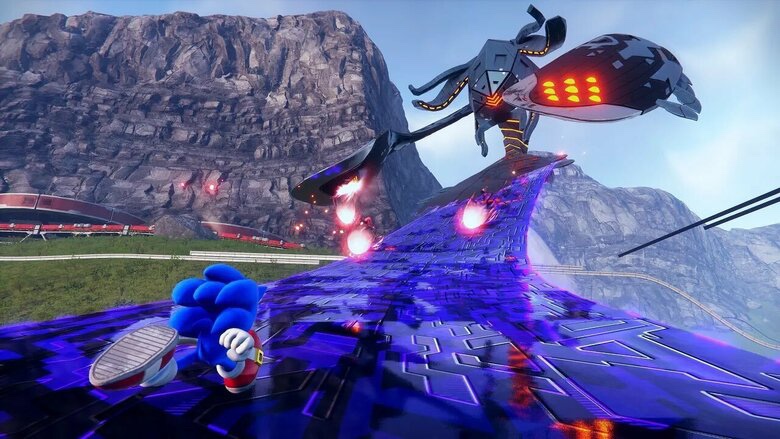


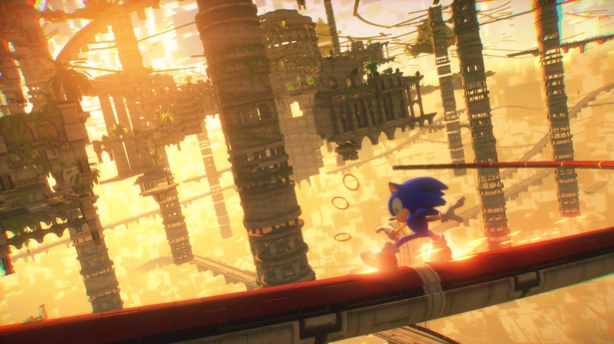


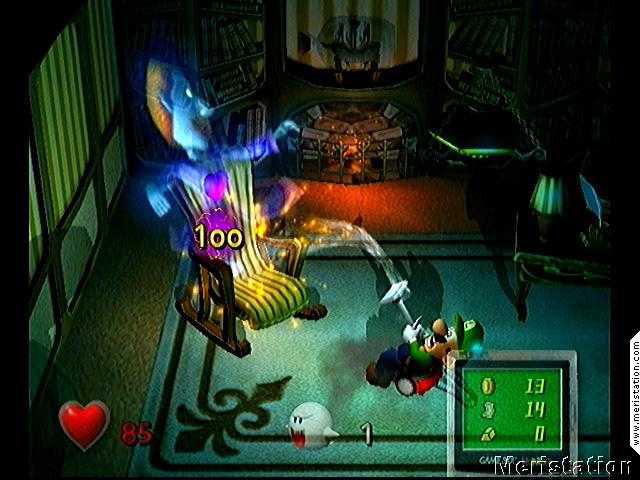
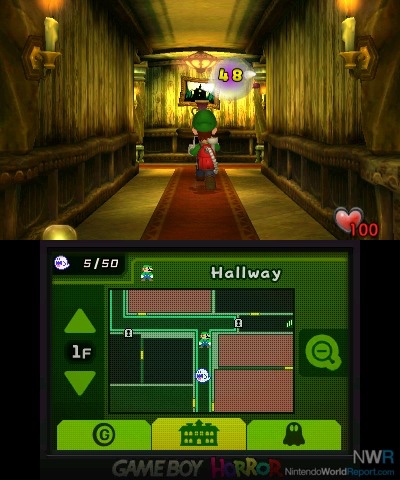


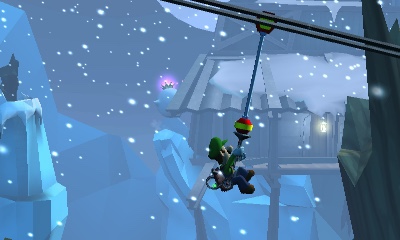


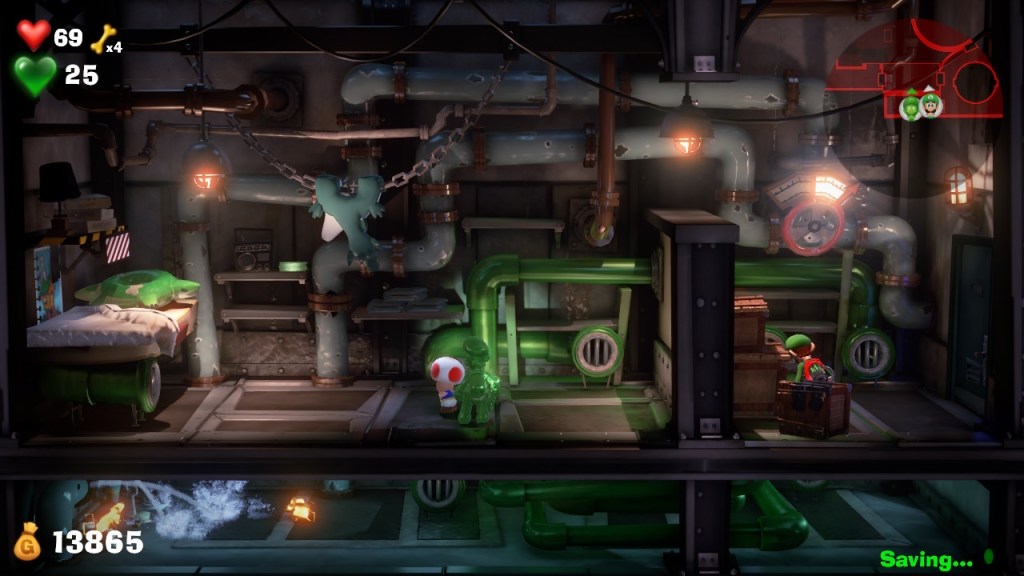

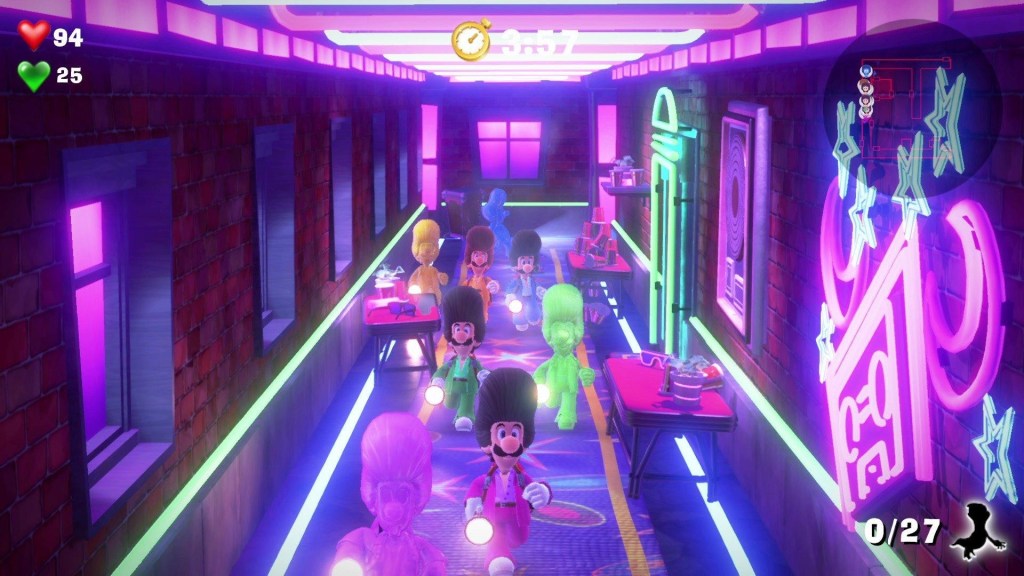


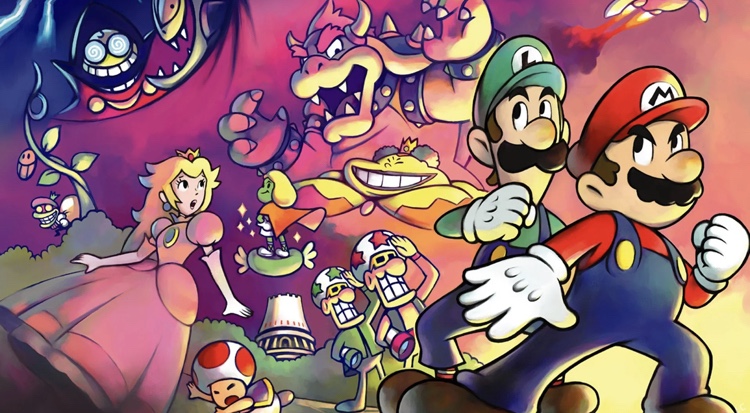


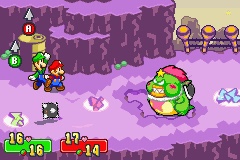


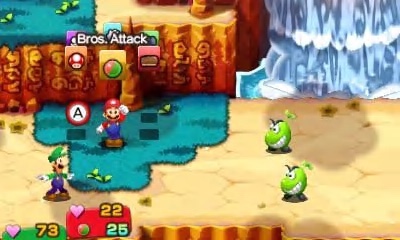
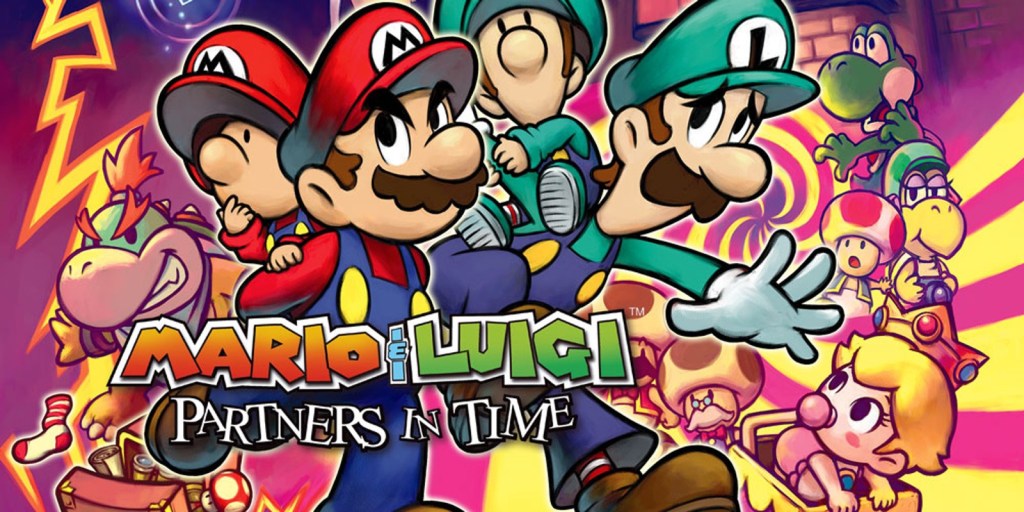
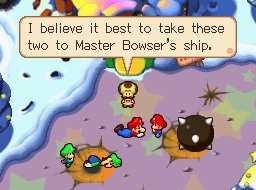


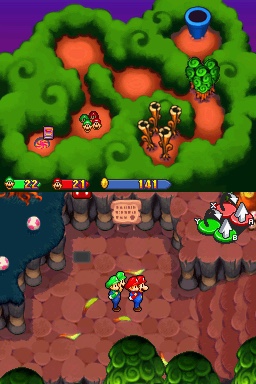


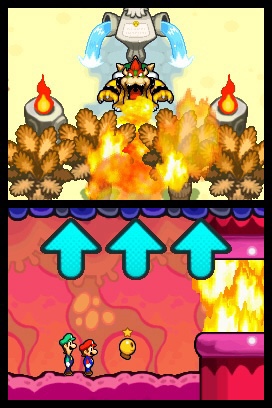


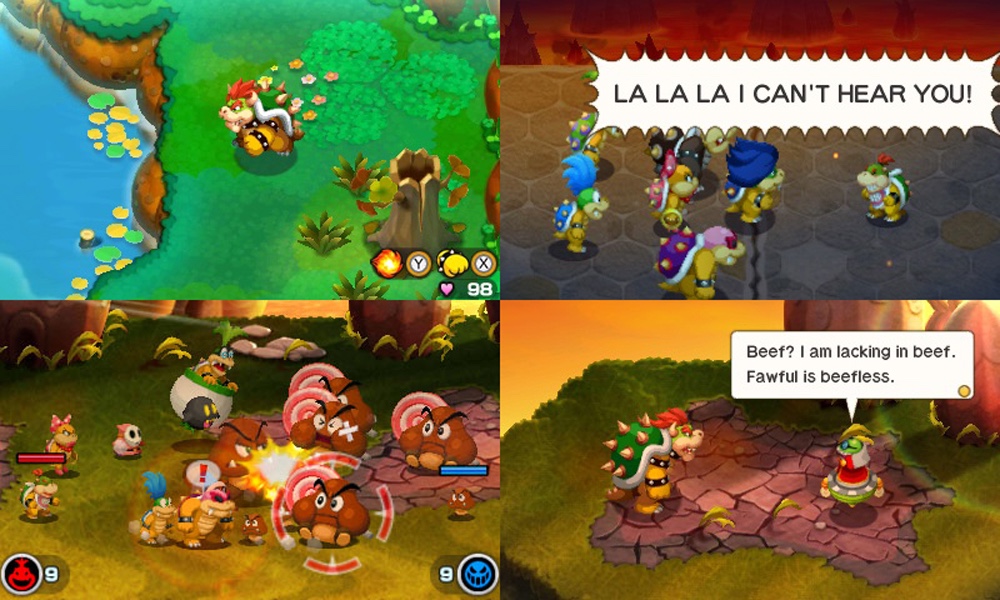
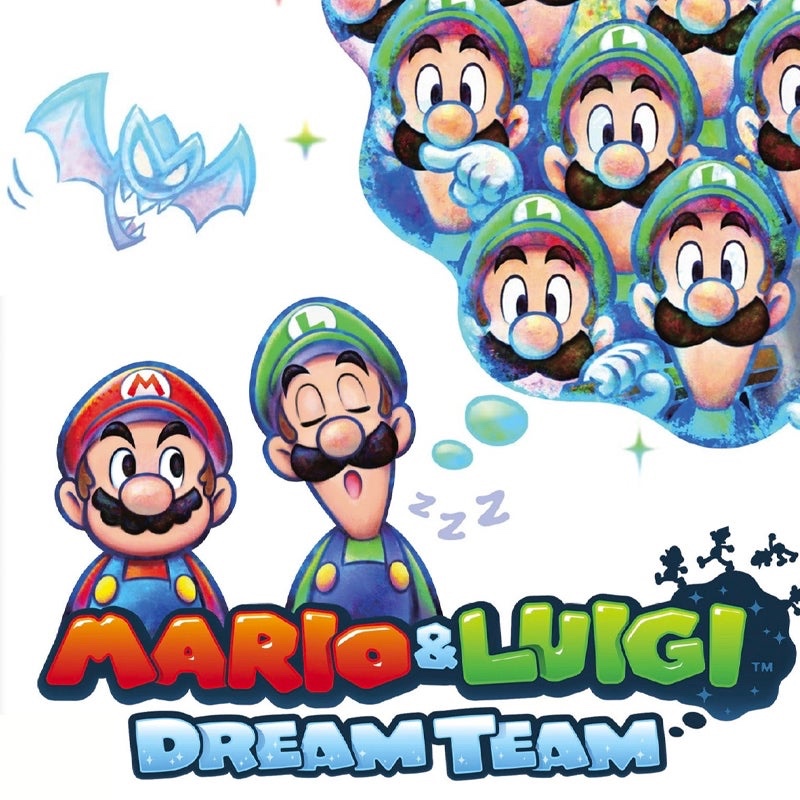
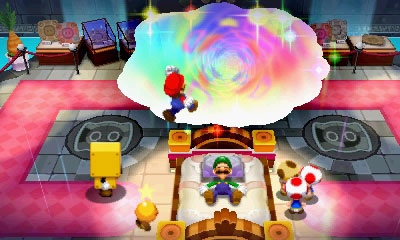
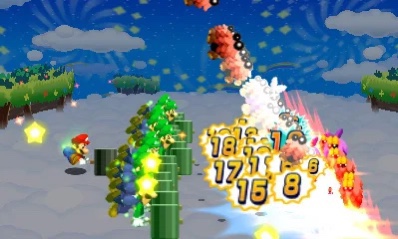

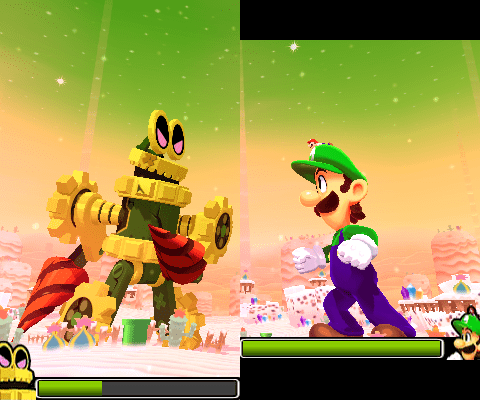
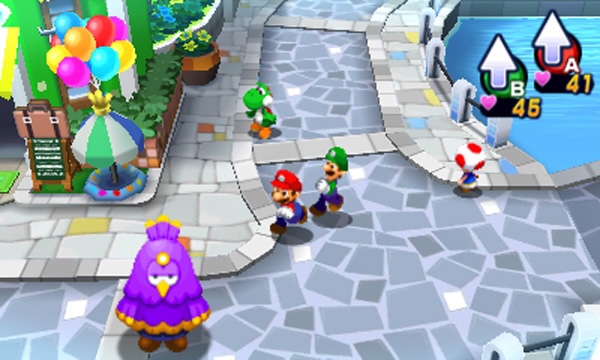
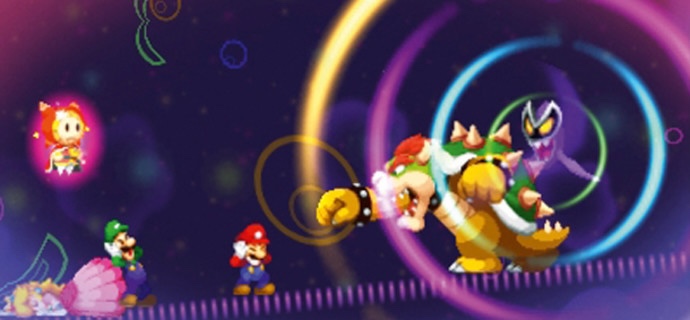


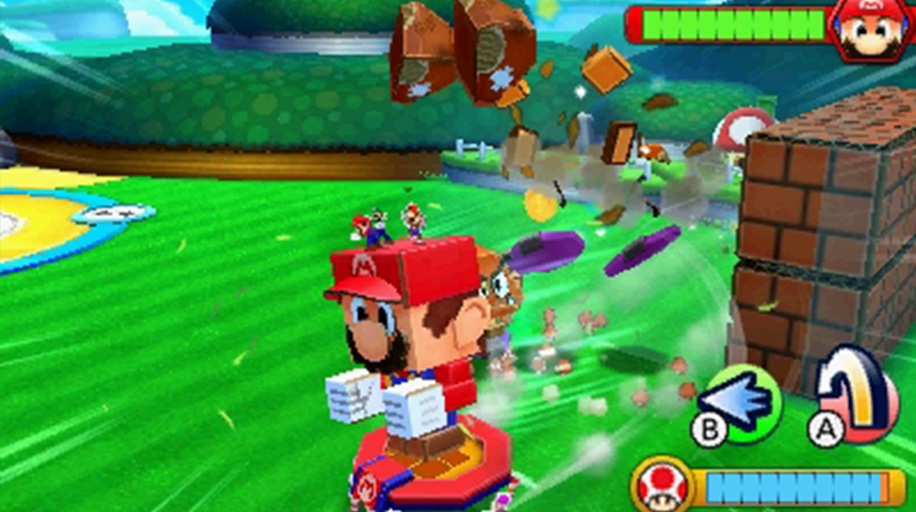














 The Squeeble Site