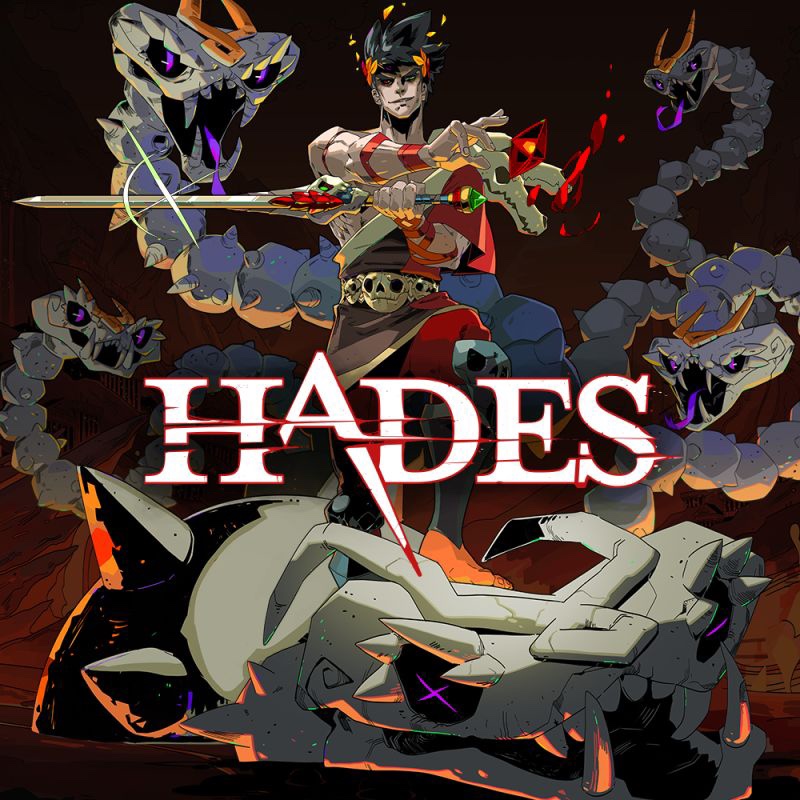
It truly is a pleasant suprise when a small indie game makes it to the game awards to throw hands with some of biggest Triple-A titles. Animal Crossing New Horizons, Ghost of Tsushima, Doom Eternal, and Final Fantasy VII Remake were only some of the games that came out in the year 2020. Though there was one title that was at the top of many people’s game of the year lists. A game made a small indie team known as Supergiant Games. This game is Hades, a rogue-like action dungeon-crawler game with hack-n-slash elements thrown in there. The game is heavily based off of Greek mythology, with various gods and characters from the Greek myths making appearances. Players will take control of Zagreus, the son of Hades and attempt to escape the Underworld and make their way towards Mount Olympus, with the aid of the Olympians. This is as deep as the story gets for the beginning but is expanded upon later in the game. Whenever you think you may get an answer, you’ll instead be left with even more questions, adding more and more layers of mystery to the overall story. The story progresses every time a run is completed. Players will have to at least fully complete 10 runs to get the final ending, with there being a post-game that requires even more runs to be completed.
The game is a rogue-like, as mentioned before. And like rogue-likes, it features randomly generated rooms, with the reward for completing each one being random as well. Right before entering one of these rooms, you can see the reward each room contains and what sort of challenge may be ahead (indicated by a skull most of the time). These rewards can be things like an increase in health, a boon from an Olympian, a gift from one of the residents of the underworld, and some of the various currency in the game. Players can upgrade Zagreus in two kinds of ways, temporarily while fighting through the Underworld, and permanently in the House of Hades. Zagreus also gains temporary upgrades while smashing through the Underworld. The boons from the Olympians are one of these various types of ways to improve Zagreus. The boons from the Olympians will last until the player dies, then they’ll be lost along with any other temporary enhancement they gain in the Underworld. Each Olympian has a different benefit often associated with them. For example: character like Zeus and Ares are focused a lot on dealing damage to enemies, but then you may have a character like Athena who has a high priority in giving the player different ways to defend themselves. Some of these Olympian can also add status affects to some of Zagreus’ attacks as well. All of this helps make the game an infinitely re-playable experience on its own.
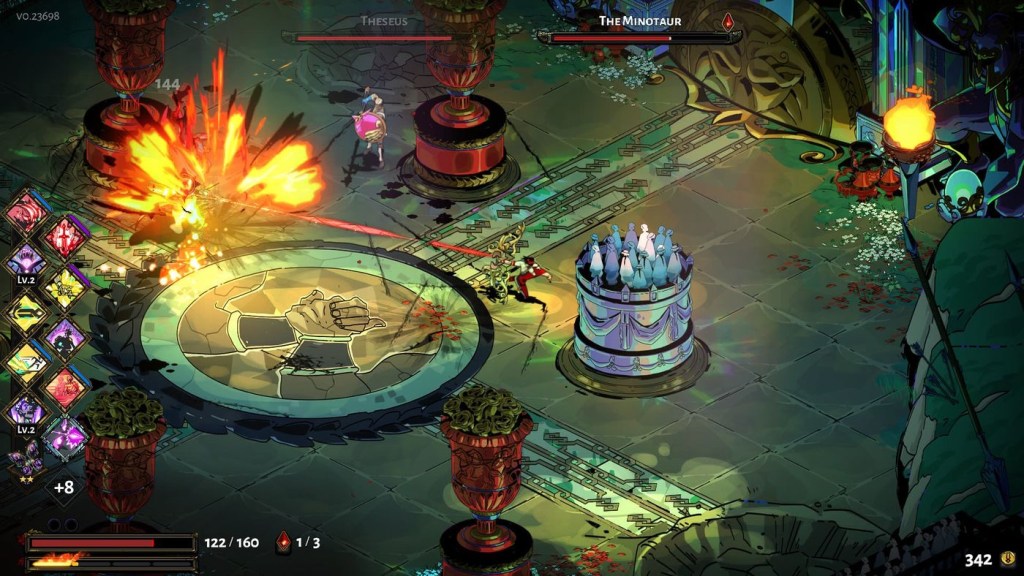
The entire game is presented in an isometric view in a very stylized art style. The layout of the Underworld changes every time a new run starts, so rooms, enemies, and rewards all change with these rooms as well. There are six different kinds of weapons that players can equip before heading out, all of these weapons differ greatly in gameplay from one another. In addition to these six weapons, later in the game, there are different variations of the same six weapons, with each of these variations differing in some way from the original weapon. There are a total of four areas in the Underworld: Tartarus, Asphodel, Elysium, and the Temple of Styx. You’ll move onto one of these different biomes after clearing the boss of each area. After you’ve done a few runs, the bosses of Tartarus and Asphodel will get different variations that are randomized each run. You’ll hack and slash your way through the Underworld and come across various rewards. These rewards are obtained generally from clearing rooms of enemies. The rewards can do things like receiving new abilities from the Olympians, increasing your health temporarily, receiving upgrades to certain abilities, and receiving various kinds of currency. Later in the game, after completing at least 1 run, you’ll unlock the “Pact of Punishment” which allows you to customize the difficulty of your run and receive more rewards. Of course, this all may sound daunting to players new to the genre, but there’s no need to worry, since there is an option that allows players to gain defense upgrades each time they perish during a run. Though, all of these things must be accessed from the House of Hades.
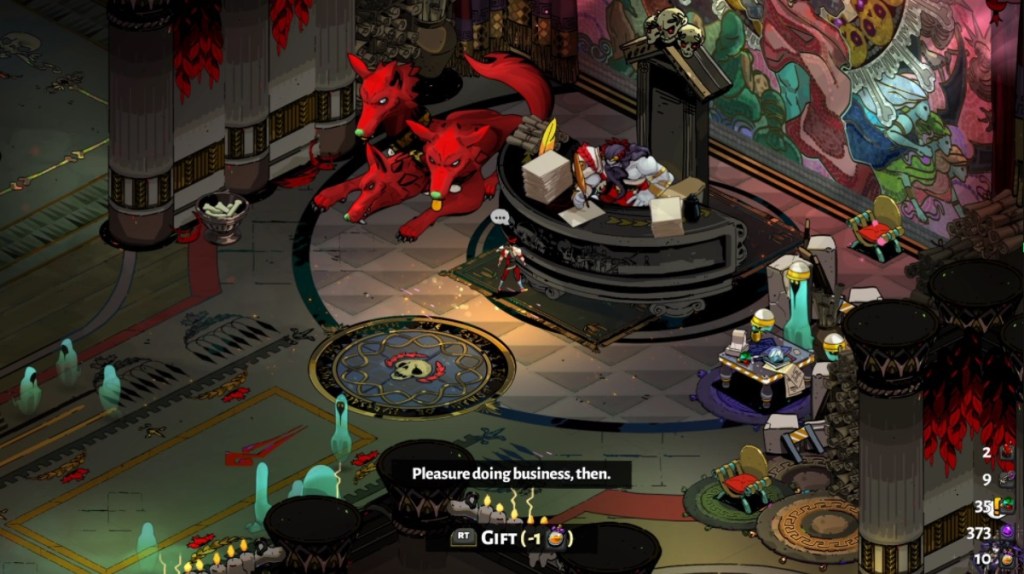
The House of Hades serves mainly as a Hub area of sorts. You can customize it by bringing “gemstones” to the house contractor. The contractor can do things like changing the basic appearance of the house to actively changing parts of the Underworld, such as making rooms with no enemies or having pots spill out gold when broken. Darkness is another currency, similar to the gemstones. Darkness can be exchanged from Zagreus’ “Mirror of Night” in order to improve your abilities. It can do things like restoring a little bit of health each time you enter a room or give you a second chance after you die. The House of Hades also lets you interact with NPCs, some of which have impacts on the story and their own questlines. You mainly interact with these characters by either talking to them or gifting them nectar. Gifting these characters nectar will help strengthen their relationship with Zagreus.
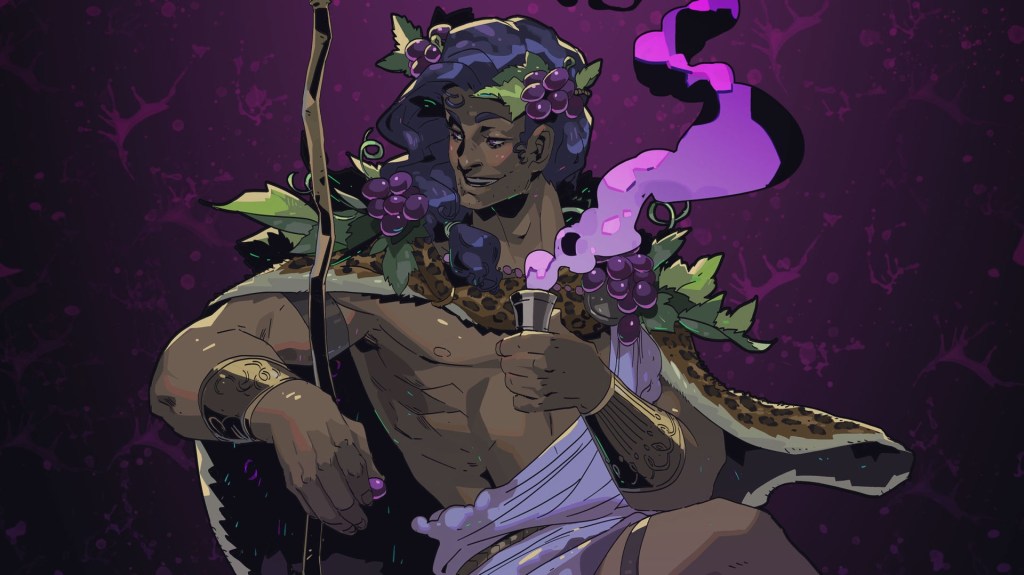
There is definitely a lot to love about this game, but the thing about the game that stands out the most, is probably the art direction. Jen Zee does an amazing job at capturing the personalities of the Greek and Chthonic Gods through absolutely gorgeous art. It isn’t just the art though, as the voice actors for all of these characters also helps brings these characters to life. Every character is incredibly entertaining due to both of these factors, and I haven’t even mentioned the awesome soundtrack that goes along with this.
Everything about this game is simply incredible. During every run I did in the game, there was always new dialogue and character interactions. The story is also really well told and very engaging, with it managing to keep me playing and wanting to uncover more. The game is just overall fantastic, and I would encourage those who haven’t played it to try it. You could probably get anywhere from 20 hours to maybe even 100 hours. So if you’re into games with a lot content like that, then this is a game for you. If you’re looking for a game that’s infinitely re-playable, then this is also a game for you.
Reviewed on Nintendo Switch and PC
 The Squeeble Site