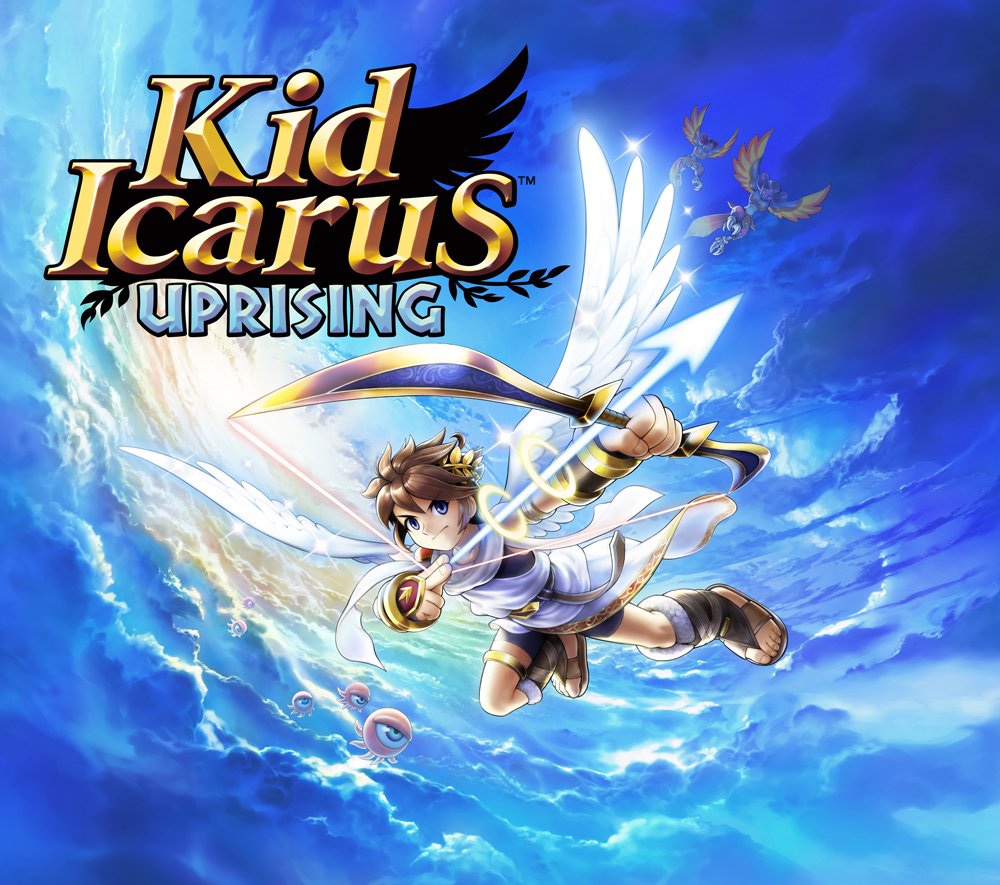
Kid Icarus. A seemingly forgotten game from an era that features some of the most remembered titles. With a hellish development that forced some of the development team to sleep in the office just to meet the deadline. Regardless, the last entry of the series was on the Gameboy, with the series seemingly ending with only two games. When the time came for a new Smash Bros. on the Wii, Masahiro Sakurai (the game’s director) decided to redesign the main character of the Kid Icarus series, Pit, as if the series kept on getting new installments. Pit’s inclusion in Smash Bros. Brawl sparked fan interest in a new game. This new game was Kid Icarus Uprising for the Nintendo 3Ds, with the game’s development being led by Masahiro Sakurai himself.
The original Kid Icarus was a 2D side-scroller that had gameplay similar to that of Metroid with RPG-like elements in addition to having many inspired elements of Greek mythology. Kid Icarus Uprising follows a formula that is completely different from what the first two games established nearly 30 years ago. Kid Icarus Uprising’s gameplay is like a third-person shooter, with players using the 3Ds’ circle pad to control Pit and the stylus to aim the reticle around. Stages are divided into two parts, flying and ground sections. The flying sections sees Pit flying through the air and shooting enemies in the air, with the section feeling a lot like that of a bullet-hell. The ground sections sees players move Pit around the level while implementing hack-n-slash gameplay into the level as they explore freely finding treasures and making their way to the end. The controls are probably the most glaring issue with the game, as they’re not really comfortable to use. Nintendo did supply purchasers of the physical copy of the game with a stand for the 3Ds, which they may have thought was supposed to make the game more comfortable to play, but it ends up making the experience less enjoyable.
Moving away from controls now, there is the difficulty scale present right before entering a level. Fans of the Super Smash Bros. series may recognize this as the same difficulty scale first seen in Super Smash Bros. for 3Ds and WiiU. The scale works by having the player wager a certain amount of ‘hearts’ (The game’s currency) to either make the level easier, or harder. The higher the number on the scale, the more it’ll cost. Players can also use these hearts to buy weapons. The other option is to fuse your current weapons in order to get entirely new ones. There’s a level of fun present in this mechanic, experimenting with all kinds of different fusions and trying to get the perfect weapon best suited for your playstyle. The other thing you can use hearts for is ‘bringing the goddess closer’. This has no actual bearing on the game itself and offers you nothing. All it does is bring a model of the goddess, Palutena, closer to the screen. There is no benefit nor consequence for offering up hearts to the goddess. 3D models of characters can also be obtained through the “playcoins” feature on the 3Ds. Players can spend their playcoins that they’ve obtained from walking with their 3Ds and spend them on 3D models of some of the weapons, characters, enemies, or locations present in the game.
Now, the story in this game is probably one of the most genius ways a story has ever played out in a video game. No need to watch a bunch of characters standing around talking to each other with lackluster dialogue. No need to button mash through text. The way the story of Kid Icarus Uprising is presented is by having it unfold during the gameplay. You play the game on the top screen, but the story is told through the bottom, with character sprites appearing and giving context to the story as you play, with their dialogue sometimes directly impacting what appears while you play. The actual animated cutscenes in the game also don’t last too long, allowing players to get right back into the action. All the characters are fun and incredibly entertaining. Pit is a fine protagonist with good lines here and there, Palutena is also very entertaining, Dark Pit starts off as an edgy clone of Pit but goes through a great arc that helps develop his character and separate him from Pit. The goddess of nature, Viridi, is also very lively, bringing with her a more chaotic personality when compared to other characters. The sheer snark coming from Hades is also very fun to listen to. Every character is wonderfully crafted and the side characters never really overstay their welcome. The voice actors also need to be credited with bringing these characters to life. Antony Del Rio, Hynden Walch, Ali Hillis, and S. Scott Bullock are a few names who bring amazing performances and help bring forth the personality in these characters. The music also helps compliment the story, with certain parts of the song changing depending on what’s happening on screen. The soundtrack of the game is also really good. Songs like: “The Return of Palutena”, “Boss Fight 1”, “Dark Pit”, “In The Space-Pirate Ship”, “Thunder Cloud Temple”, and more are all amazing.
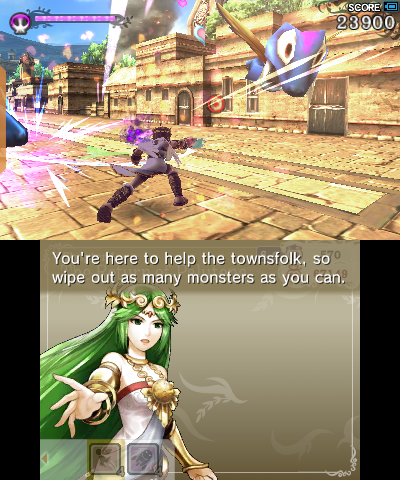
The levels, difficulty scale, and a wide variety of different weapons all help make this game endlessly repayable. There’s even an online mode as well, and as of early 2022, it’s still active and still easy to get into a match.
With a great story, music, characters, and gameplay, this game is a classic for all 3Ds owners. An amazing revival to a series thought to be dead. It should be worth noting that there are still no new plans for a new entry, which is disappointing, and Masahiro Sakurai has went on record saying that it would be difficult to make a new entry. But fans can still hope for a new entry. The game isn’t perfect, no game is. The controls are really the only thing that brings this game down, with the controls making the game a test of endurance. Overall, great game and I would recommend this to anyone interested in this series.
Reviewed on the Nintendo 3Ds
 The Squeeble Site